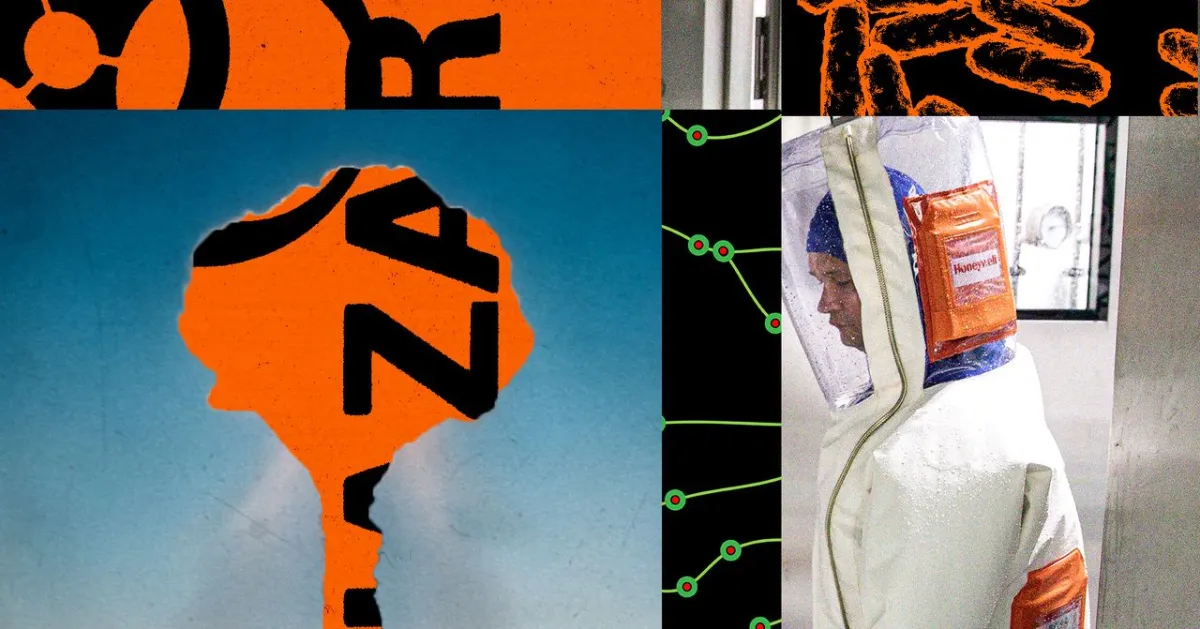
Even without the buzzy advancements of artificial intelligence, the development of dangerous bioweapons remains a significant and chilling threat, according to experts. A new book, "Biological War: A Scenario," delves into the terrifying possibilities of engineered pathogens, highlighting that the tools and knowledge for creating them are already readily available.
Annie Jacobsen, author of the book, spoke about the ease with which pathogens can be manipulated to become more infectious or deadly. She points out that while AI might accelerate these processes, the fundamental capabilities already exist. "The threshold for entry is extremely low," Jacobsen stated, emphasizing that unlike nuclear weapons requiring state-level infrastructure, biological agents can be accessed by a much wider range of actors.
The conversation highlights that accidental lab leaks pose a greater risk than deliberate deployment by terrorists. With thousands of high-security biolabs worldwide handling dangerous pathogens, the potential for human error or unforeseen events is statistically significant. Jacobsen noted that intelligence agencies work to disrupt bioweapons programs, but the sheer number of individuals and institutions working with risky pathogens increases the chance of an accidental release.
Furthermore, the discussion touched upon the concept of "dual-use" research – scientific endeavors that can be used for both beneficial and harmful purposes. Genetic engineering, for instance, can lead to life-saving vaccines but also to more potent biological weapons. This ambiguity, coupled with a perceived hubris among some scientists who prioritize publishing findings over potential risks, adds to the complexity of the threat landscape.
Jacobsen's book also explores the limitations of government preparedness and response to such threats. Drawing from war gaming scenarios, experts suggest that while mitigation efforts exist, there is "no real defense against a large-scale biological attack." The potential for social breakdown and the need for contingency plans like "devolution" – a classified plan for reconstituting government in a catastrophic event – underscore the gravity of the situation.
Despite the grim subject matter, Jacobsen aims to empower readers rather than induce panic. By bringing these "quiet parts" of existential threats into public awareness, she hopes to foster informed discussion and pressure for greater oversight and safety measures in the world of biological research.