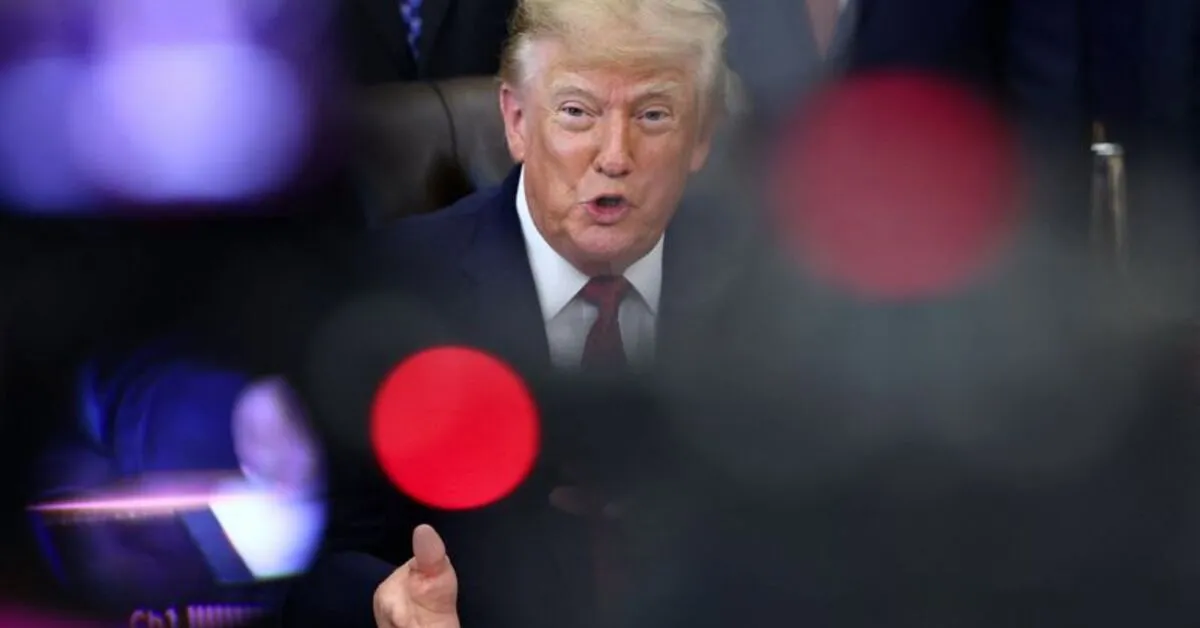
Experts suggest that while Donald Trump is unlikely to win this year's Nobel Peace Prize due to ongoing geopolitical conflicts, his past efforts to secure the award and subsequent interactions with a laureate will likely influence the committee's selection process.
The awarding body, comprised of five members, is expected to consider the potential for any recipient to face pressure from Trump, a sentiment echoed by Haakon Gjerloew, acting director of the Peace Research Institute Oslo. Gjerloew stated that the events surrounding last year's prize, including the Venezuelan laureate Maria Corina Machado gifting her medal to Trump, will undoubtedly factor into the committee's deliberations. A significant concern for the committee may be whether an award to a particular individual could inadvertently place them under duress from the former U.S. President, potentially leading to a consideration of whether the prize would ultimately do more harm than good.
Potential candidates who might be considered less susceptible to such pressures, according to experts, include Pope Francis, the International Criminal Court (ICC), the International Court of Justice (ICJ), or Francesca Albanese, the UN Special Rapporteur on the Occupied Palestinian Territories. Pope Francis, known for his outspoken stance against war and his advocacy for dialogue and humanitarian work, has been positioned as a leading global thought leader. Albanese, meanwhile, has faced criticism from the United States and Israel for her reporting on the conflict in Gaza and the occupation of the West Bank.
Alternatively, the committee might opt for a less controversial, "safe" choice to avoid antagonizing Trump, who reportedly expressed dissatisfaction with Norway for not awarding him the prize previously. Such a choice could involve recognizing Sudan's Emergency Response Rooms, a network of community groups aiding those affected by civil war, or Save the Children, a non-governmental organization dedicated to assisting children in conflict zones.
However, the committee also faces scrutiny to address Trump's challenges to the international order. Historian Oeivind Stenersen, who has studied the Nobel Peace Prize, noted a pressure on the committee to take a firm stance against Trump's influence, suggesting a need for a prize that defends liberal democracy, international law, and human rights. Awards to the ICC, at a time when the U.S. is considering sanctions against the tribunal, or the ICJ, which supports peaceful dispute resolution, are seen as potential avenues to assert these principles.
Despite reported nominations from leaders of Cambodia, Israel, and Pakistan, Trump's chances are considered "quite low" by experts. The former President's perceived pressure on the Norwegian Nobel Committee has drawn criticism from figures like Nobel laureate Maria Ressa, who expressed dismay last year and asserted that "bullies don't run the world."