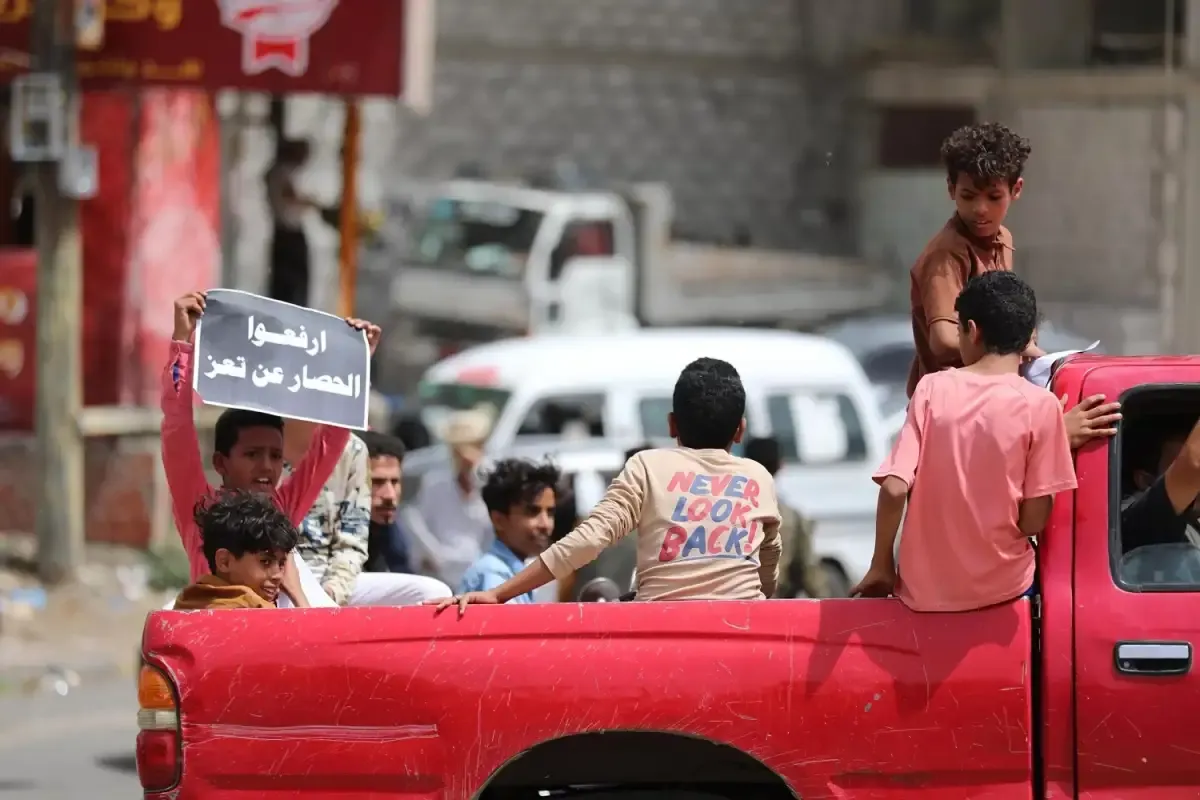
The humanitarian repercussions of the blockade on the city of Taiz are escalating, with life-saving aid struggling to reach hundreds of thousands of residents. Flour reserves are nearly depleted, and prices for essential goods, fuel, and water have surged, prompting renewed international calls for the Houthi militia to open roads and lift restrictions on civilian movement and supplies.
The United Nations World Food Programme (WFP) has warned that escalating conflict, road closures, shifting frontlines, and insecurity have prevented it and its humanitarian partners from accessing approximately 800,000 people in Yemen, predominantly in Taiz Governorate. Over 600,000 within the governorate rely on humanitarian assistance, including more than 200,000 women and children. The WFP also noted that this figure includes communities affected by disrupted aid access to the western coast since early September, highlighting how fighting and road closures are hindering relief operations in areas that have hosted large numbers of internally displaced persons since the crisis began.
This warning is particularly grave as it coincides with the deterioration of food security in Taiz, which the WFP has identified as one of Yemen's most food-insecure regions. Sixteen areas in Taiz were previously classified at emergency levels according to the Integrated Food Security Phase Classification (IPC). Recent monitoring indicates that wheat flour reserves are nearing exhaustion, and remaining food supplies in local markets may only last a short period if access restrictions persist. This places impoverished families and displaced individuals at increased risk, with diminishing access to food and rising living costs.
The economic impact of the blockade is further evidenced by sharp increases in the prices of essential goods and services, as documented by the organization Mwatana for Human Rights through field data and reports up to October 15. Mwatana reported a 217% rise in domestic gas cylinder prices, a 167% increase in fuel and oil derivatives, a 60% hike in water tanker costs, and a 38% rise in wheat and flour prices. The organization explained that road and supply line restrictions have compelled thousands of families to rely on the black market for their needs at unaffordable prices, warning that the continuation of this situation threatens water services, healthcare, and vital infrastructure.
The implications of road closures extend beyond delayed relief convoys to encompass commercial goods, transportation costs, and the availability of fuel for hospitals and water networks. Consequently, civilians are bearing a direct and escalating cost for the persistent restrictions on the city. The European Union reiterated its call for the Houthi militia to lift the siege on Taiz, open its roads, and permit the entry of food, water, medicine, and fuel. EU Ambassador to Yemen, Patrick Simonnet, expressed grave concern over the situation, emphasizing the need to protect civilians and civilian infrastructure and enable humanitarian partners to deliver essential aid.
The European appeal comes amid continued restrictions on most routes leading to government-controlled areas in Taiz. Human rights and humanitarian organizations accuse the Houthi militia of besieging the city since the outbreak of the war in 2015 and obstructing aid delivery, allegations the militia denies. Yemeni Prime Minister Shae'a Mohsen Al-Zindani affirmed that the Houthis' continued targeting of civilians and their imposition of a blockade on Taiz constitute a "war crime that does not lapse with time," stressing the necessity of holding those responsible accountable for the violations. Mwatana described breaking the siege and securing the needs of the population as a non-negotiable humanitarian imperative, warning that the continued closure of vital roads and crossings threatens the lives of over one million civilians and exacerbates their suffering.