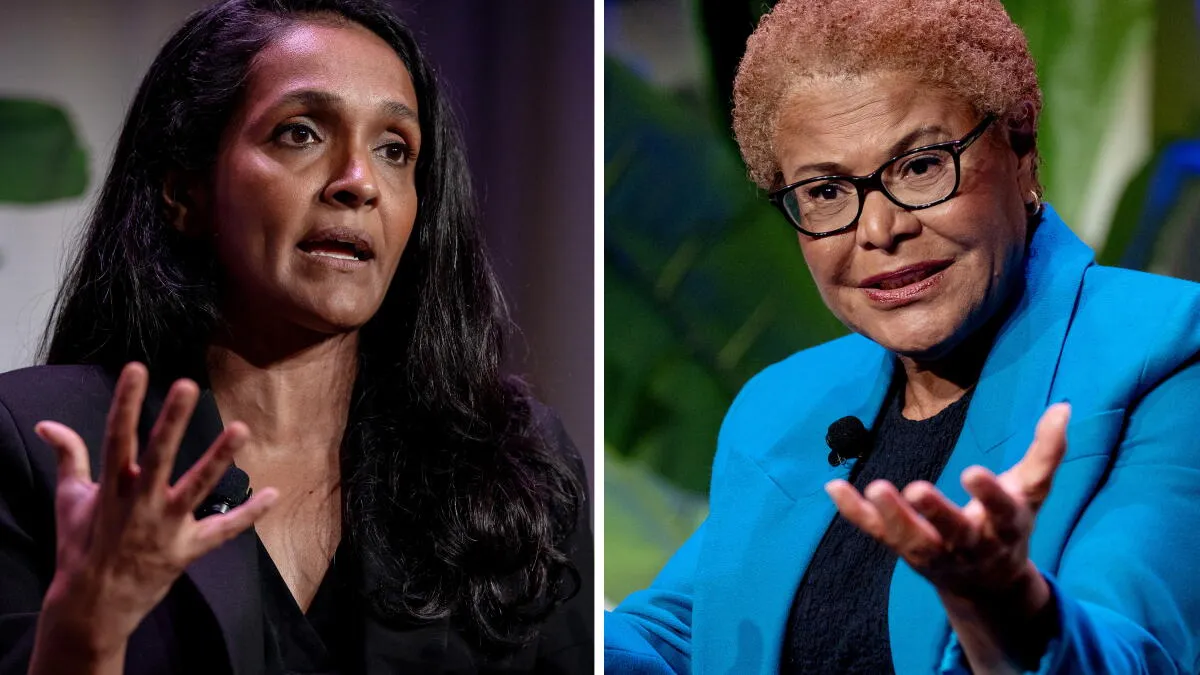
Los Angeles is nearing a pivotal decision point in its mayoral election, with incumbent Karen Bass and challenger Nithya Raman locked in a tight race that will determine the city's leadership ahead of significant global events and critical policy challenges. The contest, which has intensified over a bitter nine-month campaign, now rests on whether voters prefer the established status quo or a riskier alternative.
The election's dynamics were significantly altered by Councilmember Nithya Raman's late entry into the race, challenging Mayor Karen Bass, who has faced political pressure regarding her handling of the devastating Palisades fire. Despite these challenges, Bass has actively promoted her administration's achievements in crime reduction and affordable housing, while also highlighting perceived missteps by Raman during the campaign's final weeks. Current polling indicates a dead heat between the two candidates, with a substantial portion of voters still undecided, underscoring the crucial choice before the electorate.
Raman has consistently portrayed Bass as an ineffective leader, citing her administration's response to the Palisades fire, the escalating homelessness crisis, and the city's persistent struggles with basic service delivery. Raman has specifically criticized the city's deteriorating infrastructure, attributing these issues to poor management and questionable financial decisions. She pointed to the delayed and over-budget SkyLink people mover project at Los Angeles International Airport as a prime example of mismanagement.
Conversely, Mayor Bass has focused her criticism on Raman's perceived inconsistency on key issues, including police hiring, the city's "mansion tax," and other policy matters. Bass has garnered support from all 14 of her City Council colleagues, some of whom have publicly expressed a lack of trust in Raman. The Mayor has also accused Raman of alienating constituents within her own council district who hold differing views, stating that Bass's office has been addressing those constituent complaints for years.
The outcome of this election carries substantial weight, as the winning mayor will be tasked with guiding Los Angeles through the 2028 Summer Olympic Games, an event that presents significant national security and financial risks. Furthermore, the city faces a critical juncture in addressing its homelessness crisis, with recent data indicating a rise after two years of decline. The next mayor will also play a central role in negotiating labor contracts with city employee unions, which will directly impact the resources available for essential public services.
Political analysts suggest the race is a symbolic choice between "the old guard" represented by Bass and "the new wave" embodied by Raman. The campaign has seen considerable external spending from various groups, including hedge funds and unions, supporting both candidates. The final days have been marked by intense campaigning, with both Bass and Raman seeking to sway undecided voters by emphasizing different aspects of their platforms, from crime statistics and infrastructure projects to broader visions for the city's future.