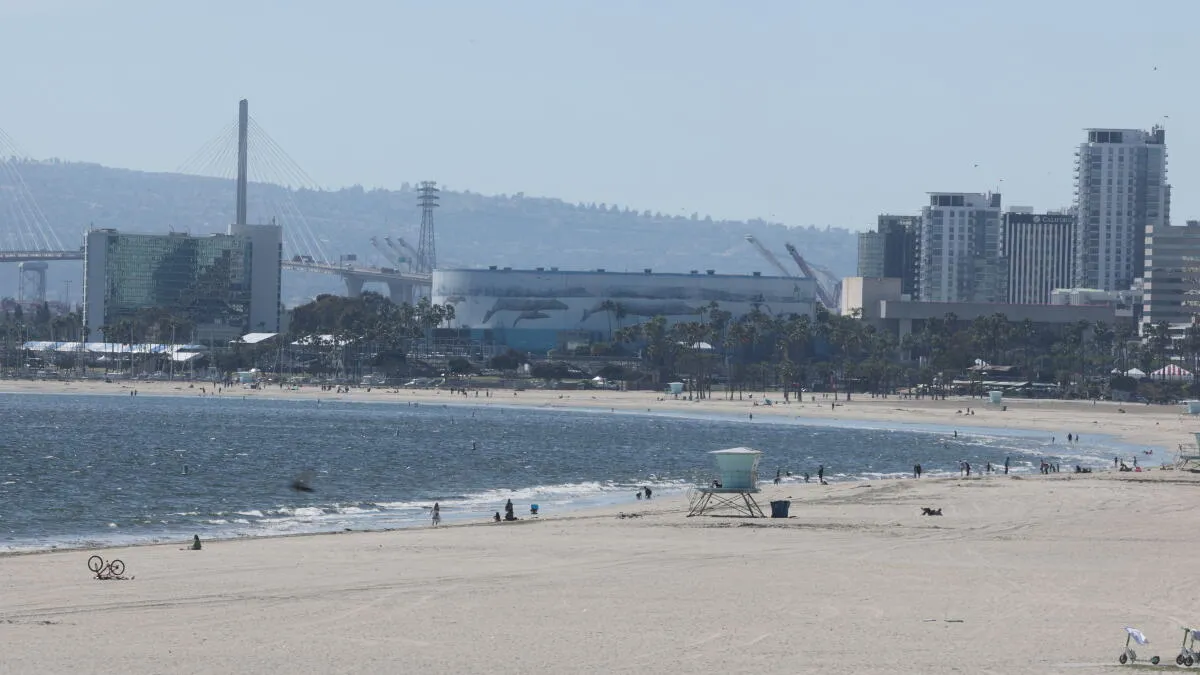
Long Beach has closed all coastal waters to the public following a significant sewage main break that discharged approximately 14,000 gallons of untreated wastewater into the ocean. The duration of the closure is uncertain as health officials await water quality test results.
City Health Officer Dr. Cliff Okada mandated the temporary closure of all open coastal swimming areas, including beaches, bays, and lagoons. This measure was implemented after the sewage spill potentially compromised recreational water quality along Long Beach's more than six miles of public beach.
The incident began around 6:30 p.m. on Friday, when a break occurred in a pressurized "force main" pipe near Livingston Drive and 2nd Street. The Long Beach Utilities Department reported that of the estimated 29,000 gallons spilled, 15,000 gallons were recovered, with the remainder entering the ocean. Repairs to the damaged pipe are currently in progress.
State law necessitates the temporary closure and posting of affected beaches in such circumstances. The city stated that the closure is precautionary and will remain in effect until recreational water quality standards are met. Water sampling is scheduled to commence on Monday, with ongoing testing to ensure compliance with state requirements.
Such extensive beach closures are infrequent and typically occur only during major emergencies, such as substantial sewage leaks, debris from fires, or severe weather events. More common are targeted bacterial advisories or rain-related runoff warnings.
Separately, the Los Angeles County Department of Public Health issued advisories on Friday for several other coastal locations due to elevated bacterial levels, including waters near Ballona Creek at Dockweiler State Beach, Mother's Beach in Marina Del Rey, and near the Santa Monica Pier. Advisories for Malibu Point, Surfrider Beach, and Avalon Beach on Catalina Island have since been lifted.