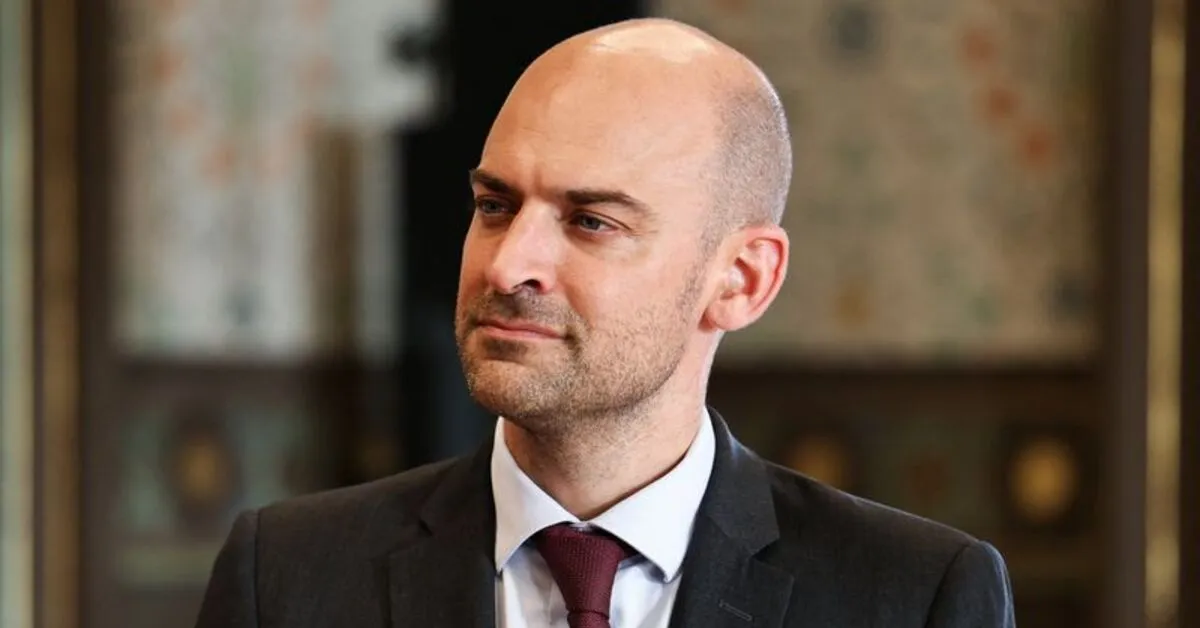
A Group of Seven (G7) foreign ministers meeting in Paris on Monday will serve as a crucial opportunity for Washington's allies to evaluate whether President Donald Trump's recent midterm election setback will influence the administration's policies regarding Ukraine, the Middle East, and relationships with key partners.
Four G7 diplomats indicated that while Democratic gains in the midterms might constrain the White House's options, a significant shift back towards traditional US multilateralism is unlikely as foreign policy remains firmly under President Trump's direction. US Secretary of State Marco Rubio, considered a potential contender for the 2028 presidential election, is scheduled to attend, marking his first appearance before allies since the elections. The meeting, which was relocated to Paris from Marseille due to recent protests in France, includes ministers from G7 nations—France, Britain, Canada, Germany, Italy, Japan, and the United States—along with representatives from the European Union. Ukraine, Saudi Arabia, Egypt, South Korea, and Brazil are also expected to participate.
With the conflict in Ukraine dominating the agenda, the G7 ministerial precedes trilateral discussions on Ukraine, Russia, and the United States scheduled for Tuesday in Abu Dhabi. Officials from France, Britain, Germany, NATO, and the European Commission are also anticipated to be in Abu Dhabi, though they are not expected to participate directly in the trilateral format. The meeting occurs amidst internal European discussions, highlighted by Italian Prime Minister Giorgia Meloni's warning that Europe risks diminishing its relevance in resolving the Ukraine war if member states pursue fragmented diplomatic strategies instead of a unified approach.
Diplomats have described a challenging situation in Ukraine, noting a stabilization of the front lines that makes significant breakthroughs improbable. They also expressed concern over Russia's shift in tactics, which now involve systematically targeting energy infrastructure in an effort to provoke widespread winter blackouts. A critical vulnerability for Kyiv is the shortage of Patriot interceptors and other air defense systems. Consequently, a key objective of the G7 meeting will be to maintain pressure on Russia while galvanizing further military, financial, and energy support for Ukraine.
Discussions are also expected to address Iran. Allies of Washington within the G7 have consistently voiced skepticism regarding the ongoing conflict and fear that further US military intervention could exacerbate rather than resolve the crisis. The upcoming talks may also highlight divergences between Paris and Washington on the issue of Lebanon. France is advocating for a new UN-backed security framework for southern Lebanon, proposing options such as a joint French-Italian international force. Despite private acknowledgments from French officials regarding US reservations about some of these proposals, the G7 meeting presents an opportunity for the allies to bridge these differences as the expiration of current arrangements approaches at year-end.