The United States has intensified its military pressure on Iran, conducting targeted strikes on the strategic island of Qeshm in the Strait of Hormuz. This action underscores the Trump administration's reliance on force to curb Iranian actions, while diplomatic efforts continue to de-escalate the months-long standoff.
The strikes, executed on Monday, the eve of the US midterm elections, reveal the limitations of Iran's reliance on negotiation and affirm Washington's approach: military pressure is not a substitute for talks, but rather a parallel tool to compel Tehran to address demands regarding navigation security in the Strait of Hormuz and threats to US forces and interests.
American officials, cited by US media, stated that the strikes were a limited response to Iran's use of surface-to-air missiles against American assets, characterizing the operation as defensive and not a resumption of major combat operations. Iranian media reported explosions on the island, with no official US confirmation of damages or casualties.
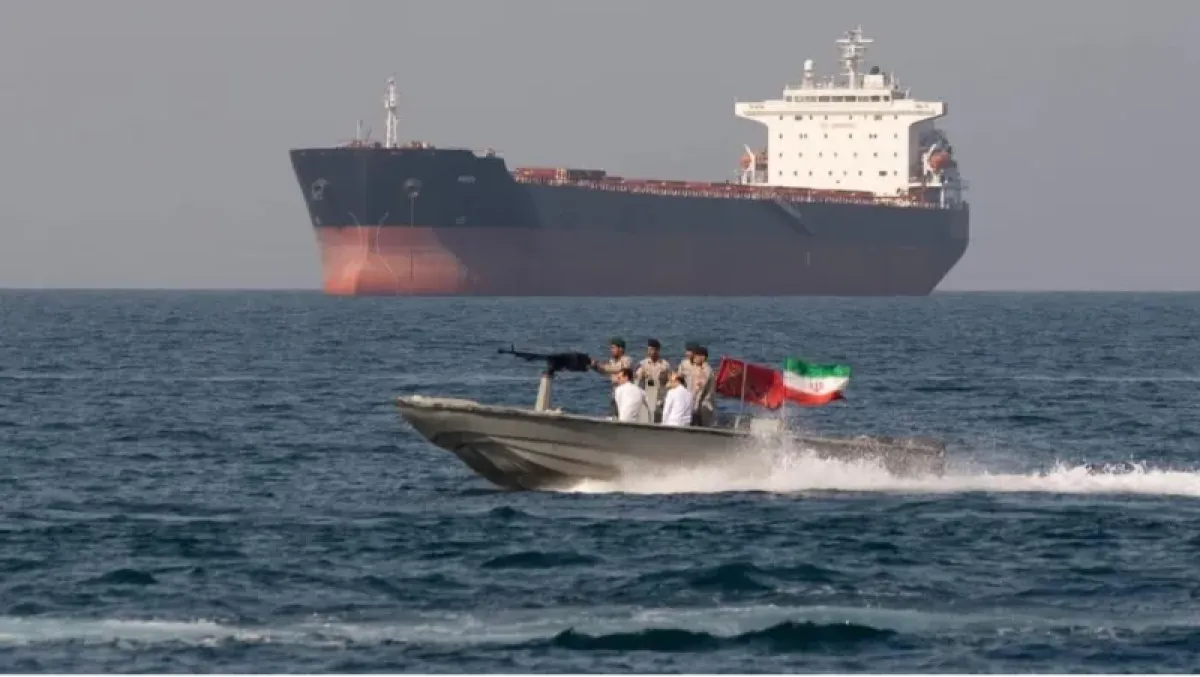
The choice of Qeshm, located at the northern entrance to the Strait of Hormuz—a vital global oil and energy transit route—carries significant geopolitical weight. This location highlights Washington's focus on Iranian threats to maritime traffic and US forces, sending a clear message that Iran cannot use the strait as leverage without facing military consequences.
The US administration's description of the strikes as limited and defensive does not signal an abandonment of military force, but rather a strategy of managed escalation. This approach allows for selective strikes without immediate escalation to a broader conflict, while retaining the option to expand operations if threats persist or negotiations collapse.
These developments appear to contradict President Trump's October 8th pledge not to strike Iran before the November 3rd elections, a commitment based on what he then described as fruitful discussions with Tehran. While the administration distinguishes between limited defensive strikes and major combat operations, the timing of the attack, one day before the elections, suggests the pledge did not encompass all forms of military action, leaving Washington substantial room for maneuver under security pretexts.
The timing of the operation is also inseparable from domestic political calculations, given the impact of conflict on energy prices and the economy, and the pressure on Republicans heading into the elections. Trump aims to portray the confrontation as a success, having degraded Iranian capabilities without incurring the costs of an open war that could raise fuel prices and increase economic and political burdens.
Concurrently, the White House seeks to maintain the appearance of ongoing negotiations. Trump has expressed no haste in deciding on a resumption of hostilities, noting that a deal with Iran remains possible. Vice President Vance has also voiced optimism regarding settlement prospects, with Qatari mediation efforts continuing to bridge the gap between the two sides.
This political flexibility, however, does not imply a willingness to concede without reciprocal action. The US administration remains steadfast in its demand for an end to threats against navigation in the Strait of Hormuz and the security of forces and commercial vessels, while maintaining a naval blockade of Iranian ports. Economic and military pressure are therefore integral components of the US negotiation strategy.
Reports indicate that Qatari mediation has prepared a draft proposal featuring confidence-building measures over three days, intended to pave the way for direct negotiations between Washington and Tehran. However, fundamental disagreements persist, particularly concerning the naval blockade, US sanctions, Iranian oil exports, and security and nuclear issues. Tehran has previously linked the reopening of the Strait of Hormuz and nuclear negotiations to the lifting of the blockade and sanctions.
These diplomatic efforts face additional complexities due to divergent views within both the US and Israeli camps regarding the future of the confrontation. While Trump appears inclined to give diplomacy further opportunity, reports suggest Israeli Prime Minister Netanyahu exerted pressure for the US to resume military strikes post-election, driven by Israeli concerns that negotiations could provide Tehran time to regroup.
This divergence creates further uncertainty about the path forward. A return to large-scale military operations would have repercussions extending beyond Iran, potentially involving armed factions in Iraq, the Houthis in Yemen, and further threats to navigation in the Persian Gulf and Red Sea.
The Qeshm strike is not an announcement of a full-scale war, but rather reflects a strategy to maintain continuous military and economic pressure on Iran, preventing it from exploiting any de-escalation to reassert its influence in the Strait of Hormuz or prolong negotiations without making concessions. The US message is clear: the diplomatic path will not be divorced from the application of force, and the continuation of talks does not preclude sustained pressure on Iran. Iran, in turn, faces a more complex equation: either engage with US demands through a settlement that curtails its regional and military capabilities, or confront the escalating risks of a confrontation whose timing and ultimate scope remain undefined by Washington.