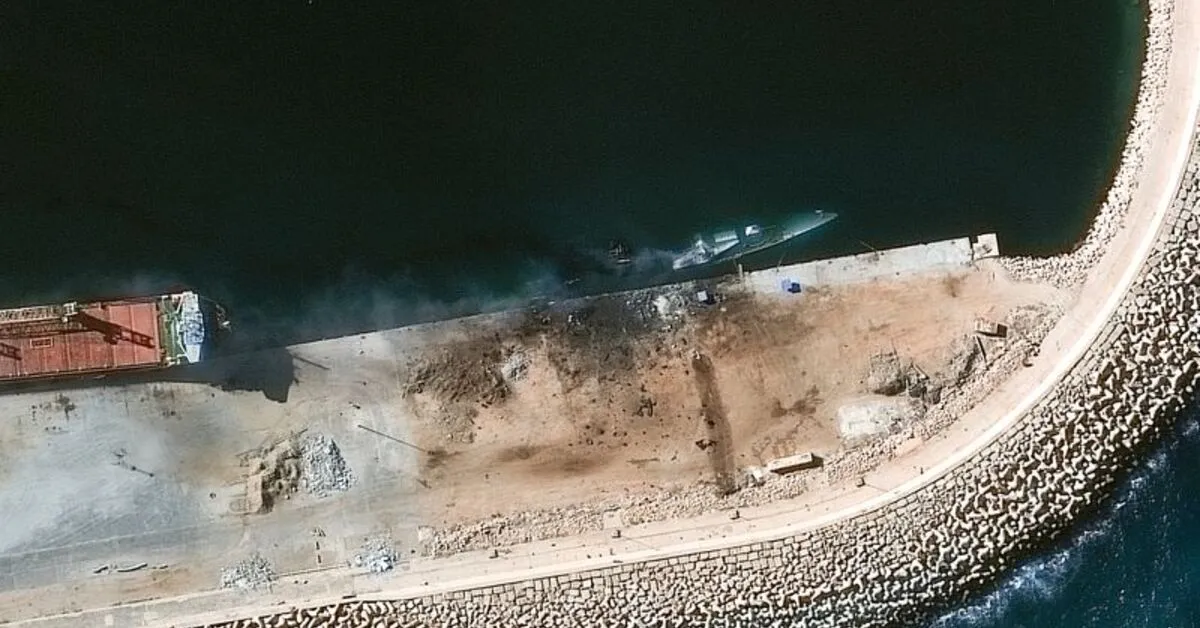
The recent sinking of a Russian naval vessel in a Libyan port underscores the persistent risk of renewed instability stemming from Libya's protracted and multifaceted conflict, which involves numerous regional powers.
Libya descended into its current state of paralysis following the 2011 uprising that toppled Muammar Gaddafi. An attempted transition to democracy faltered as various armed factions established control over territories and economic resources, aligning with rival political groups. By 2014, disputes following an election led to the establishment of a parallel administration in the east, recognizing Khalifa Haftar as the military chief, while most members of the new parliament relocated eastward.
A United Nations-backed political agreement aimed at reunifying Libya was rejected by eastern factions. In 2019, Haftar's Libyan National Army (LNA) launched an offensive on Tripoli, supported by the United Arab Emirates, Russia, and Egypt. This assault was ultimately repelled by western factions with Turkish backing, resulting in a 2020 truce that halted large-scale hostilities. Subsequent UN efforts to resolve underlying disputes led to the formation of an interim Government of National Unity and a plan for elections in 2021, but the vote was canceled due to disagreements over electoral rules and candidate eligibility. The conflict remains frozen, with the country divided and foreign powers maintaining a significant presence on the ground.
Several international players are deeply involved in Libya. Russia has supported Haftar, with reports indicating the presence of its mercenaries and the expansion of its military facilities. Ukraine is reportedly involved in training forces aligned with the Tripoli government and conducting operations against Russian targets. Turkey deployed forces in 2019 to support the internationally recognized government and maintains a military presence in western Libya, alongside a significant maritime agreement. The UAE has provided military support to Haftar since 2014, viewing him as a counter to Islamist-aligned factions, and has also cultivated ties with current Libyan leadership.
While efforts are underway to unify Libya and resolve its conflict, significant hurdles remain. A US-led initiative aims to establish a framework for unifying state institutions and paving the way for elections, reportedly focusing on power-sharing agreements between key families in the east and west. However, analysts express concerns that entrenched power brokers may impede genuine change and the prospect of meaningful elections.
Libya's instability reverberates beyond its borders through its vital oil sector, a primary objective for all factions. Frequent production and export disruptions impact global supply. Furthermore, Libya's position as a major departure point for migrants crossing the Mediterranean presents a significant concern for European countries.