Yemen's Minister of Oil and Minerals, Mohammed Abdullah Bamqah, has revealed plans to import household gas from abroad to address shortages in liberated areas, attributing the decision to insufficient domestic production. This announcement has raised critical questions regarding the role of the Balhaf gas export project and whether its export agreements have deprived Yemenis of affordable gas and energy.
The minister's justification for importing gas, made during an interview with the official "Yemen" channel, appears contradictory. While he stated that production from the Safer fields in Marib is insufficient for local consumption in liberated areas, the reasons behind this alleged limitation in production capacity remain unclear. He noted a drop in Safer's daily output from 128 to approximately 54 gas tankers, asserting these quantities are inadequate for local demand. When questioned about increasing production, Bamqah cited the need for substantial financial resources and capabilities.
This explanation has been deemed unconvincing, particularly given the substantial daily revenues generated from gas sales and the high demand exceeding production. The significant profitability of increasing production suggests that financial resources could be secured for such an endeavor. Unlike electricity services, which often struggle to attract private sector investment due to their non-profit nature, gas sales represent a lucrative business.
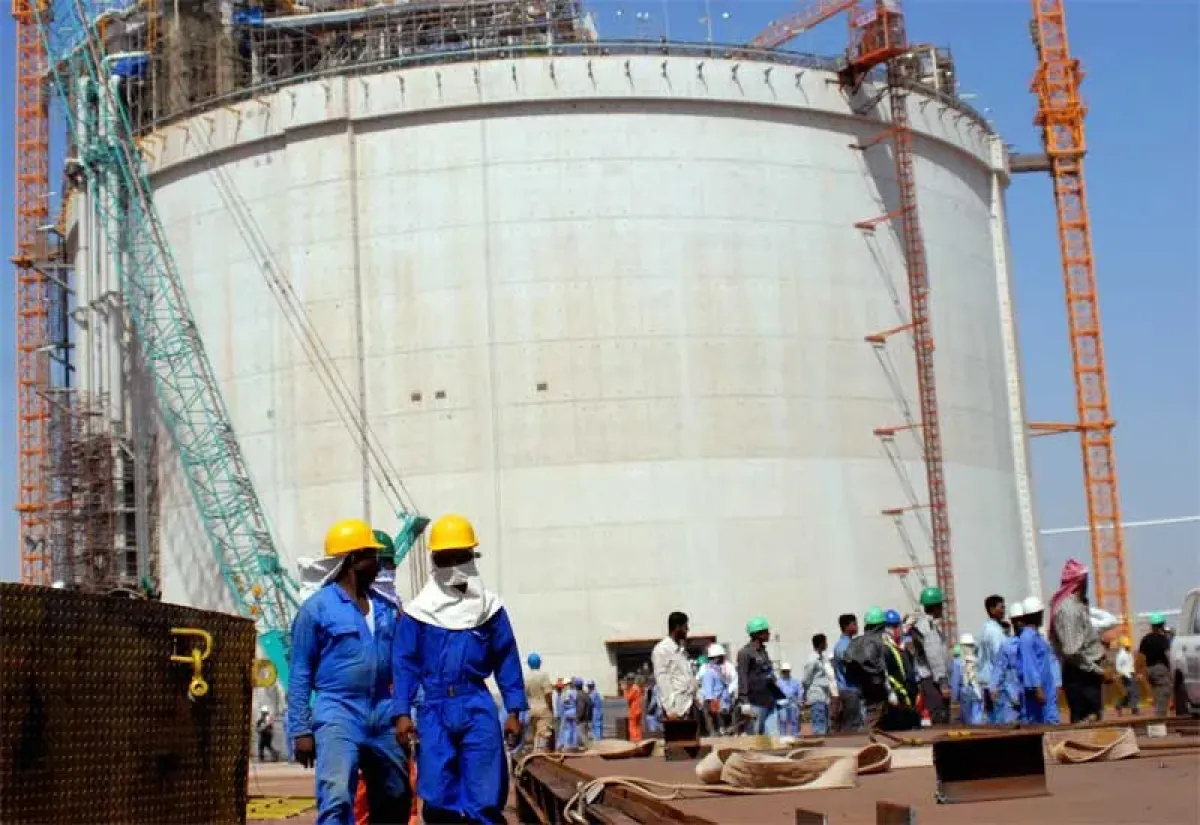
Furthermore, the minister implicitly acknowledged a potential underlying issue when discussing the prospect of importing gas despite Yemen possessing an operational gas export project, Balhaf, which has been idled since the war began in 2015. In the same interview, Bamqah disclosed that the government agreed last month with the operating company and partners to extend the project's suspension for another two years.
The contradiction between importing and exporting gas became apparent when the minister addressed the electricity crisis in Aden and the issue of securing fuel oil for the city's largest power plant, "PetroMasila." He stated that the country's available gas reserves are insufficient for domestic consumption. He later explained this by citing difficulties in transporting gas from the Marib fields to Aden. However, he also alluded to the government's agreements with Balhaf project partners, implicitly referring to the division of Yemen's gas reserves.
The minister explicitly stated, "We have agreed with foreign companies to sell quantities of gas. Therefore, the quantities of gas currently used for household consumption and vehicles from Safer are not enough for the local market in the first place." This statement confirms long-standing concerns raised by activists about the negative repercussions of Yemen's gas export agreements and an inequitable distribution of national gas reserves.
This division was highlighted in a UN plan approximately two years ago aimed at resolving Yemen's electricity crisis. The plan proposed hybrid energy generation projects combining renewable energy with cheaper fossil fuel-powered plants, specifically gas. A key recommendation was to verify Yemen's gas reserves to assess the economic viability of proposed gas-powered electricity generation plants within the investment plan.
The Ministry of Oil and Minerals had previously presented data indicating Yemen's total natural gas reserves at 18 trillion cubic feet, with only 1 trillion cubic feet allocated for domestic consumption, including electricity generation. The remaining reserves were designated for export. This clarifies the situation, which the oil minister did not explicitly detail, explaining the critical gas shortage in liberated areas, forcing them to import gas and preventing its use in resolving the electricity crisis.
The minister implicitly acknowledged this by mentioning the government's agreement with Balhaf's operating company and partners to reserve enough gas for 1,000 megawatts of power generation, noting that the government is currently seeking funding for the project. This suggests that 1,000 megawatts represents the maximum gas utilization for electricity production available to the government. A plant of this capacity would require approximately 50 billion cubic feet of gas annually if operating on a combined cycle. This figure could double if operating on a single cycle, similar to the Marib gas plant. Over ten years, such a plant would consume around 500 billion cubic feet of gas, which is half of the trillion cubic feet allocated for domestic consumption and electricity generation from the country's reserves, with the remainder exported.