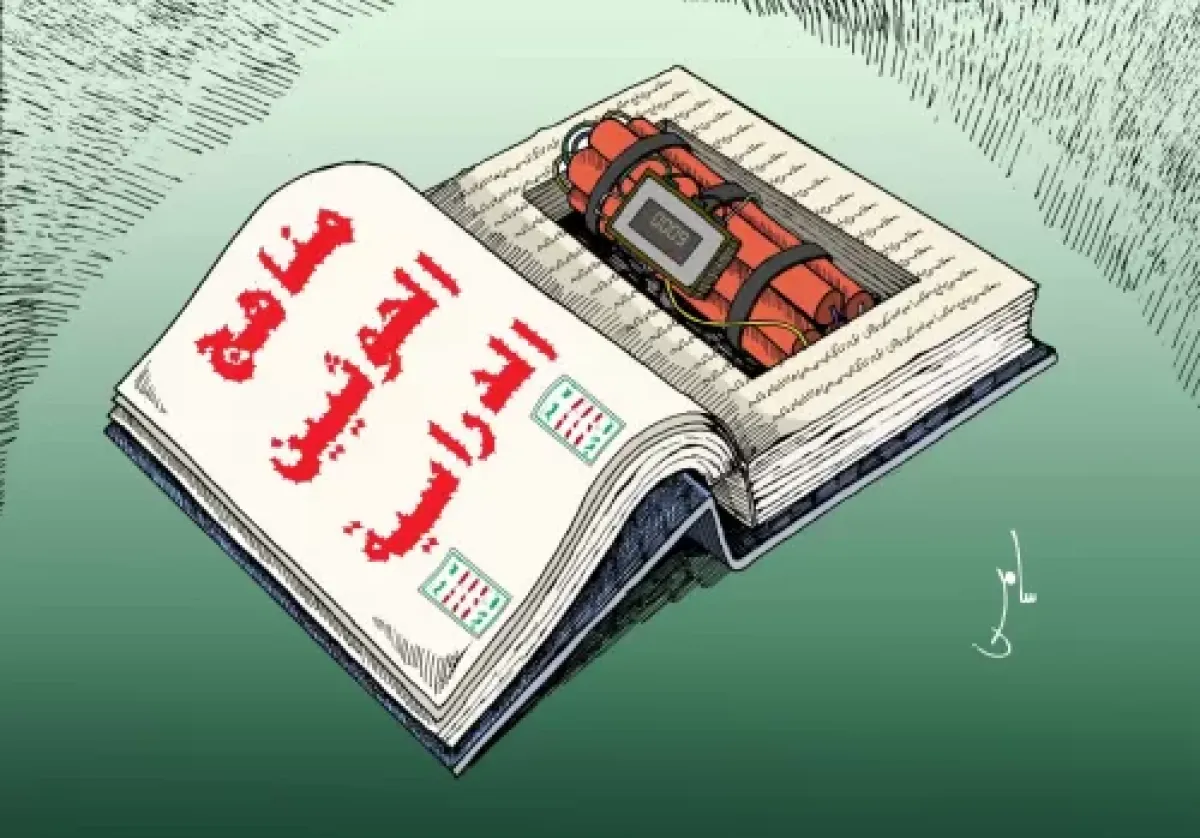
The Houthi faction is facing escalating accusations of weaponizing the Yemeni education system, allegedly manipulating school curricula to promote its sectarian ideology and undermine national identity. This alleged politicization of education is seen as a threat to future generations and a contributor to societal division.
Dr. Ali Al-Abab, Yemen's Deputy Minister of Education, stated that the Houthis have systematically targeted the education sector since their 2014 coup. He claims they have introduced significant revisions to school materials, embedding sectarian and political content aimed at shaping the perception of younger generations according to the group's specific doctrines. Al-Abab further asserted that the Houthis are exploiting educational institutions for child recruitment and conscription into combat roles, contrasting this with the legitimate government's commitment to a unified national curriculum that upholds Yemeni values and the republican system.
Yemen has experienced an unprecedented educational schism for years, characterized by divergent curricula in government-controlled areas versus Houthi-controlled territories. This dichotomy directly impacts educational outcomes and the values instilled in students. The Deputy Minister attributes this division primarily to the Houthi insistence on imposing foreign ideologies and materials that serve their political objectives. He emphasized that restoring state institutions and the educational framework is crucial to resolving this crisis and ensuring students' right to a unified national education.
Official data and specialized reports indicate that the Houthi faction has implemented approximately 530 changes to the curriculum, with a significant concentration in primary education, particularly grades one through six. These alterations have affected subjects like history, reading, Islamic education, and the Quran, incorporating content aligned with the group's ideology, with an emphasis on themes of war, combat, and conflict. Educators view this as an attempt to reorient the cognitive development of young children.
Furthermore, investigative reports reveal that changes in some literature and religious curricula have exceeded 75%, while modifications in middle and high school curricula range from 60% to 65%, reflecting the substantial shifts in educational content over recent years. Observers contend that the most dangerous aspect of these revisions is not merely the alteration of texts but the transformation of schools from educational institutions into platforms for ideological indoctrination. In addition to curriculum changes, the Houthis have reportedly appointed loyalists to positions in numerous schools and organized ideological training sessions for students and youth, raising concerns about the long-term use of education to advance a political and sectarian agenda.
Legal experts and human rights advocates assert that the politicization of education and the subordination of curricula to political or sectarian agendas constitute a clear violation of the Yemeni constitution, which designates education as a means to foster national and humanitarian values and strengthen national unity. The inclusion of content inciting violence or discrimination also contravenes relevant international conventions, notably the Convention on the Rights of the Child, which prohibits the exploitation of education for spreading hatred or inciting violence. They note that curriculum manipulation not only affects students but also impacts society as a whole, as education is a primary tool for shaping collective consciousness and national identity.
The Deputy Minister of Education confirmed that the Yemeni government has repeatedly appealed to international organizations concerned with education and childhood, including UNESCO and UNICEF, to exert pressure for the neutralization of the educational process and to prevent the imposition or printing of curricula inconsistent with the national standards approved before 2014. He pointed out that the Houthi group has consistently reneged on understandings and agreements related to the education sector, perpetuating the crisis and exacerbating its impact on millions of students in their controlled areas.
Observers view the educational struggle in Yemen as no longer solely about curriculum development or improving the school environment but as a battle for the preservation of national identity and the safeguarding of Yemeni state values and institutions. Amidst the ongoing division, local and international calls are increasing to insulate education from political and military conflicts, recognizing it as a fundamental right for every Yemeni child and a key guarantee for building a more stable and secure future. Specialists emphasize that protecting the educational process from political and sectarian polarization is an urgent national priority, and any efforts to rebuild the Yemeni state will be incomplete without restoring education's true role as a space for knowledge, enlightenment, and the promotion of citizenship and coexistence, free from conflicts and ideological agendas.