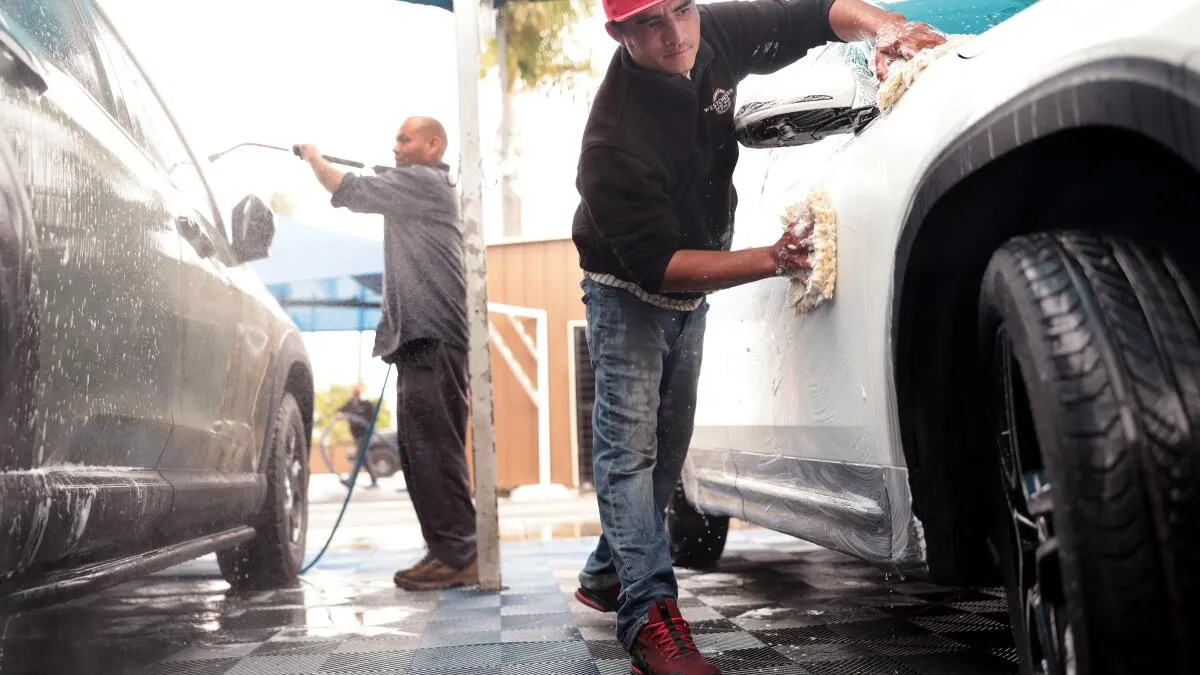
Immigration enforcement actions initiated under the Trump administration have significantly disrupted the operations and workforce of car washes in Southern California, leading to worker shortages, business closures, and profound psychological distress among employees.
Immigrant workers, who form a significant portion of the labor force in industries such as car washes, hospitality, and agriculture, have been increasingly targeted by U.S. Customs and Border Patrol. These sweeps have caused absenteeism, production disruptions, and have prompted workers to take extreme risks. In the car wash industry alone, over 370 workers were detained at approximately 100 car washes across Los Angeles and Orange counties in the past year, according to the labor advocacy nonprofit CLEAN Carwash Worker Center. Some car wash locations experienced multiple raids, with one business owner reporting his establishment was raided three to four times during the industry's peak season.
The persistent enforcement actions have led to considerable staffing issues. Many car washes have struggled to attract new labor due to the physically demanding and now perceived dangerous nature of the job. This has forced some businesses to invest in automation and machinery to compensate for the lack of staff. At least seven car washes in the region have closed entirely, while others have been put up for sale. Mehmet Aydogan, owner of Westchester Hand Wash, described the constant need to monitor immigration enforcement websites and his significant financial strain, including approximately $100,000 in loans and credit card debt, to cope with high worker turnover and an inability to retain experienced staff.
The raids have also inflicted deep psychological trauma on workers. Employees have reported experiencing nightmares, anxiety, and fear following raids. Some have resorted to implementing new security measures, such as stationing an employee at the entrance to watch for federal agents. Labor advocates and unions have responded by organizing "Know Your Rights" training sessions and community patrols. However, the stress of potential enforcement actions can manifest in physical ailments, including sleep disturbances, stomach issues, and headaches, potentially escalating to chronic conditions, substance abuse, and absenteeism, according to Vivi Sanchez Salinas of MiSalud.
In a particularly severe incident, Rafie Shouhed, a 79-year-old car wash owner, was allegedly slammed to the pavement and handcuffed by agents during a raid. Despite being a naturalized U.S. citizen, he was held for 12 hours. His attorney claims he sustained major brain trauma, leaving him anxious and confused. Historical parallels have been drawn to immigrant targeting in the 1980s, with experts noting that current detention periods are longer, and the chances of re-entry after deportation are significantly reduced due to a hyper-militarized border. Local government initiatives are providing financial relief to impacted small businesses, but the overall economic and social toll on immigrant communities remains substantial, as exemplified by families struggling to cope with detained breadwinners and children questioning the reasons behind their parents' detainment.