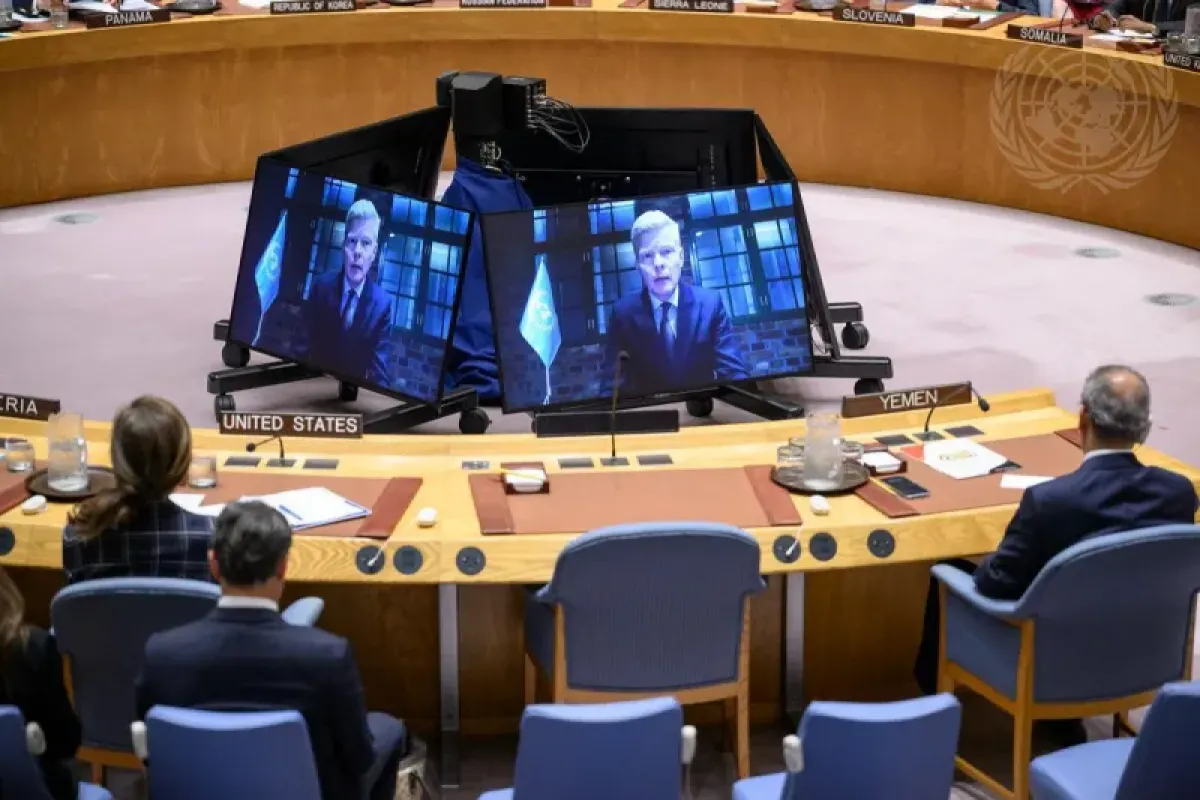
United Nations Special Envoy to Yemen, Hans Grundberg, has called on the UN Security Council to actively work towards overcoming the political deadlock hindering peace efforts in Yemen, emphasizing that the protracted conflict without a comprehensive settlement exacerbates the suffering of Yemenis and perpetuates instability both domestically and internationally.
In a briefing to the Security Council, Grundberg noted that the relative calm established since the 2022 truce has largely held, but the underlying crisis remains unresolved. He highlighted that Yemenis continue to bear the daily cost of the prevailing uncertainty. The entrenchment of front lines in various regions has deepened divisions, depleted resources, and accelerated the militarization of society. He warned that this reality is pushing segments of the population, including students and teachers, towards armed groups as a means of economic survival.
The UN envoy stressed that the fundamental issues driving the Yemeni people's suffering can only be sustainably addressed through comprehensive UN-facilitated political negotiations, stating that the launch of an integrated political process to end the conflict has been long overdue. He suggested that recent regional developments present a new opportunity to advance the political process in Yemen, urging all parties to seize this moment to achieve tangible progress towards a lasting and sustainable settlement.
Grundberg welcomed the announced agreement between the United States and Iran, expressing hope that it will mark a positive turning point for the region. He pointed out that regional tensions in recent years have complicated Yemeni peace efforts and increased mistrust among the parties. He also indicated that the ramifications of recent regional conflict on Yemen have remained relatively limited militarily, with no new attacks recorded on commercial shipping in the Red Sea despite repeated threats, and a continued relative calm within the country.
Economically, Grundberg affirmed that Yemen faces mounting pressures due to rising food and fuel prices and worsening inflation. He noted that heavy reliance on imports and the region's vulnerability to geopolitical tensions have contributed to increased living costs for citizens. He also addressed protests in Aden and other governorates over deteriorating electricity services during the summer, underscoring the importance of economic reforms being pursued by the Yemeni government to improve living conditions, boost public revenue, and restore confidence in institutions.
Regarding prisoners and detainees, the UN envoy disclosed that Yemeni parties reached an agreement last month to release over 1,600 individuals detained in connection with the conflict, following 14 weeks of negotiations in Amman, Jordan, facilitated by the UN. He described this as the largest release agreement since the conflict began, commending the flexibility and willingness of the parties to make concessions despite difficult negotiations and low levels of trust. Grundberg reiterated his call for the swift implementation of this agreement, with support from the International Committee of the Red Cross, to alleviate humanitarian suffering and build trust.
He further demanded the immediate and unconditional release of 73 UN staff members still held by the Houthi group, along with other humanitarian workers, civil society members, and diplomats. He asserted that their continued detention violates international law and undermines the UN's capacity to deliver vital humanitarian assistance to millions of Yemenis in need. The envoy concluded by affirming the UN's continued support for peace efforts in Yemen, emphasizing that a sustainable end to the conflict can only be achieved through an inclusive political process involving all parties under UN auspices.