Scientists have long believed that mammals, including humans, lack the ability to regrow lost body parts, unlike creatures like salamanders. However, groundbreaking research from the Texas A&M College of Veterinary Medicine and Biomedical Sciences (VMBS) suggests that mammals might possess hidden regenerative capabilities, potentially lying dormant within their normal healing processes.
The study, published in Nature Communications, details a novel two-step treatment that successfully stimulated the regeneration of bone, joint structures, and ligaments in mammals. While the regrown tissues weren't perfect copies of the originals, the researchers are optimistic that this approach could significantly reduce scarring and enhance tissue repair following amputations.
"Why some animals can regenerate and others, particularly humans, can't is a big question that has been asked since Aristotle," explained Dr. Ken Muneoka, a professor in the VMBS' Department of Veterinary Physiology & Pharmacology (VTPP). "I've spent my career trying to understand that." The team's research focused on redirecting the behavior of fibroblast cells, which typically form scar tissue during healing, towards a regenerative response similar to the blastema formation seen in salamanders.
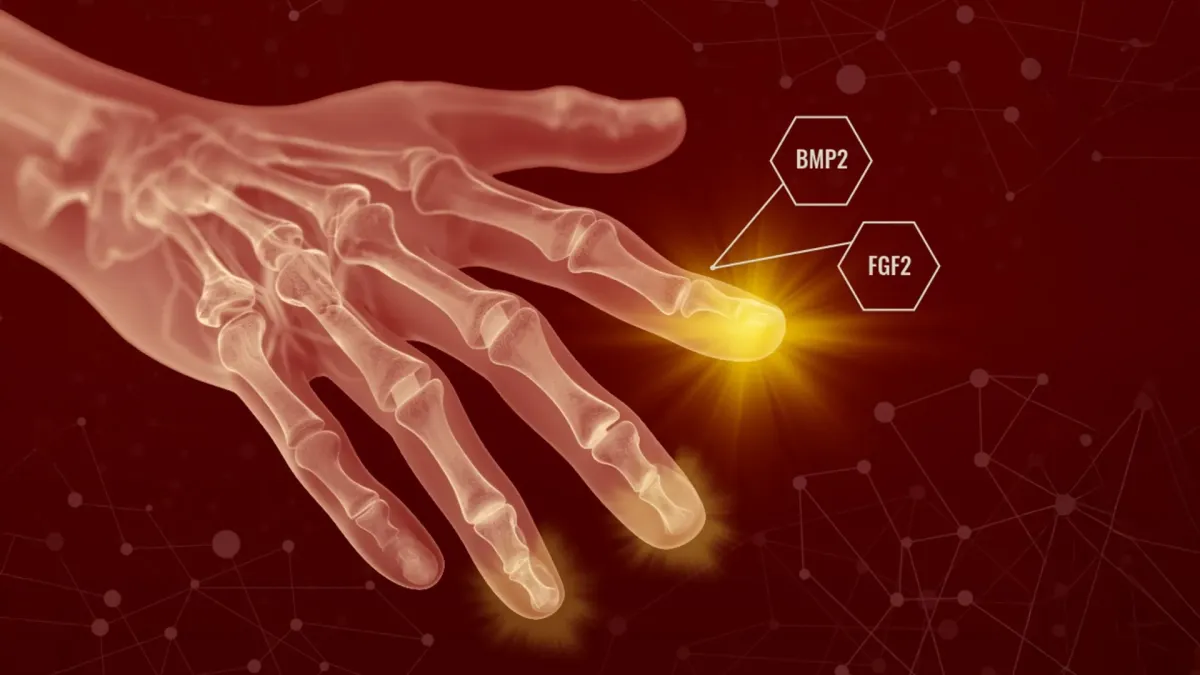
The innovative treatment involves applying two growth factors sequentially. First, fibroblast growth factor 2 (FGF2) is applied after the initial wound has closed, encouraging the formation of a blastema-like structure. Several days later, bone morphogenetic protein 2 (BMP2) is introduced, signaling these cells to begin building new tissues. "It's as if these cells can move in two different directions," Muneoka said. "They could either make a scar or make a blastema. Our research focused on redirecting the behavior of fibroblasts already present at the injury site."
Crucially, the study indicates that regeneration might not require external stem cells, challenging a common assumption in regenerative medicine. "You don't have to actually get stem cells and put them back in," Muneoka stated. "They're already there -- you just need to learn how to get them to behave the way you want." This suggests that the cells' potential is not absent but rather "obscured," according to Dr. Larry Suva, another VTPP professor involved in the study.
While the research is in its early phases, the findings hold promise for improving wound healing by reducing scar formation and enhancing tissue repair, even before full limb regeneration becomes a reality. The potential for clinical application is also bolstered by the fact that BMP2 is already FDA-approved for certain uses, and FGF2 is undergoing clinical trials. "This changes the way we think about what's possible," Suva concluded. "Once you show that regeneration can be activated, it opens the door to asking entirely new questions."