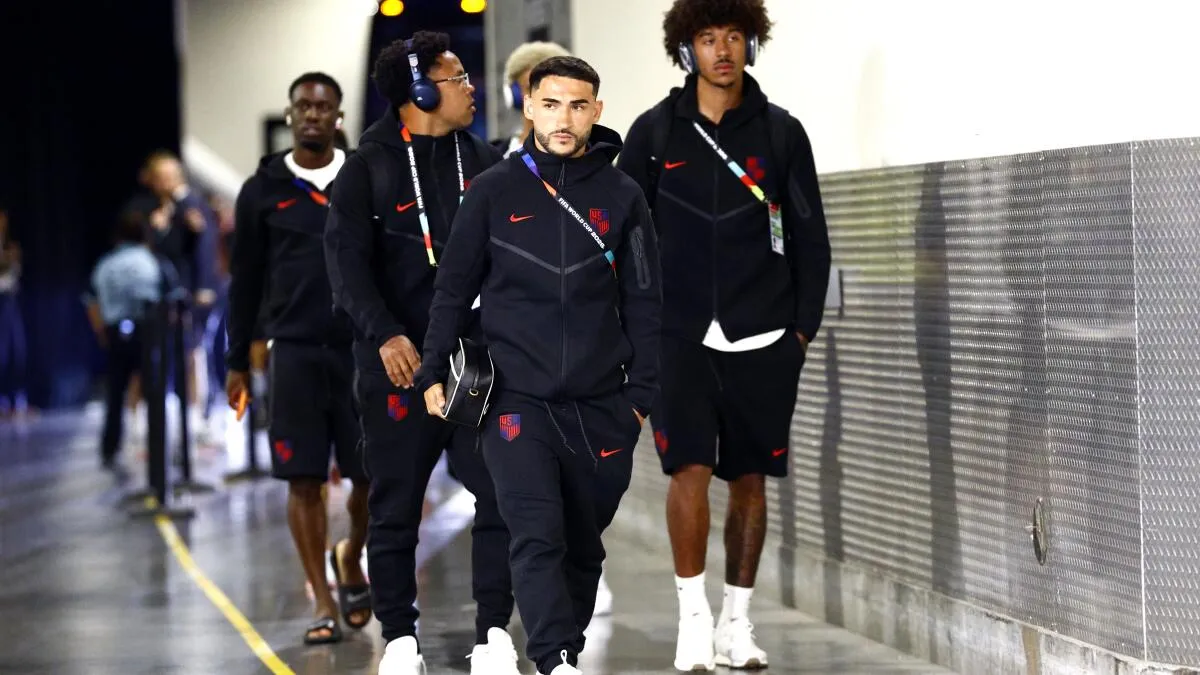
Cristian Roldan, a midfielder for the U.S. Men's National Soccer Team, may represent the last generation of American World Cup players to have developed through the traditional high school system, highlighting a significant shift in player development pathways.
Roldan, who played all four years at El Rancho High School in Pico Rivera, California, stands as a unique figure on the current U.S. World Cup squad. While many of his teammates followed elite academy routes from a young age, Roldan's journey involved playing alongside friends and prioritizing his local community. This path, once common, is increasingly rare as academy systems and elite club leagues demand year-round commitment, effectively sidelining high school athletics.
"I might be the last one," Roldan commented, expressing a hope that his story is not an anomaly. Historically, high school soccer was a crucial developmental stage for American players. In 2002, when the U.S. reached the World Cup quarterfinals, 18 players had participated in high school sports. By 2022, Roldan was the sole player on the roster with a full four-year high school soccer background.
His brother, Cesar Roldan, noted that Cristian's decision to play high school soccer was driven by a desire to remain with his friends, a motivation atypical for aspiring professional athletes. "That is not a standard way to make it into MLS. And forget about making it all the way to the national team," Cesar Roldan stated, underscoring the unconventional nature of Cristian's journey.
The rise of structured academy programs and the Elite Club National League has created a bifurcated system. These elite pathways often require players to choose between high school teams and club commitments, presenting a significant hurdle for those who wish to continue playing for their schools. This shift is seen by some as a disadvantage for U.S. soccer, potentially overlooking talented players who might thrive in the more accessible high school and college sports infrastructure, which is largely free compared to the often costly "pay-to-play" models of elite clubs.
Dominic Picon, who coached the Roldan brothers at El Rancho, expressed concern that this narrowing of scouting scope leads to a loss of talent. "We're losing a ton of kids who never get seen," Picon said. "There's a lot of kids that just get lost in the shuffle simply because we have a very limited scope of how we find players." He highlighted that while baseball, basketball, and football largely retain their high school pipelines, soccer is diverging.
Despite the challenging path, Roldan achieved significant success, leading El Rancho to a CIF Southern Section title and earning national player of the year honors. His mother's proactive approach in reaching out to college coaches ultimately secured him a scholarship to the University of Washington, leading to his professional career with the Seattle Sounders and his national team call-ups. Roldan's story is presented as an "American story" of immigrant parents trusting the public school system, culminating in unexpected yet celebrated success on the world stage.