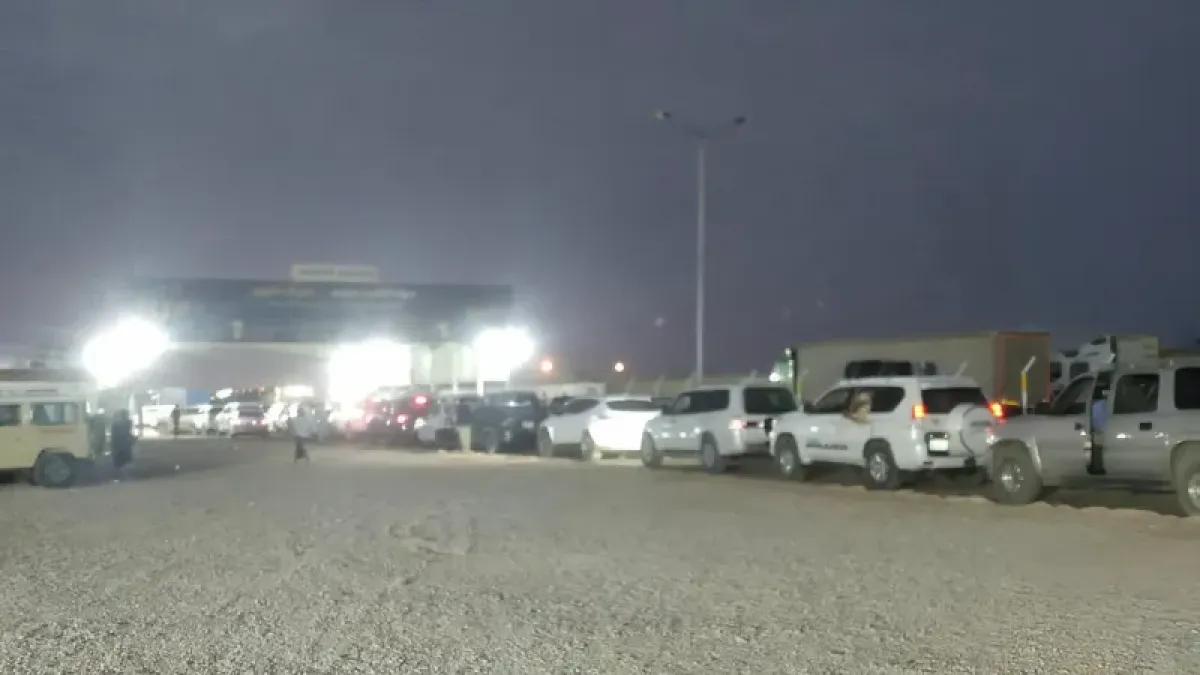
The Al-Wadiah land port, the sole remaining land crossing between Yemen and Saudi Arabia, is once again experiencing severe congestion, leaving hundreds of travelers and vehicles stranded for days. This recurring crisis underscores a continuous failure in addressing critical issues faced by Yemenis traveling through this vital gateway.
Travelers and vehicle operators have voiced significant complaints regarding the slow pace of procedures, inspections, and crossings on the Yemeni side of the port. Numerous families have been forced to endure prolonged waits in the open air, often for days, before being permitted to continue their journeys into Saudi territory.
The suffering of those stranded has been exacerbated by extreme summer temperatures, compounded by a stark lack of essential services typically expected at a port handling thousands of travelers daily. Individuals are facing severe shortages of drinking water, food, and adequate shelter, alongside insufficient medical and emergency services.
Footage circulating on social media platforms depicts extensive queues of cars, buses, and trucks at the port, illustrating the recurrent bottleneck that has become a constant source of anxiety for expatriates, patients, students, and families alike.
Travelers assert that the congestion is no longer an exceptional circumstance tied to travel seasons but has evolved into a chronic problem. This persistent issue recurs almost daily without effective solutions or sustainable measures from the responsible authorities, despite the port's critical importance as Yemen's primary land artery to the outside world.
Observers attribute the recurring crisis to a lack of foresight, inadequate infrastructure development, and insufficient operational services at the port, which are failing to cope with increasing pressure. This is particularly evident given the growing number of expatriates and travelers who rely on Al-Wadiah as their sole option for overland travel.
In response, the port administration has issued a new advisory urging travelers to obtain prior transit permits before heading to the port, warning that arrivals without confirmed appointments may face delays or be denied passage. They also reiterated regulations concerning customs prohibitions, including the ban on importing tobacco, shisha, and qat into Saudi Arabia.
However, travelers argue that while these directives are organizationally important, they do not address the core problem: the port's limited capacity, slow procedures, and inadequate services. They emphasize that the crisis demands comprehensive solutions that go beyond administrative advisories, necessitating improvements in operational infrastructure, expansion of reception and transit facilities, and enhancement of traveler services.
The renewed congestion occurs amidst escalating public calls for immediate intervention from the government and relevant authorities to end the suffering of thousands of Yemenis. These recurrent crises over years raise serious questions about the reasons for their persistence and highlight significant neglect within the country's land port sector.