Authorities in Marib, controlled by the Islah party (an affiliate of the Muslim Brotherhood), have escalated practices against journalists, drawing stark parallels with the repressive tactics employed by the Iran-backed Houthi militia in their controlled territories. This crackdown raises significant concerns about the shrinking space for freedom of expression in Yemen.
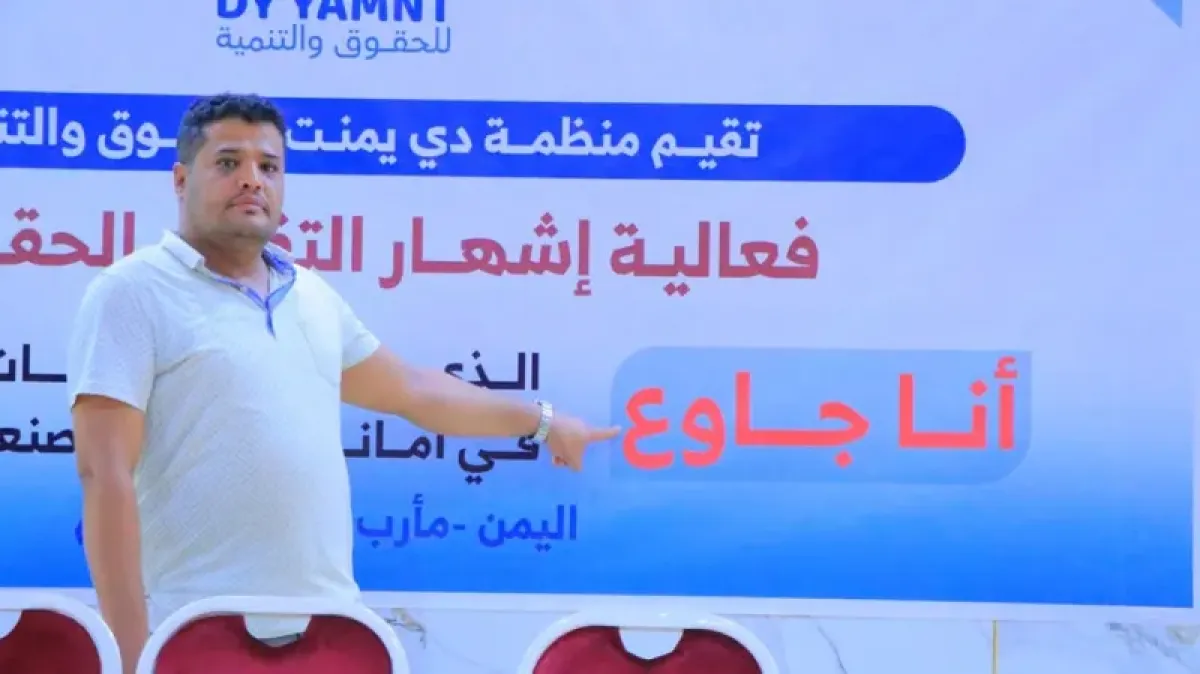
Security forces in Marib reportedly arrested journalist Hammoud Hazaa while he was covering a national alignment event at the Grand Hall in Marib city. He was subsequently taken to an undisclosed location and has been subjected to enforced disappearance for two consecutive days. No official explanation regarding his fate or the legal basis for his detention has been provided.
This incident evokes memories of the Houthi practices in Sana'a and other areas under their control, where arbitrary arrests, enforced disappearances, and the persecution of journalists have become systematic policies aimed at silencing critical voices and restricting independent media work. This is not the first time Hazaa has faced violations from Marib authorities; he was previously arbitrarily arrested and forcibly disappeared in August of the previous year after his home was raided, his family terrorized, and his personal belongings confiscated. He was later transferred to military police custody and released three days later, an event that sparked widespread condemnation at the time.
Hazaa's disappearance has triggered a wave of human rights and media condemnations. The "Masarat" Center for Media Freedoms expressed deep concern over his continued disappearance, holding the security authorities in Marib fully responsible for his safety. The center demanded the immediate disclosure of his detention location and that his family and lawyer be allowed to communicate with him. Masarat emphasized that any allegations or charges must be processed through legal and judicial procedures guaranteed by the constitution and prevailing laws, rather than through extrajudicial detention or enforced disappearance, which constitute flagrant violations of public rights and freedoms.
The Yemeni Journalists Syndicate "Sada" and numerous other human rights organizations have also called for swift clarification of the missing journalist's fate, considering his continued disappearance a cause for serious concern for his life and safety and indicative of a dangerous decline in the environment for press freedom. Observers suggest that the events in Marib signify an unannounced partnership between the Brotherhood and the Houthis in suppressing freedoms. While their political slogans differ, their methods of dealing with journalists, writers, and activists—through persecution, arrest, disappearance, and intimidation—are remarkably similar, aiming to impose greater control over the media landscape and prevent the dissemination of dissenting opinions.
These practices reveal a grim reality for Yemeni journalism across various spheres of influence, where freedom of expression has become a direct target of violations. Journalists are paying the price for their commitment to reporting the truth and practicing their profession in an increasingly hostile environment. Data from the Media Freedoms Observatory indicates that 2,675 violations against journalists and media outlets were documented between 2015 and 2025, with the Houthi militia topping the list of perpetrators. Other parties, including the de facto authorities affiliated with the Brotherhood, have also recorded a series of violations that have contributed to stifling freedoms and undermining media work in Yemen. Human rights activists assert that the continuation of these violations without accountability encourages further repression and solidifies a culture of impunity, at a time when the need to protect journalists and ensure their right to work freely, without threats, arrest, or persecution, is more critical than ever.