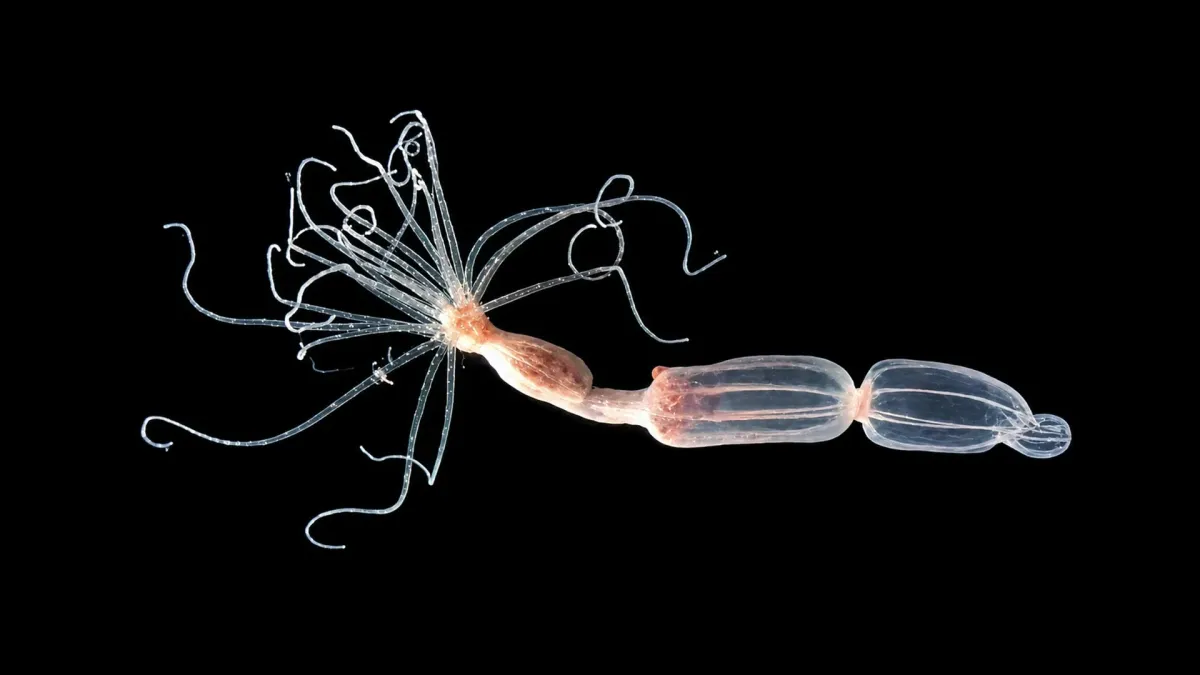
Scientists have uncovered a totally new way sea anemones fight off viruses, suggesting animal immune systems evolved in more diverse ways than we thought. This defense uses a protein similar to a key human antiviral one, but it does the opposite job while still protecting the animal. The discovery challenges the idea that animals inherited a single core antiviral system, pointing instead to multiple evolutionary solutions for fighting viral infections.
Researchers studied sea anemones, ancient marine animals that split from the evolutionary path leading to humans over 600 million years ago. These creatures are close relatives of corals and jellyfish, offering a unique look into early animal immunity.
The team found a protein named CARDIB, which initially looked a lot like MAVS, a crucial antiviral protein in humans that helps trigger immune responses. However, experiments revealed CARDIB actually suppresses antiviral defenses under normal conditions. "Everything about CARDIB suggested it should function like MAVS," said Prof. Yehu Moran, a lead researcher from the Hebrew University of Jerusalem. "Instead, we discovered that it does the exact opposite."
Curiosity about why an animal would suppress its own immune system led the researchers to use CRISPR gene editing to remove the CARDIB gene. Sea anemones without CARDIB became far more vulnerable to viruses, with infections spreading rapidly and their defense mechanisms failing. "Although CARDIB acts as a brake on the immune system under normal conditions, that brake turns out to be essential for mounting an effective antiviral response," explained Ton Sharoni, a PhD candidate on the project.
To confirm these findings, genetically modified sea anemones were placed in outdoor marine environments. Those lacking CARDIB accumulated significantly more viruses than their unmodified counterparts, showing that this newly found pathway is vital for dealing with real-world viral threats. "This demonstrated that the pathway we discovered is not simply a laboratory phenomenon," added Moran. "It plays a crucial role in helping these animals cope with the viral challenges they face in nature."
The research suggests that evolution didn't settle on just one antiviral strategy. Instead, different animal groups might have independently developed unique molecular systems to detect and combat viruses. This highlights the value of studying ancient organisms like sea anemones, as they can preserve evolutionary innovations that might be missed if scientists only focus on commonly studied species.