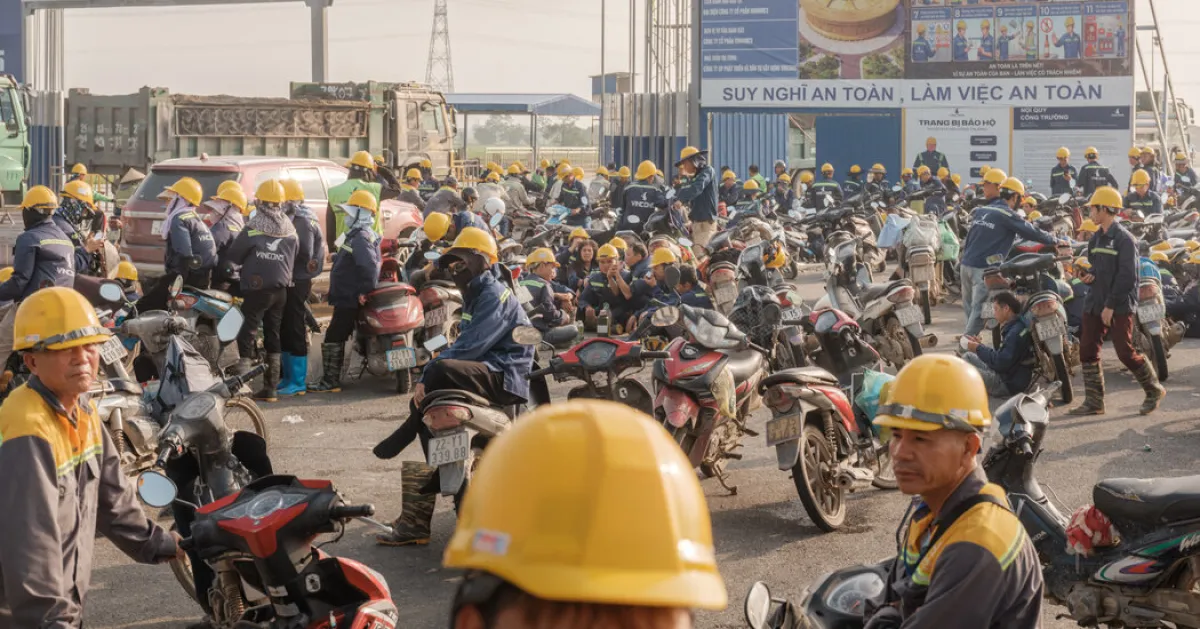
Construction of Vietnam's colossal Hung Vuong Stadium, designed to accommodate 135,000 spectators, is accelerating amidst global economic instability, highlighting a widening gap between large corporations and struggling small businesses.
The ambitious stadium project, located outside Hanoi and intended to resemble a Vietnamese drum, commenced construction shortly before geopolitical events intensified global economic turmoil. Despite these challenges, the stadium and its associated urban development have seen expanded and expedited progress.
The Vietnamese government is relying on large-scale infrastructure projects to counteract potential economic slowdowns attributed to international conflicts and trade disputes. Prominent state-backed enterprises, such as Vingroup which is developing the stadium, are experiencing significant growth. Similarly, major foreign manufacturing companies have established Vietnam as a key export hub, while smaller local businesses face considerable hardship and displacement.
Pham Thi Mui, a 36-year-old owner of a bedding factory near the stadium site, described the difficult operating environment for small enterprises. "For small companies like us, it’s so challenging, it’s harder, and it’s not fair," she stated, detailing how these businesses are often the first to suffer during economic downturns despite their dedication.
This disparity mirrors a global trend where large corporations tend to expand during periods of economic shock, while smaller, local firms are pressured by inflation and energy scarcity. The Vietnamese government and its banking sector, having heavily invested in specific industries like real estate, have offered limited support to these smaller entities.
Experts observe Vietnam's economic model with a mixture of optimism and caution. Recent analyses from the World Bank point to an "uneven growth model," where global firms boost exports but provide minimal local economic benefits due to low wages and the limited integration of Vietnamese companies into higher-value supply chains.