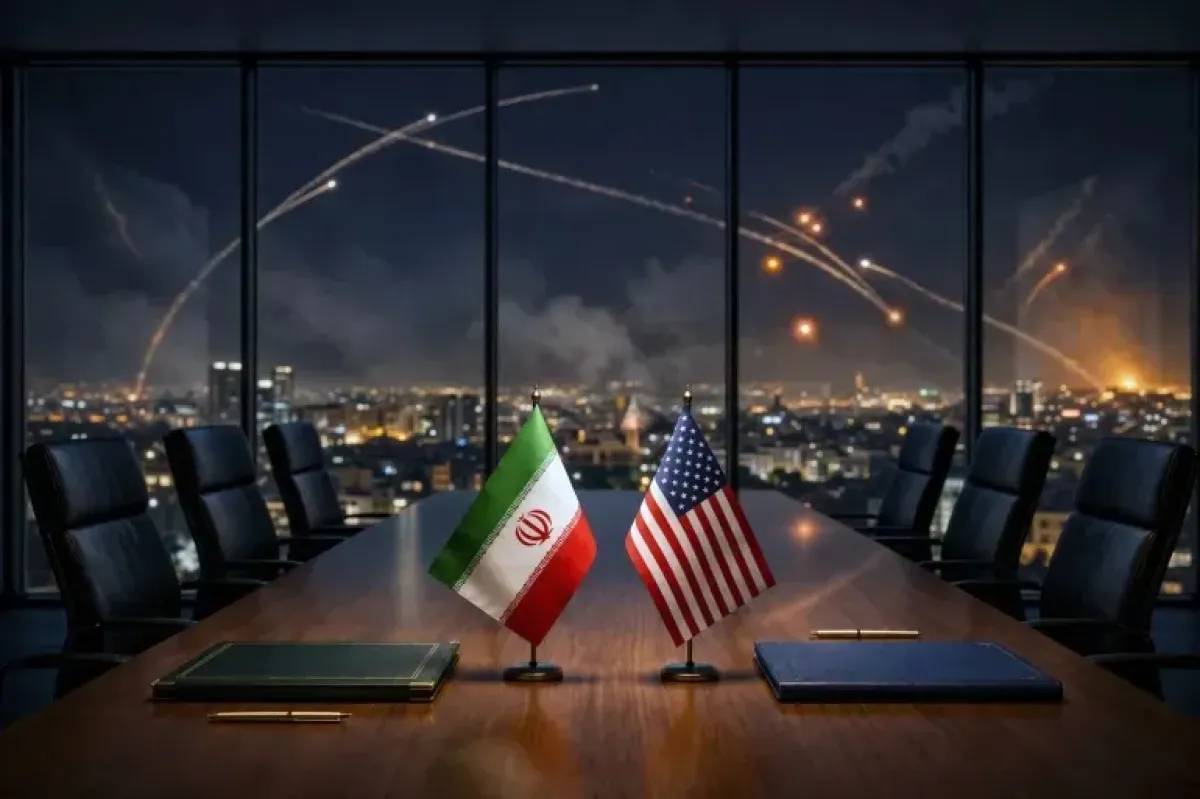
Tehran has escalated its regional actions by targeting U.S. military bases in Gulf states and Jordan, marking a significant shift in its strategy. This expansion directly threatens American military infrastructure in the Middle East and increases the risk of a broader regional conflict, jeopardizing the security of host nations.
The Islamic Revolutionary Guard Corps (IRGC) claimed responsibility on Sunday for missile attacks on U.S. military sites in allied Gulf nations and the Al-Hasan Air Base in Jordan. Tehran asserted that these strikes targeted command and control centers and facilities for MQ-9 drones, justifying the actions as a response to U.S. military movements in the region.
Concurrently, U.S. Central Command announced one of its most extensive air campaigns against Iran since hostilities began. The U.S. military reported striking approximately 140 military targets within hours, including missile launch sites, drone facilities, ammunition depots, naval installations, and communication networks. These operations, according to U.S. officials, aim to degrade Iran's capacity to threaten international shipping and U.S. forces stationed in the region.
The Iranian attacks have also impacted civilian areas. Qatar's Ministry of Interior reported four injuries, including a child, from shrapnel resulting from missile interceptions. The ministry confirmed that emergency and civil defense plans were activated, and the injured are receiving medical care. In Bahrain, the General Command of the Defence Force announced the successful interception and destruction of Iranian missiles and drones targeting the Kingdom, elevating military readiness to its highest level and denouncing the attacks as violations of international humanitarian law.
The targeting of U.S. bases in the Gulf and Jordan signifies a notable evolution in Iran's strategic approach. The confrontation is no longer confined to reciprocal strikes within Iranian territory or territorial waters but has expanded to include countries hosting U.S. forces. This development presents escalating security challenges for these nations, even as they endeavor to remain neutral in the conflict.
Analysts suggest that the inclusion of Jordan in Iran's target list carries strategic implications, indicating Tehran's perception of the U.S. network of bases from the Gulf to the Levant as an interconnected military system. This implies that any U.S. base in the region could become a target if the escalation continues. The strikes also heighten concerns regarding the security of vital infrastructure and energy markets, given the region's critical role in global oil and gas production and exports.
The reciprocal escalation suggests that both parties are attempting to establish a new deterrence equation. However, the widening scope of attacks, extending to allied nations of the United States, increases the likelihood of a larger regional confrontation. Such an outcome could push the region into a more perilous phase with potentially uncontainable political, security, and economic repercussions, particularly if future strikes result in casualties or target strategic installations.