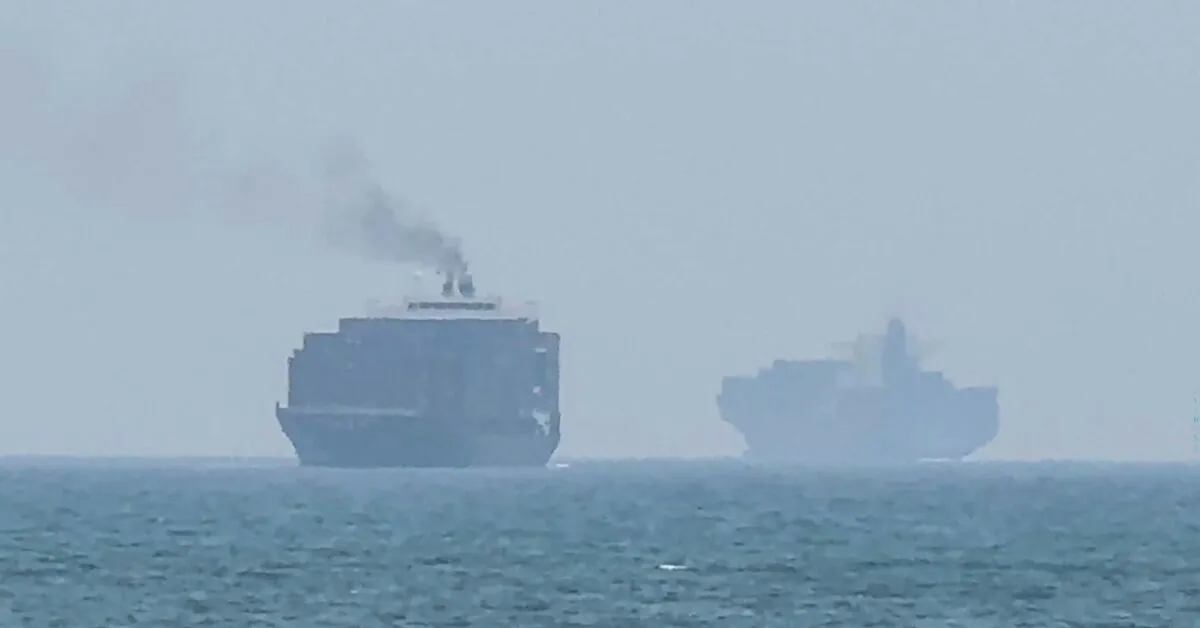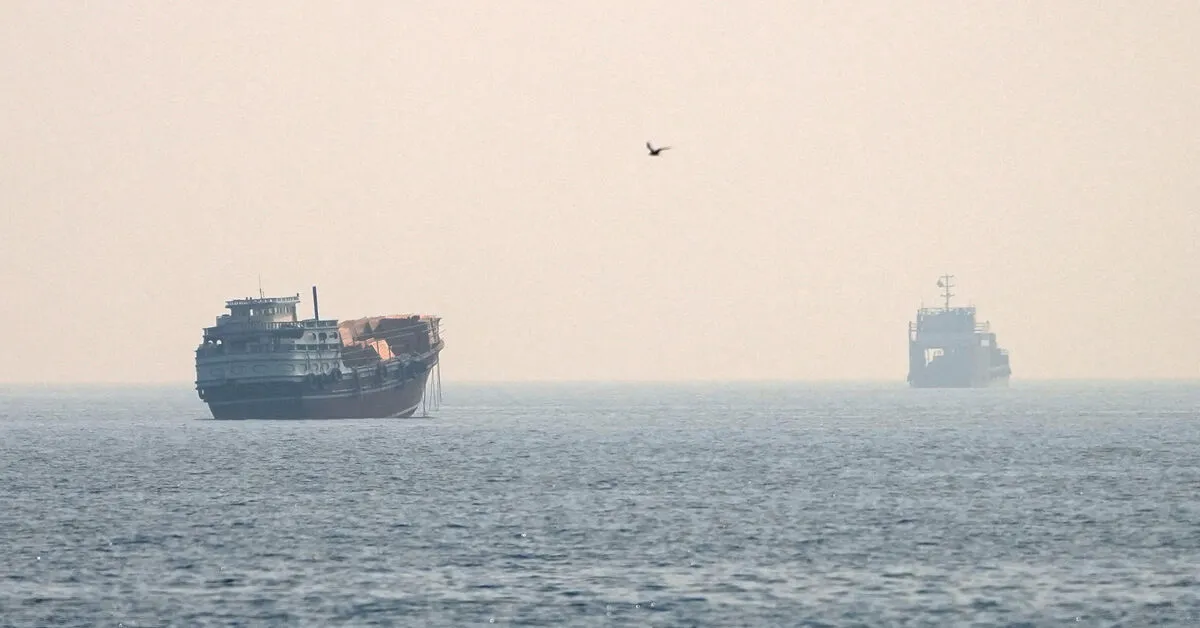
The number of vessels transiting the Strait of Hormuz increased on Tuesday, with the majority linked to Iranian trade, just prior to the implementation of a U.S. naval blockade on Wednesday, according to shipping data.
U.S. President Donald Trump reimposed a naval blockade on all Iranian ports on Tuesday, threatening further action against infrastructure if Tehran did not re-engage in negotiations. This measure marks an escalation in the ongoing conflict between the United States and Iran.
Shipping data from Kpler indicated that nine out of eleven vessels passing through the strait on Tuesday utilized the Iranian route. Among these, three empty oil tankers—one Aframax-sized and two Very Large Crude Carriers (VLCCs)—entered the strait. Vessels exiting the strait with Iranian exports included a VLCC carrying two million barrels of crude, a medium-range tanker with refined products, and two tankers laden with liquefied petroleum gas.
A laden methanol tanker and a dry bulk carrier carrying iron ore also departed the Gulf on Tuesday. Notably, there were no discernible entries or exits for tankers intending to load oil and gas from other Gulf producers on the same day. Shipping activity through the Strait of Hormuz, which handles approximately one-fifth of global oil and liquefied natural gas shipments daily, had significantly slowed due to heightened tensions and strikes between the U.S. and Iran in the Middle East.
The United States reported on Tuesday evening that Iran had attacked seven commercial ships in the preceding week, resulting in numerous crew casualties, including fatalities and injuries. Attacks on Emirati supertankers have contributed to a strengthening of Middle East spot crude prices this week, with prompt month prices exceeding future month prices, signaling tighter supply conditions. Analysts at Goldman Sachs noted in a Wednesday report that the recovery of Gulf shipping flows might be protracted, even following a de-escalation of geopolitical tensions, citing shippers' risk aversion on non-Iranian routes after recent tanker attacks.