Democrats are increasingly adopting a pragmatic approach in their midterm campaign strategy, emphasizing affordability and shifting away from ideological arguments to connect with voters on economic concerns. This tactic aims to counter the perception that the party is detached from everyday realities and to capitalize on voter focus on the economy.
Across the nation, Democratic candidates are framing issues in economic terms and highlighting real-life scenarios to win over voters. Strategists believe this focus on affordability, particularly as inflation and high gas prices persist, presents a significant opening. They aim to leverage this by presenting Democrats as the party addressing tangible economic challenges, a contrast to former President Trump's dismissive stance on affordability, which he has called a "hoax."
Democratic strategist Alex Jacquez noted a learning curve within the party to effectively link Republican actions to their real-world economic consequences for candidates. He suggested the current political climate is opportune for the party to redefine its image. The Democrats' messaging centers on elevated inflation, the impact of tariffs, and rising energy costs, aiming to secure a House majority and potentially influence the Senate.
Polling indicates widespread pessimism regarding the economy, with a majority of Americans perceiving an affordability crisis. Voters frequently cite government leadership and economic issues as the nation's most pressing problems. Furthermore, disapproval of former President Trump's economic stewardship is growing, even among key segments of his base. In a recent poll, Americans gave Trump his lowest-ever approval rating on the economy.
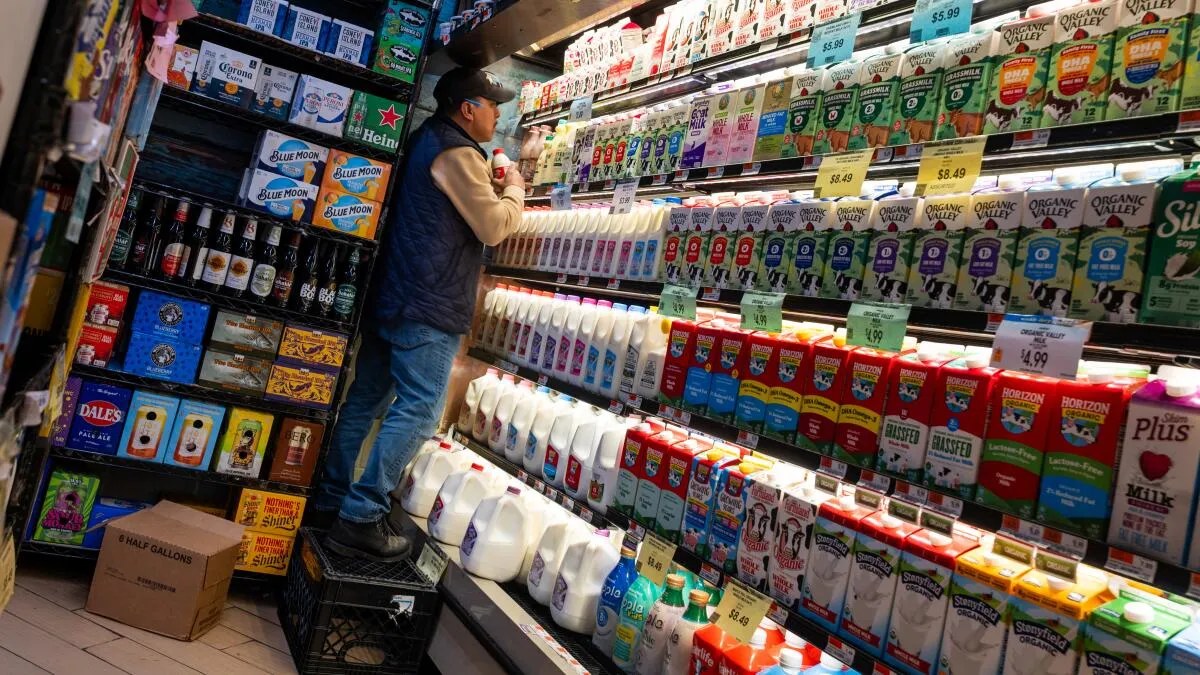
Representative Adam Gray, a Democrat from a swing district, observed that voters are frustrated by Washington's perceived disconnect from their concerns. He cited examples of Central Valley growers affected by rising fuel and fertilizer costs, labor market challenges, and federal program changes. Gray emphasized that voters' political experience is rooted in practical matters like grocery shopping or fuel prices, rather than abstract ideological debates.
This "practical" messaging strategy is seen by some as a path forward for Democrats, particularly as the party navigates its identity beyond opposition to Trump and internal divisions. In Texas, candidates are reportedly linking issues like water supply and the state's abortion ban to practical consequences. Matt Angle, director of the Lone Star Project, believes Democrats are improving at communicating these issues in pragmatic rather than ideological terms.
Republican strategists acknowledge this shift, with Brittany Martinez suggesting that Democrats are making a clear move in this direction, though she cautioned that internal party outliers could potentially derail this message. The National Republican Congressional Committee has criticized Democrats' economic record, questioning their ability to authentically address "kitchen-table issues." Conversely, Joe Gruters of the Republican National Committee expressed confidence in retaining congressional majorities, emphasizing Trump's commitment to the American worker and economic recovery.
Despite Republican efforts, Martinez noted that Trump's own comments mocking affordability could hinder the GOP's efforts to attract swing voters, creating an opportunity for Democrats. Both progressive and moderate factions within the Democratic Party see this as a chance to define their platform. Usamah Andrabi of Justice Democrats stated that framing issues in economic terms has long been a progressive strategy and encouraged other wings of the party to adopt it, while also stressing the importance of not abandoning other critical issues.
Climate advocates are also connecting environmental concerns to voter priorities. Jamie Henn of Fossil Fuel Media advises Democratic candidates to frame climate issues in terms of reducing utility bills and connecting them to energy costs, rather than purely scientific discussions. However, Henn cautioned that translating these connections into effective political messaging remains a challenge for many candidates.