Houthi leader Abdul Malik al-Houthi has escalated threats against Saudi Arabia, targeting airports and vital oil facilities, in a rhetoric aimed at deflecting from severe internal economic and humanitarian crises within territories controlled by the group. This comes in the wake of recent airstrikes targeting Sanaa Airport.
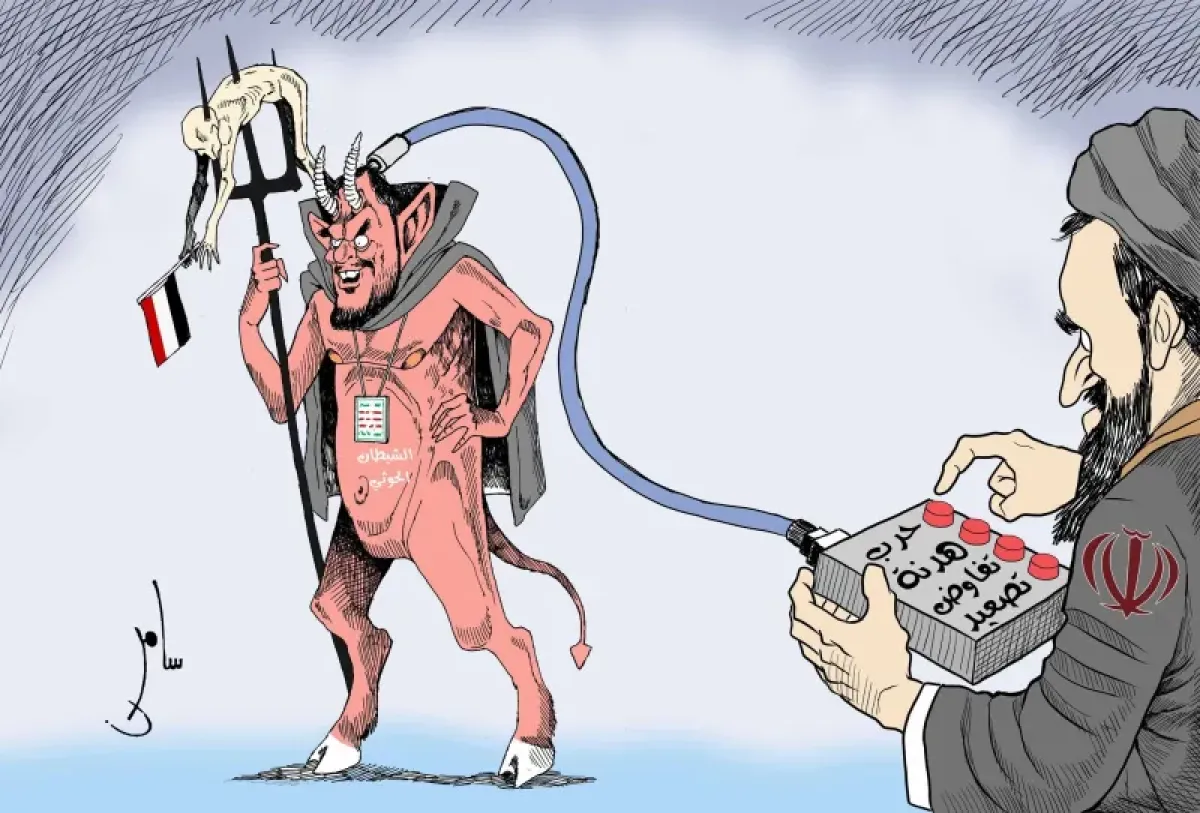
In his first public appearance since the Sanaa Airport attack, al-Houthi declared that his group would adopt a "ports for ports, blockades for blockades" approach. He warned that Saudi Arabia's airports and critical infrastructure would become targets for Houthi missiles and drones should Riyadh engage in any military escalation against them. He also called upon his fighters to increase their readiness for a new phase of escalation.
Al-Houthi reiterated accusations against Saudi Arabia for the "starvation of the Yemeni people" and the deprivation of oil and gas resources. He expanded these accusations to include the United States, the United Kingdom, and Israel, alleging coordinated efforts with Riyadh to target what he described as the "axis of resistance." This aligns with his consistent political discourse linking internal Yemeni crises to regional and international conflicts.
However, observers noted a significant paradox in al-Houthi's speech. It implicitly acknowledged the deteriorating living conditions and severe suffering of the population in Houthi-controlled areas, while failing to address the internal factors contributing to this crisis after more than a decade of the militia's coup and seizure of state institutions. Analysts suggest that al-Houthi attempted to shift focus from domestic issues to external confrontation through renewed war rhetoric, avoiding discussions on corruption, arbitrary taxation, and the withholding of public revenues and salaries – key elements of the crisis in these regions.
Despite advocating for the "lifting of the blockade and restoration of rights," al-Houthi's speech omitted any review of the economic policies implemented by the group's authorities. These policies have imposed numerous fees and taxes on goods, merchants, and suppliers, directly inflating food prices and increasing the burden on citizens. Analysts point out al-Houthi's criticism of fees imposed on goods at ports outside Houthi control, while ignoring similar taxes levied on goods entering Houthi-controlled areas, such as flour at the Al-Raha checkpoint, which has exacerbated the cost of essential items and contradicts his stated defense of the populace.
Furthermore, al-Houthi raised the issue of salaries as a point of contention with Saudi Arabia, without explaining the continued non-payment of salaries to hundreds of thousands of state employees in Houthi-controlled areas or revealing the fate of revenues collected over recent years, including funds gathered for salary support and special funds, which have seemingly translated into further taxation and price increases. Experts believe the speech also overlooked the period of relative calm following the UN truce, which could have been an opportunity to address economic and administrative imbalances and improve public services. Instead, the group reportedly used this period to enhance its military capabilities and expand its taxation and mobilization systems without tangible improvements in living standards.
Al-Houthi also failed to address critical issues such as the state of education and the Teachers' Support Fund, from which billions of riyals were reportedly collected while thousands of teachers continue to face unaddressed hardships. His speech similarly neglected to mention ongoing arrests, violations, and the restriction of public freedoms in areas under the group's control. Observers suggest that a return to external confrontation rhetoric aims to re-mobilize supporters and divert attention from worsening internal crises, fueled by widespread popular discontent over economic collapse, deteriorating services, and continuous taxation. Military threats have become a recurrent tactic to justify internal failures and project the group as being in a perpetual state of conflict.
Analysts emphasize that a regime's true measure lies not in its ability to issue threats or expand conflict zones, but in its capacity to manage state institutions, safeguard public resources, improve citizens' livelihoods, and provide salaries and essential services. Critics contend that the Houthi group has failed to address these fundamental areas, despite over a decade of controlling Sanaa and state institutions. This escalation occurs amid growing fears of cross-border confrontations, following recent tensions related to Sanaa Airport and subsequent accusations between the Yemeni government and the Houthi militia. Warnings suggest that the continued rhetoric of threat and escalation could push the region into a new phase of tension, leaving the humanitarian and economic crises facing Yemenis unresolved.