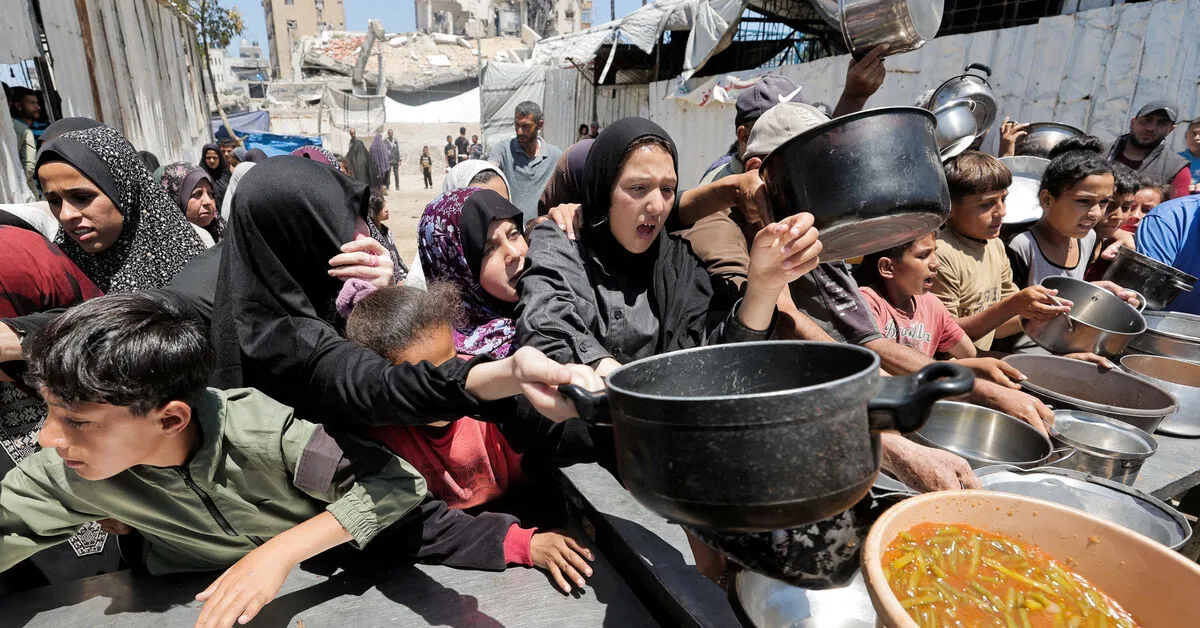
The U.N. World Food Programme (WFP) has warned of significant further reductions in aid to Gaza, where it supports 70% of the population, if additional funding is not secured.
This alert follows a report by the Integrated Food Security Phase Classification (IPC), the global hunger monitor, which indicated that over two-thirds of Gaza's population could face acute hunger by the end of the year. The IPC attributed this projected increase to aid cuts by humanitarian agencies experiencing funding shortages.
The majority of Gaza's population relies heavily on aid supplies due to prolonged conflict, repeated displacements, and stringent Israeli restrictions on aid deliveries. While the number of people experiencing acute hunger had fallen to 1.2 million between mid-April and the end of June, the IPC predicts this figure will rise to over 1.4 million, or 67%, by December. The monitor cautioned that these gains are jeopardized by declining assistance.
"Without sufficient funding, we will be forced to scale back assistance for people who depend on it for survival," stated WFP spokesperson Smith in a video conference from Rome. While increased operational costs due to the war in Iran, which impacted oil prices and supply chains, are a contributing factor, Smith emphasized that the primary issue is donor fatigue and a shift in global attention.
The WFP requires over $420 million to sustain its operations in Gaza and the occupied West Bank through year's end. Currently, cash assistance for 75,000 individuals has been reduced by 25%, and 220,000 households have had their food rations halved. Smith indicated that more substantial cuts will be necessary by October unless further funding is obtained.
Israel's Ministry of Foreign Affairs has stated that it does not impede the entry of food into Gaza and has facilitated the delivery of over 1.8 million tons of food into the enclave since a ceasefire in October 2025.