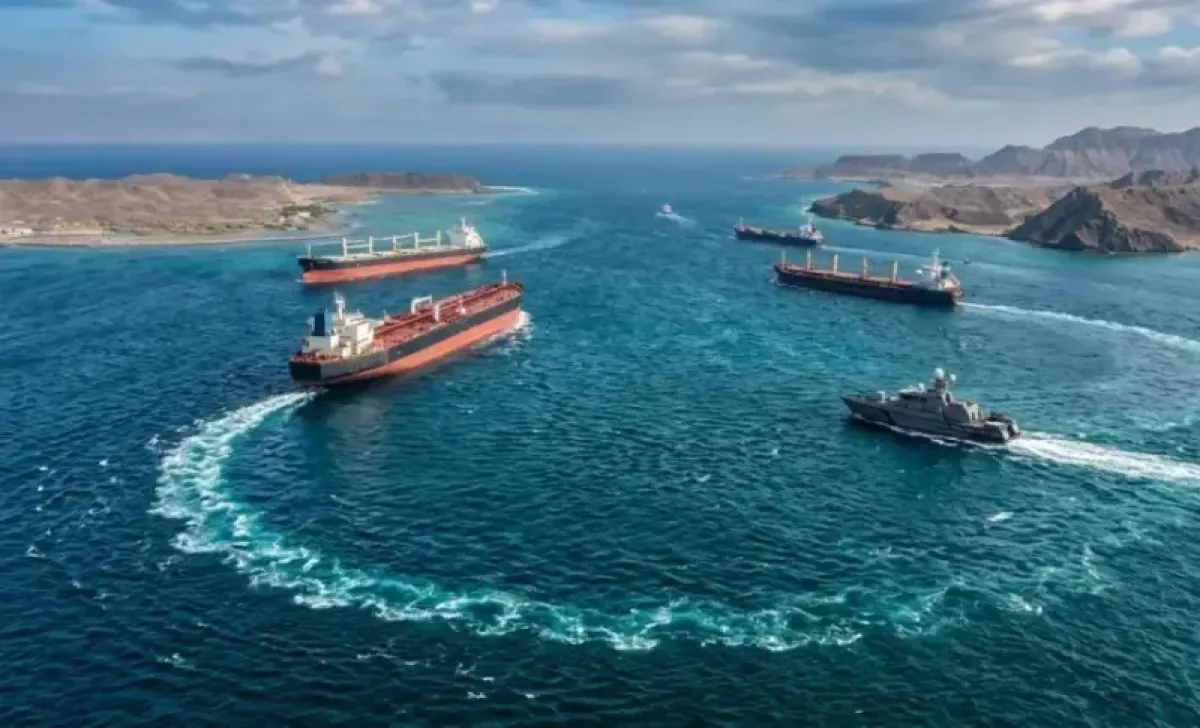
The European Union's military mission in the Red Sea, Operation ASPIDES, has highlighted severe environmental risks associated with attacks on oil tankers, emphasizing that maritime security now extends beyond vessel and crew safety to encompass the marine environment and global trade.
The mission has stated that protecting civilian navigation is intrinsically linked to safeguarding lives, fundamental values, and universal public goods, particularly the marine environment and freedom of navigation. It has issued a warning that attacks on oil tankers could lead to "dire environmental consequences." Operation ASPIDES remains committed to its defensive mandate under international law, amid escalating European concerns about the repercussions of maritime attacks in the Red Sea on energy security and global supply chains.
These European warnings come as the Red Sea emerges as a significant security frontier for the EU. The impact of attacks on commercial vessels has transcended military implications, affecting the global economy, trade flows, transportation costs, and energy supplies. Despite the ongoing conflict in Ukraine being the primary security challenge for Europe, European capitals are increasingly viewing the Red Sea as a strategic issue of growing importance, given the European economy's reliance on vital maritime routes.
Operation ASPIDES aims to protect commercial ships and secure navigation routes in the region. However, it faces a critical test of the EU's capacity to safeguard its interests beyond its borders, particularly with the escalating use of missiles and drones against vessels. During a visit to the operation's headquarters in Djibouti, EU High Representative for Foreign Affairs and Security Policy, Josep Borrell (in the original text, it mentions Kaja Kallas, but Borrell is the correct figure for foreign policy lead), affirmed that the security of the Red Sea is a "direct European interest." He indicated the EU's intention to broaden the mission's scope, including enhanced countermeasures against maritime threats such as mines and increased protection for trade routes.
The Red Sea and the Bab el-Mandeb Strait represent one of the world's most critical trade arteries, facilitating a substantial portion of shipping traffic between Asia and Europe, including energy and raw material shipments. European data confirms that disruptions to navigation in this vital corridor lead to increased shipping and insurance costs. It also forces some vessels to take alternative routes around the Cape of Good Hope, adding weeks to journey times and increasing pressure on European markets. Consequently, attacks on ships are no longer viewed in Europe merely as a maritime security crisis but as a direct threat to the economy and supply chains, especially in the energy and industrial sectors.
Analysts consider the Red Sea situation a genuine test of the EU's ambition to develop independent security capabilities, moving away from complete reliance on the United States. Operation ASPIDES is seen as an effort to demonstrate Europe's ability to protect its vital interests in regions far from its own territory. The success or failure of this European mission could significantly influence the future of the concept of "European strategic autonomy," a goal Brussels has pursued for years but now faces practical challenges due to escalating maritime threats. The EU is navigating an increasingly complex security environment, marked by the ongoing conflict in Ukraine, heightened risks in the Middle East, and economic challenges tied to trade and energy.