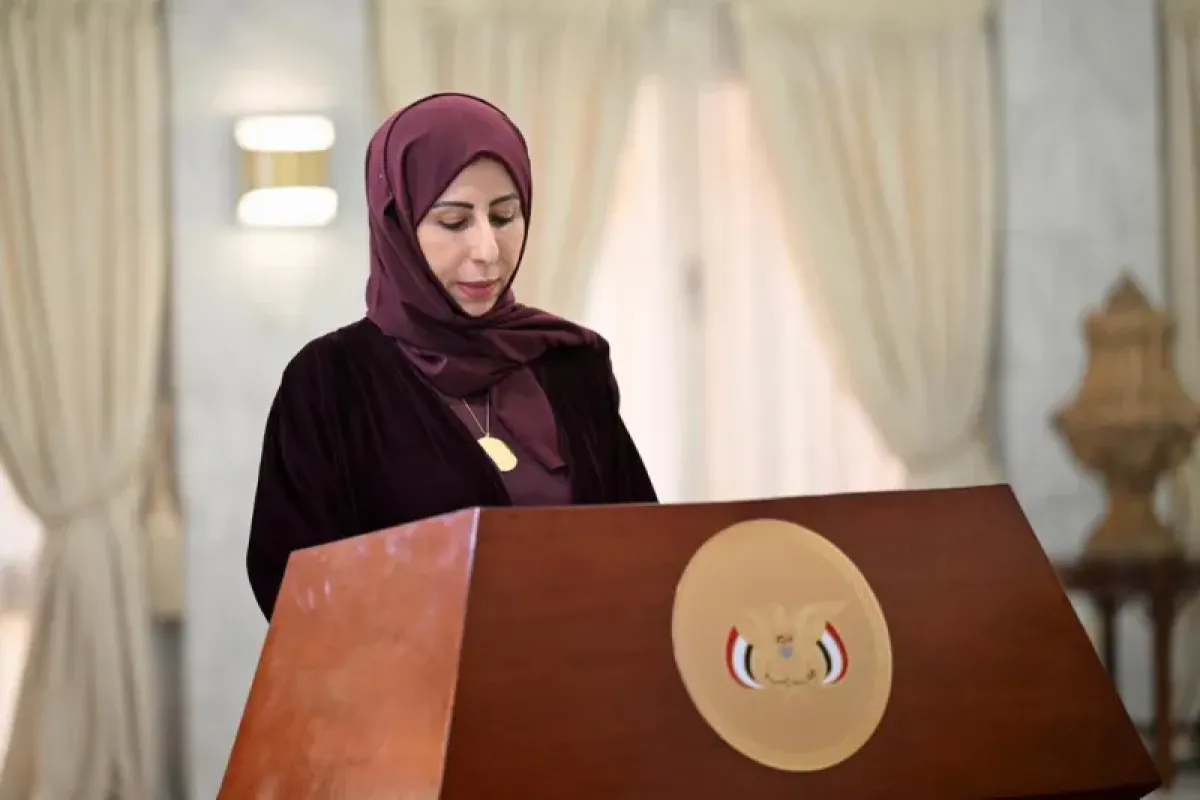
Afrah Al-Zaouba was sworn in as Yemen's new Minister of Foreign Affairs and Expatriates before Presidential Leadership Council Chairman Rashad Al-Alimi, following days of delays marked by internal disagreements and objections over the process of issuing presidential decrees and surprise ministerial appointments.
The swearing-in ceremony followed a series of consultations and mediations that resulted in an understanding allowing Al-Zaouba's appointment to the Foreign Ministry. However, disputes persist regarding changes within the Ministry of Local Administration, with the former minister, Badr Al-Baslama, insisting on retaining his position to complete crucial projects related to empowering local authorities.
Initially, the Presidential Leadership Council issued a limited ministerial reshuffle, appointing Afrah Al-Zaouba, previously Minister of Planning and International Cooperation, as Foreign Minister. Badr Al-Baslama was designated to move to the Ministry of Planning and International Cooperation, and Ahed Jaessous was appointed as Minister of State while also taking on the portfolio of Minister of Local Administration.
However, these appointments reportedly faced objections from within the council, with sources indicating that members were surprised by the decisions, which were made without prior internal consultations. This sparked renewed disagreements concerning the scope of powers and decision-making mechanisms within the presidency.
The eventual understanding reached involves proceeding with Al-Zaouba's appointment as Foreign Minister, while she will temporarily continue to oversee the Ministry of Planning and International Cooperation until a new minister is appointed. Concurrently, Badr Al-Baslama will remain as Minister of Local Administration, and Ahed Jaessous will continue in her role as Minister of State. This effectively freezes the changes intended for the Ministry of Local Administration and postpones the resolution of related disputes.
Observers suggest that this compromise has addressed an aspect of the crisis but has not resolved its underlying causes. The issue of ministerial appointments remains open to further developments, particularly given the ongoing divergence on the procedure for issuing decrees and the commitment to internal consultations among the Presidential Leadership Council members.
The conflict extended beyond legal considerations to political and consensus-building aspects. Opponents argued that decisions impacting ministerial portfolios should be subject to internal council consultations to maintain balance among its components and prevent governmental decisions from becoming a new source of tension within state institutions. Following the oath-taking, President Al-Alimi met with the new Foreign Minister, congratulating her and expressing hopes that her appointment—as the first woman to hold the Foreign Ministry portfolio in Yemen's history—marks a new phase for Yemeni diplomacy, characterized by increased effectiveness in defending state interests and enhancing its regional and international standing.
President Al-Alimi emphasized the current phase's requirement for a transition from traditional diplomacy to an active, initiative-driven approach that leads international discourse on Yemen, fosters partnerships, and defends national interests. He highlighted the importance of consolidating the national narrative in international forums and preventing the Iran-backed Houthi militia from exploiting any political or diplomatic vacuum to promote their narratives and falsify facts, calling for a unified state discourse grounded in international law, documented facts, and Security Council resolutions.
Political analyst Majed Al-Daari commented that disagreements within the Presidential Leadership Council and the government are escalating, despite overcoming the immediate crisis of the Foreign Minister's swearing-in. Al-Daari noted that Badr Al-Baslama's continued tenure at the Ministry of Local Administration is linked to completing the project of empowering local authorities and fulfilling commitments made during the partnership and integration conference between the government and local authorities, as well as pledges to international supporting bodies. He warned that disrupting the local authority empowerment project could negatively impact administrative reform efforts and undermine the confidence of international partners.