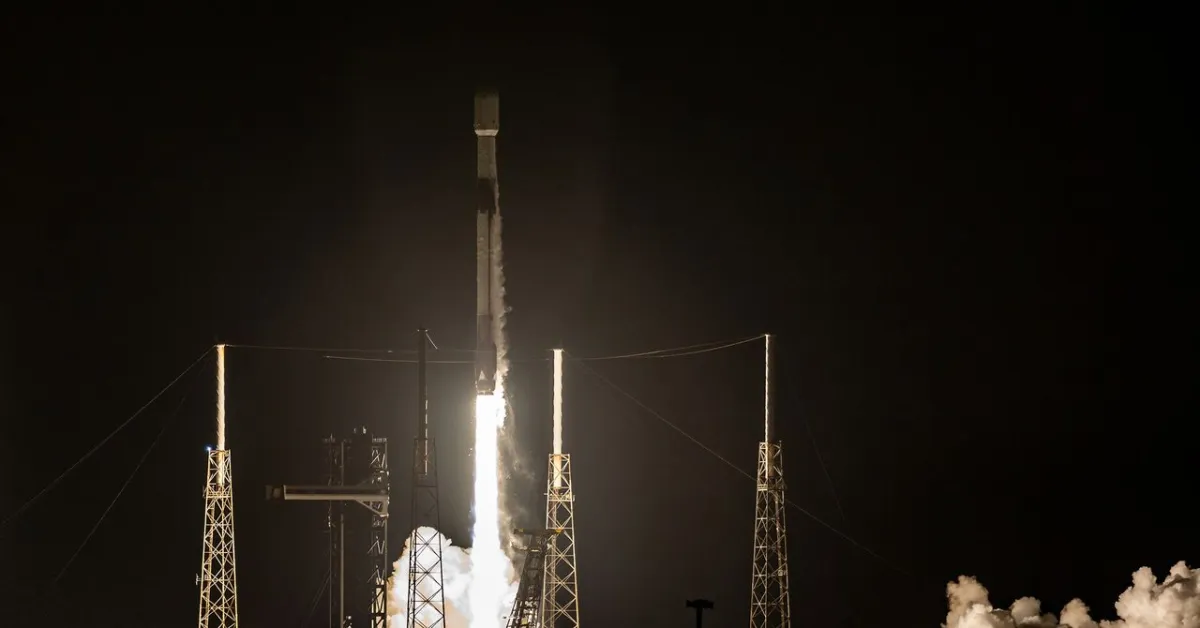
History is about to be made (or at least observed) on Wednesday as a defunct SpaceX Falcon 9 rocket is slated to slam into the Moon, potentially creating a debris plume bright enough for Earthbound telescopes to detect.
The collision is predicted to occur around 6:34 am UTC on August 5, with the rocket's upper stage expected to hit the Moon's western edge near Einstein crater at a blistering speed of over 5,400 mph. If predictions hold true, the impact could generate an unusual spectacle: an "impact flash" on the moon's sunlit surface, an event that has never been recorded before. This flash, caused by ejected dust, might stand out against the blackness of space, offering a unique celestial event.
Scientists are studying the potential impact, with research suggesting the Falcon 9, weighing about 3,900 kilograms, will behave differently than a solid meteorite. Instead of burrowing in, its hollow, shell-like structure might collapse inward, creating a wide, low curtain of lunar soil extending up to 183 kilometers, along with a narrower, faster upward spike of debris. "It's like an empty eggshell, because it had all the fuel in it, and there is a rocket engine at one end that's denser," explained David Goldstein, an aerospace-engineering professor at UT Austin.
While simulations offer a detailed forecast of the debris splash, visibility from Earth remains uncertain. Astronomer Laurence Trafton notes that a plume extending 50 kilometers past the visible edge would span a significant angle, potentially resolvable by small telescopes. However, the plume's faintness, estimated to be 30 to 300 times less bright than the Moon itself, and potential interference from scattered moonlight could make observation challenging, requiring stable equipment and clear conditions.
For those hoping to witness the event, timing and location are key. The plume is expected to peak about 90 seconds after impact. However, the Moon's low altitude for observers north of a Massachusetts-to-Texas line means peering through significantly thicker atmosphere, which could obscure any signs of the debris. The best viewing opportunities are anticipated in the US Southeast, where atmospheric conditions are more favorable.
This unplanned impact, like previous planned lunar collisions, serves a scientific purpose. Researchers aim to analyze the ejected debris to better understand the Moon's composition and surface. As lunar exploration ramps up with NASA and China planning future missions, understanding the effects of hardware impacts is crucial for astronaut safety and planning lunar bases, as lunar dust control is expected to be a major challenge.