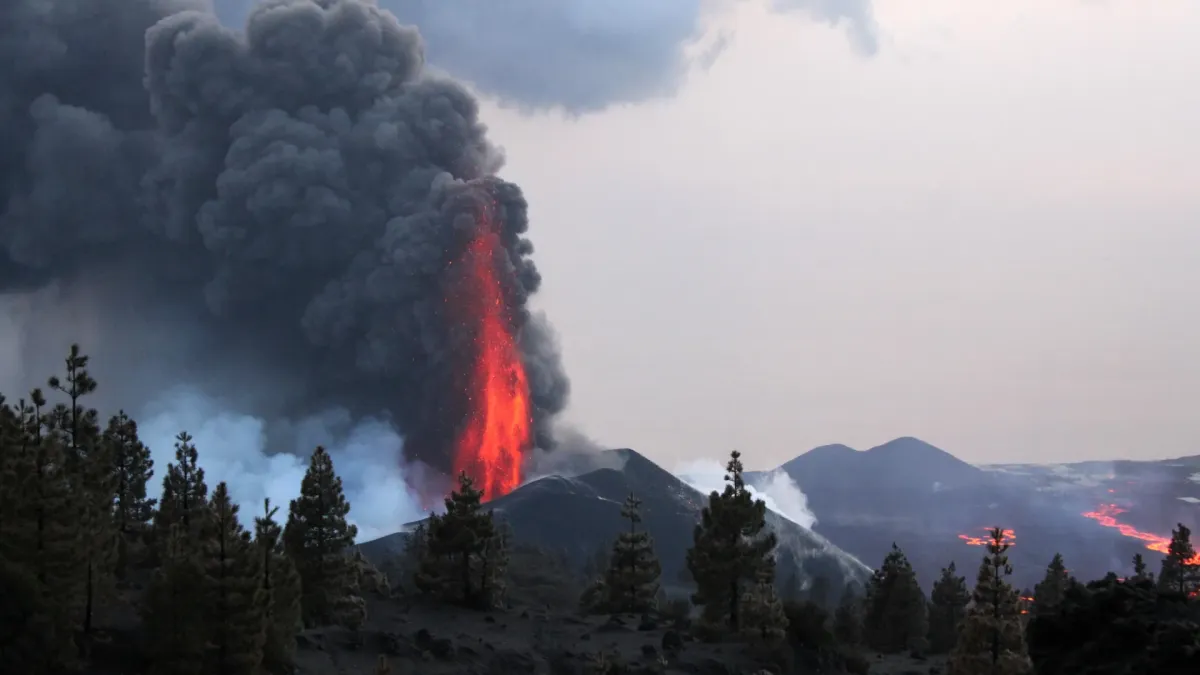
Scientists have stumbled upon a colossal magma system lurking deep beneath Tuscany, Italy, despite the region showing surprisingly few surface signs typically associated with such underground heat. Using advanced seismic imaging, researchers detected a massive body of volcanic fluids roughly 8 to 15 kilometers below ground, with a volume estimated at a staggering 6,000 cubic kilometers.
This enormous discovery, comparable in scale to systems fueling supervolcanoes like Yellowstone, was made by an international team using a technique called ambient noise tomography. This method essentially acts like an underground X-ray, analyzing subtle seismic vibrations from natural and human-made sources to map subterranean structures. The technique revealed that seismic waves traveled slower in specific areas, indicating the presence of hot, partially molten material.
While the sheer size of the magma body might sound alarming, the researchers stress that it poses no immediate threat. "We knew that this region... is geothermally active, but we did not realize it contained such a large volume of magma," explained Matteo Lupi, the lead researcher from the University of Geneva. The system spans across Tuscany and exists at depths that do not currently suggest an imminent eruption.
Beyond understanding the region's geological makeup, this discovery has significant implications for resource exploration. Deep magmatic systems are often linked to valuable mineral deposits, including lithium and rare earth elements, which are crucial for the ongoing energy transition and the production of technologies like electric vehicle batteries. The study, published in Communications Earth & Environment, suggests that ambient noise tomography could become a key tool for efficiently locating these vital resources.
"These results are important both for fundamental research and for practical applications, such as locating geothermal reservoirs or deposits rich in lithium and rare earth elements," Lupi concluded. The technique's ability to survey large underground areas quickly and affordably makes it a promising tool for future resource discovery and energy development.