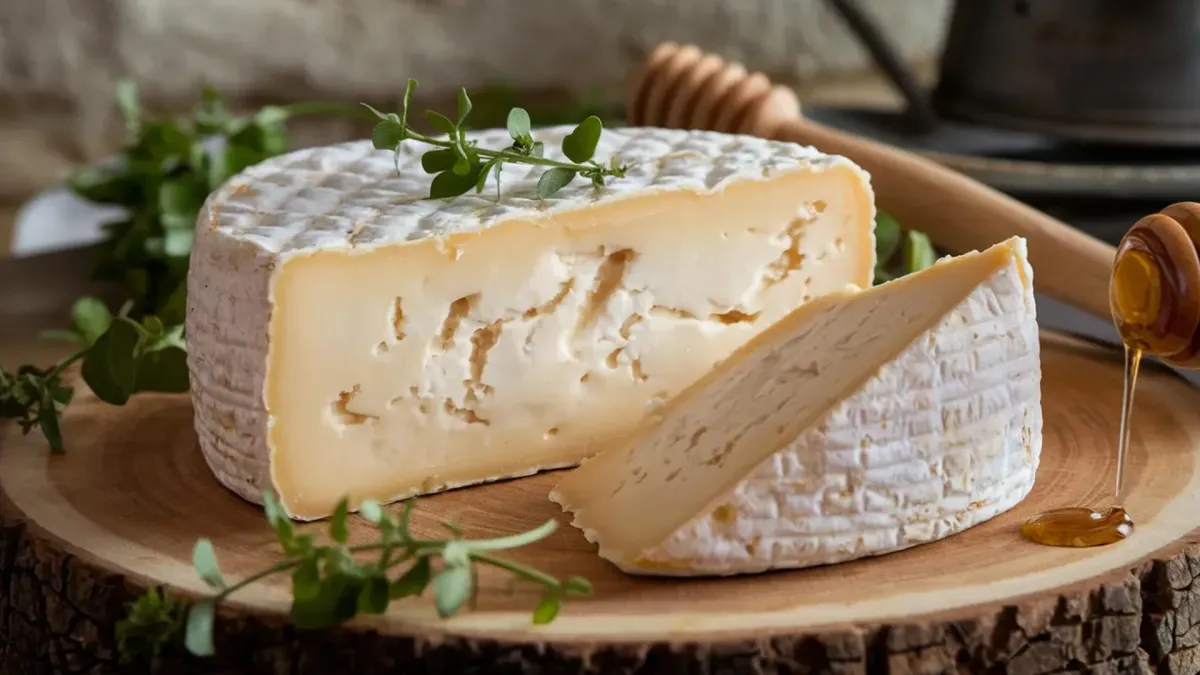
Scientists have pinpointed the bacteria behind the killer flavors of three British artisan cheeses, and surprise – some of these microbes could actually be good for your gut.
Researchers at the University of Reading dove deep into the science behind how three locally made Oxfordshire cheeses developed their unique tastes during maturation. Their findings suggest that the very bacteria responsible for each cheese's distinct character might also offer health perks to those enjoying them.
The study, featured in ACS Food Science & Technology, zeroed in on three varieties from Nettlebed Creamery. We're talking a quick-aged soft white rind cheese, a more complex washed rind semi-soft, and a nine-month hay-aged semi-hard cheese.
"Good cheese is delicious, and the artisan varieties we studied are full of microbial life that could have benefits to your gut health," explained lead author Sabrina Longley, a PhD researcher. "The aging process creates more complex aromas and textures through the work of an army of helpful bacteria. The matrix of fats and proteins in the cheese may also help protect the bacteria as they travel along the digestive tract, making cheese an excellent vehicle for delivery of probiotics to the gut."
Digging into samples at various maturation stages, the team analyzed bacterial communities and chemical makeup. All three cheeses packed bacteria known for their probiotic potential. Interestingly, Streptococcus thermophilus, a common yogurt starter, dominated the semi-soft and hard cheeses, while Lactococcus lactis popped up in all of them from start to finish. The washed rind and hay-aged varieties also featured Propionibacterium freudenreichii, a bacterium linked to anti-inflammatory effects, lower cholesterol, and appetite control.
Even the cheese rind might be getting a health upgrade. The white mold, Penicillium candidum, on the soft cheese produces chitin, a dietary fiber that could act as a prebiotic, feeding beneficial gut bacteria. The hay aging also boosted bacterial diversity in the hard cheese, with the mature version sporting nearly four times as many species as its younger self. Plus, by the time these cheeses are ready to eat, they contain almost no lactose, making them easier to digest for many.
While the results are promising, the researchers stress that more investigation, including dietary trials, is needed to fully understand how these bacteria behave in the human gut and their ultimate health impacts.