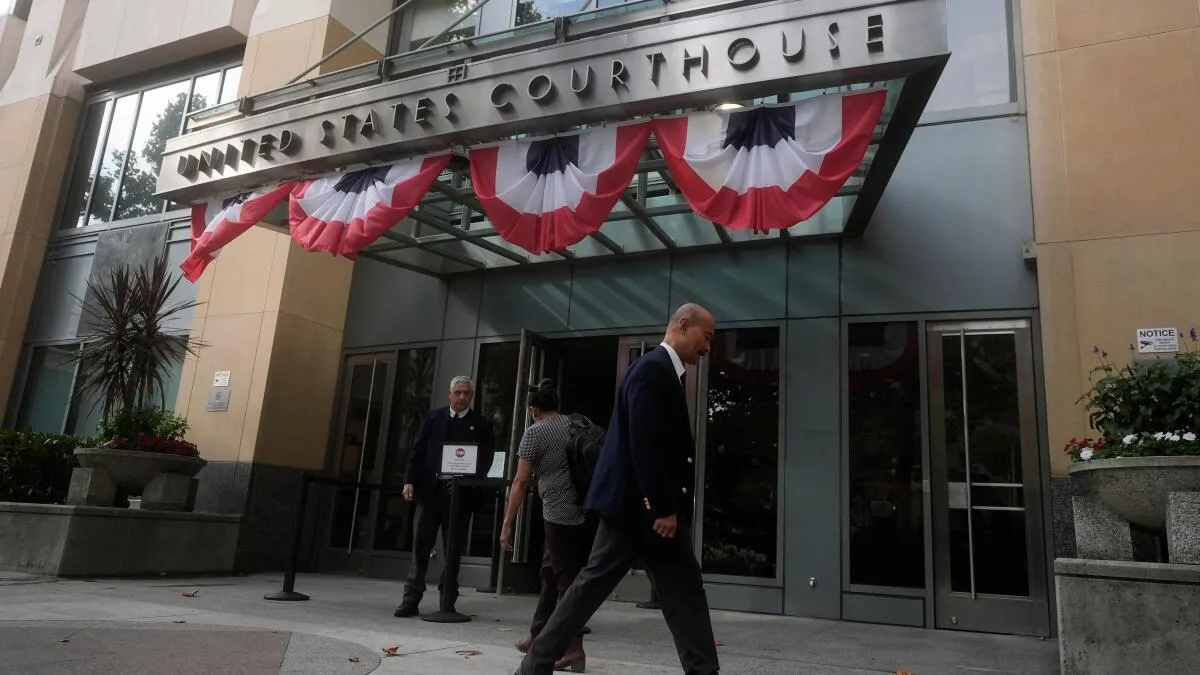
California launched a sweeping opening statement Tuesday in a landmark multistate lawsuit against Meta, alleging the social media giant intentionally designed its platforms to addict children and profited from their engagement. Deputy Attorney General Megan O’Neill presented internal company documents to a federal court jury, including a memo titled "The young ones are the best ones," suggesting a deliberate strategy to target and retain underage users.
O’Neill asserted that Meta sought to "hook kids under 13" and specifically focused on "tweens," utilizing data from these youngest users. Meta, however, countered that the states’ claims misrepresent their efforts, arguing that legal restrictions prevent them from collecting data on users under 13, which in turn hinders their ability to develop systems to exclude them. Paul W. Schmidt, representing Meta, stated that the law itself creates a barrier to more comprehensive protection for this age group.
The lawsuit, spearheaded by California, Colorado, Kentucky, and New Jersey, along with 25 other state attorneys general, accuses Meta of intentionally designing addictive features, maintaining known dangerous functionalities, and misleading the public about product safety. A central claim is that Meta violated the Children's Online Privacy Protection Act by collecting data from preteens and younger children, despite terms of service prohibiting their presence on the platforms.
O’Neill drew a parallel to the adage, "If you're not paying for the product, you are the product," implying that children’s data is Meta’s actual product. She further contended that Meta considered but ultimately rejected taking more proactive steps to identify and remove underage users due to concerns about potential findings and legal repercussions. Meta’s defense suggested that external factors, not social media, are primarily responsible for declining teen mental health.
This case is one of the most significant legal challenges against Meta, potentially reshaping its operational practices and resulting in billions in damages. Unlike a previous trial in Los Angeles that awarded $6 million, the attorneys general are seeking substantially larger damages and injunctive relief to compel changes in Meta's business model. The states' calculations suggest potential liability exceeding $3 billion for violations concerning users under 13 alone, with Meta estimating the states' total monetary demand could approach $1.4 trillion.
The trial also tests the implications of Section 230, a federal law shielding internet companies from liability for user-generated content. While Meta argued for immunity under this law, an appellate court ruled it serves as a defense at trial rather than absolute immunity. The proceedings are expected to continue through the fall, with appeals anticipated regardless of the verdict, particularly concerning the interpretation and application of Section 230.