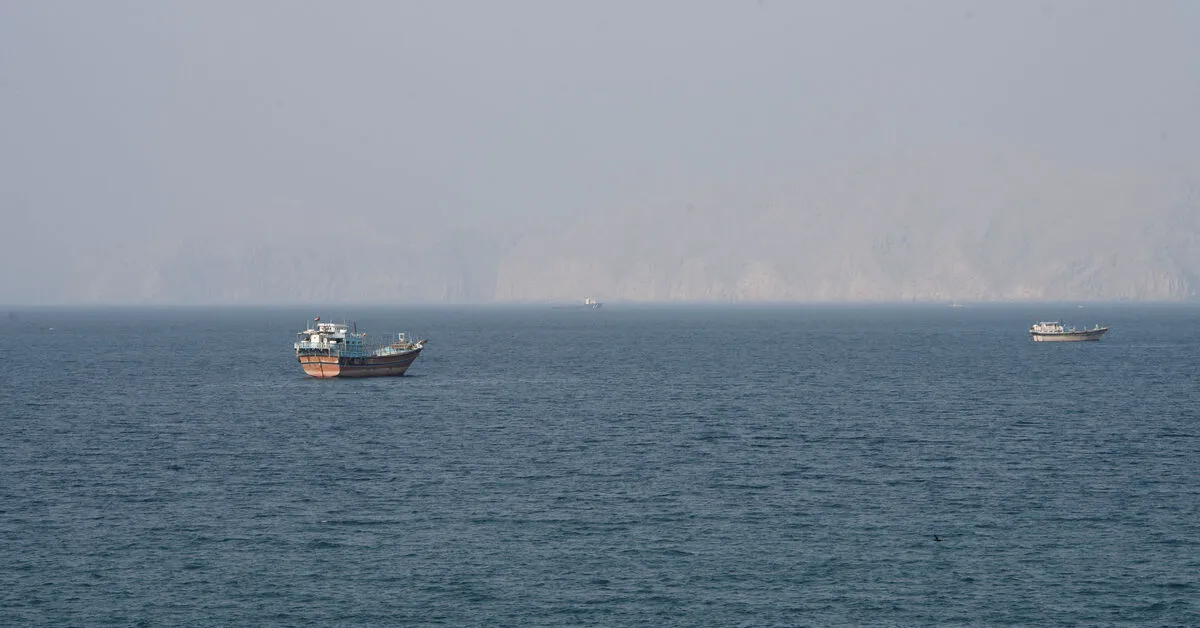
Traffic through the critical Strait of Hormuz has significantly decreased, with only seven commodity ships recorded transiting the waterway on Thursday, according to data from maritime analytics firm Kpler. This marks a stark reduction from the previous day and occurs amidst ongoing concerns for shipping safety in the Middle East, particularly as diplomatic efforts between the United States and Iran remain stalled.
Of the seven vessels tracked, four entered the strait while three departed. The Strait of Hormuz, a vital chokepoint, historically handles approximately one-fifth of the world's crude oil and liquefied natural gas (LNG) shipments. Notably, none of the ships passing through on Thursday were very large crude carriers (VLCCs) or LNG tankers. However, one large gas carrier, transporting propane and butane, did transit out of the strait via the Iranian route.
In parallel, traffic through the Bab el-Mandeb strait, another key maritime route, also experienced a slight slowdown on Thursday compared to the preceding two days. Kpler data indicated that 23 commodity ships transited the Bab el-Mandeb, a decrease from the 34 vessels recorded on each of the previous two days. Of these, 16 ships entered and seven exited.
Among the seven vessels exiting the Bab el-Mandeb were two Suezmax tankers, the Stoic Warrior and the Dokos, which were carrying crude oil destined for Vietnam and India, respectively. Similar to the Strait of Hormuz, no VLCCs or LNG tankers passed through the Bab el-Mandeb on Thursday. It is important to note that vessels navigating these waterways with their transponders deactivated are not included in this data.