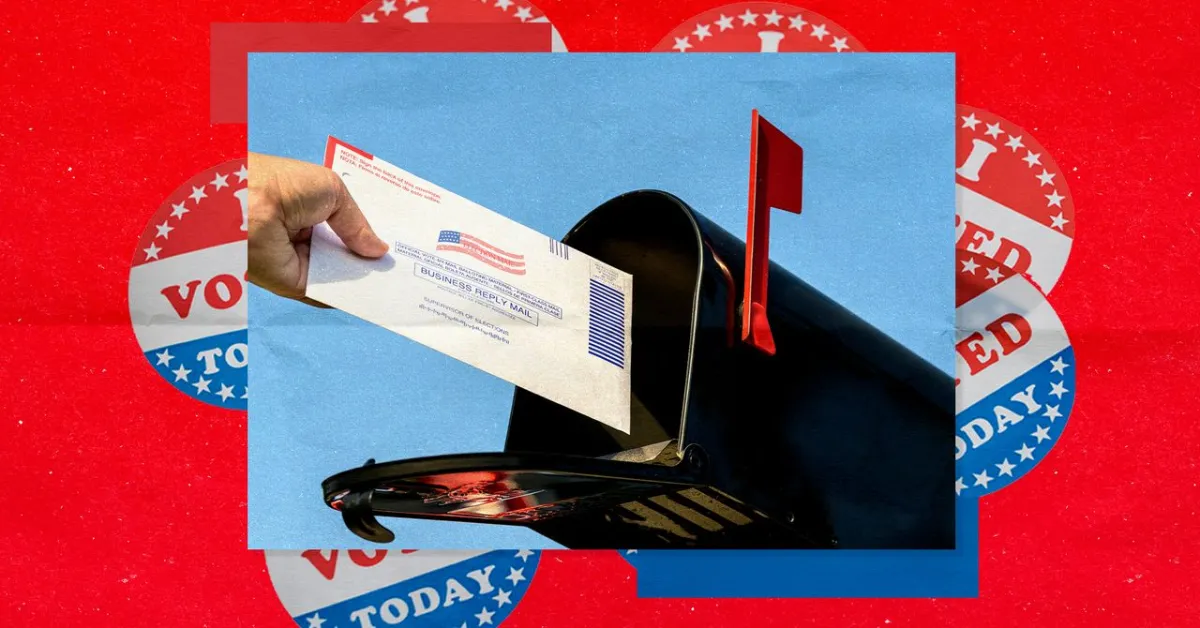
The US Supreme Court has allowed President Trump's executive order to restrict mail-in voting to move forward, potentially creating chaos and disenfranchising voters in the upcoming midterm elections, despite a nationwide injunction currently blocking its implementation.
The Supreme Court's decision paused a lower court's injunction that had protected 23 states and Washington D.C. from the executive order's provisions. While the court didn't rule on the order's legality, focusing instead on whether the suing states could prove they were harmed, the conservative majority's decision has election officials and experts deeply concerned.
The executive order is based on unsubstantiated claims of widespread mail-in voter fraud. Experts warn that if fully implemented, it could disenfranchise millions. Justice Ketanji Brown Jackson, in a strong dissent, called the ruling a "Kafkaesque nightmare" that injects unnecessary chaos into the elections.
Voting rights groups are already experiencing significant confusion. They are scrambling to understand how the rules might change while trying to reassure voters who rely on mail ballots. "Voting rights organizations have experienced first-hand the significant confusion that President Trump’s executive order is causing right now," stated the counsel and plaintiffs in a related lawsuit, highlighting that valuable time is being diverted from voter education to addressing these uncertainties.
The executive order, signed in March, includes provisions to create a federal "State Citizenship List" compiled from various government records, directs the Attorney General to prioritize prosecuting election officials who issue ballots to ineligible voters, and requires the USPS to establish new rules for mail-in ballots, including lists of eligible voters. The USPS issued its own final rule last week, comparing mail-in ballots to "fake bombs or cremated animal remains."
Election officials are raising alarms about the practical impossibility of implementing these changes in time for the November elections. Stuart Holmes, director of elections in Washington state, points out that printing new ballot envelopes and updating voter lists within such a tight timeframe is not only financially burdensome but also logistically unrealistic, potentially disrupting the voting process for millions.