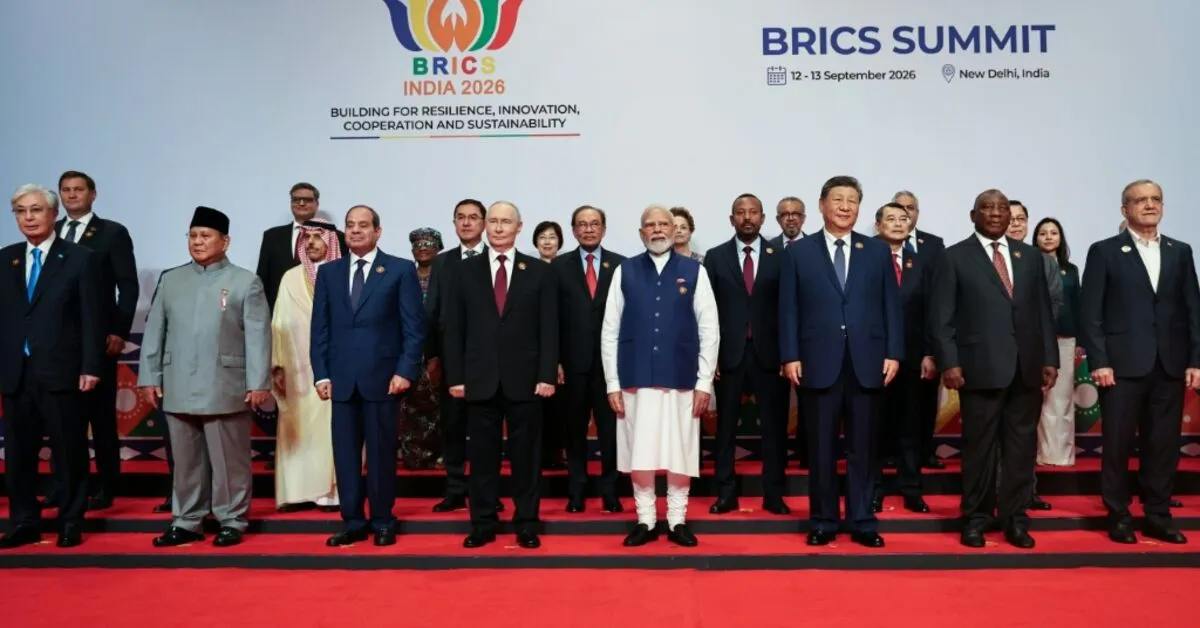
Leaders from BRICS nations, including China, Russia, and India, convened for discussions on inclusive global growth, concluding their summit in New Delhi. The group reached a significant agreement calling for restraint in the Middle East, a key outcome following intensive diplomatic efforts.
Indian Prime Minister Narendra Modi emphasized the bloc's potential, highlighting that BRICS collectively represents half of the world's population, 40 percent of global GDP, and over 25 percent of international trade. He articulated that the strength of BRICS lies in its diversity and cooperative approach, addressing leaders including Chinese President Xi Jinping and Russian President Vladimir Putin.
Established in 2009, BRICS serves as a platform for major emerging economies aiming to increase their influence within global institutions traditionally dominated by Western powers. The current agenda focuses on bolstering global standing and addressing challenges such as conflict, trade volatility, and energy security. Prime Minister Modi stated, "We have tried to push inclusive global growth," adding, "We may be rooted in different realities, but together we rise through cooperation and blossom for humanity."
The summit's initial day was largely dominated by the escalating conflict in the Middle East. Despite prior disagreements among foreign ministers in May, the leaders issued a joint statement expressing deep concern over the continued tensions and urging "maximum restraint." This consensus was achieved after considerable diplomatic engagement led by India, the host nation.
Chinese President Xi Jinping's participation marked his first visit to India since 2019, signifying a cautious improvement in relations between the two neighboring nuclear-armed states, which experienced a deadly military confrontation in 2020. President Xi remarked on the potential for mutual benefit and shared advancement, stating, "Although our two countries are different in many respects, they are fully capable of complementing each other's strengths, supporting one another, achieving mutual success and advancing together." Both nations reaffirmed their commitment to resolving the longstanding border dispute through peaceful and equitable means, despite ongoing strategic rivalry and a significant trade imbalance.