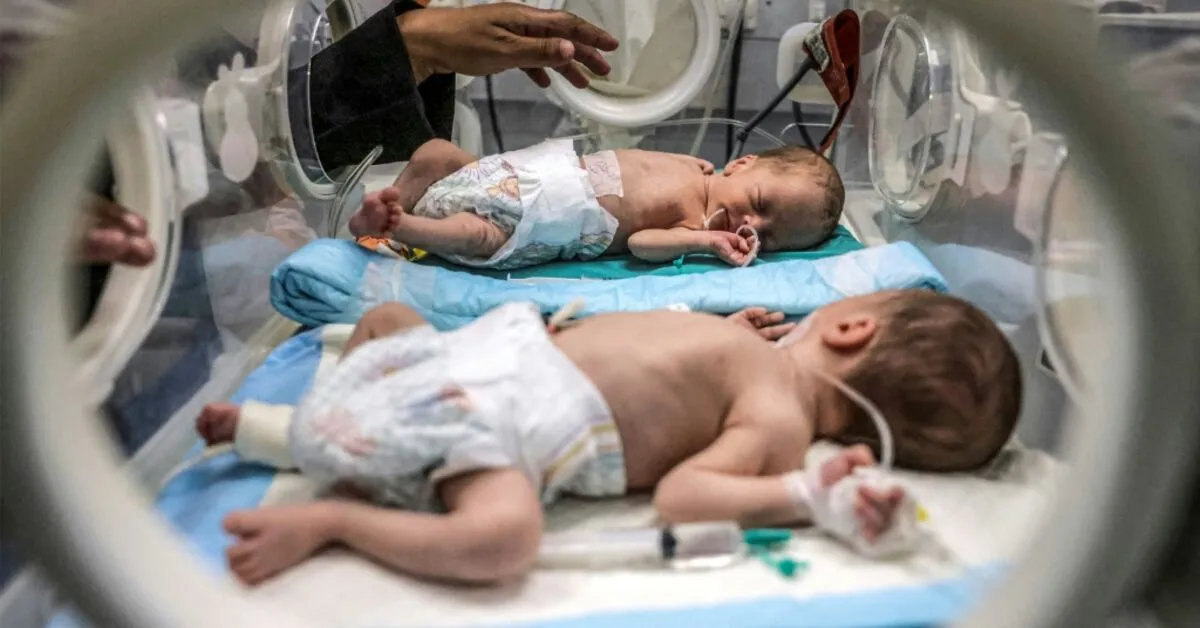
Gaza's healthcare system is facing a critical crisis, with hospitals overwhelmed by an increasing number of premature births and a severe shortage of essential equipment, particularly incubators. Neonatal departments are forced to place multiple infants in single incubators due to a lack of resources, significantly escalating mortality risks for the most vulnerable newborns.
Hatem Dhahir, head of the neonatal department at Nasser hospital in Khan Yunis, described the situation as dire, citing a lack of oxygen and available incubators. He noted that attempts to transfer infants to other hospitals are futile as facilities are already at maximum capacity. The growing number of underweight newborns and premature babies, coupled with dwindling supplies, has exacerbated the precarious conditions.
The ongoing conflict between Israel and Hamas has devastated Gaza's healthcare infrastructure, rendering many facilities partially or fully inoperable. Restrictions on the entry of goods into the Gaza Strip, which Israel states are to prevent items with potential military use from reaching Hamas, have led to a critical scarcity of medical supplies and specialized equipment.
Nasser hospital has observed a marked increase in premature births, twins, and triplets recently, forcing staff to house two or even three babies in a single incubator. Reports from March indicated that one in three pregnancies in Gaza were considered high-risk, with 70 percent of newborns being premature or underweight. The United Nations humanitarian agency OCHA has warned that incubator sharing drastically increases mortality rates.
The broader impact of the war, which has displaced nearly the entire population of Gaza and destroyed vital infrastructure, has been profound on maternal health. A UN-mandated inquiry highlighted severe shortages of food, medical supplies, and fuel, contributing to an increase in miscarriages, stillbirths, low-birthweight infants, and congenital defects. Cases of transposed arteries, a serious congenital heart defect, have also been reported, with infants requiring transfer for treatment unavailable within Gaza.
In response, the UN children's agency UNICEF has intensified efforts to supply Gaza's hospitals with essential medical equipment, including incubators, ventilators, and monitors. UNICEF has provided 93 incubators to six facilities across the Strip. However, significant challenges persist, and further intervention is urgently required. The resilience of medical professionals in Gaza is currently sustaining neonatal care under immense pressure.