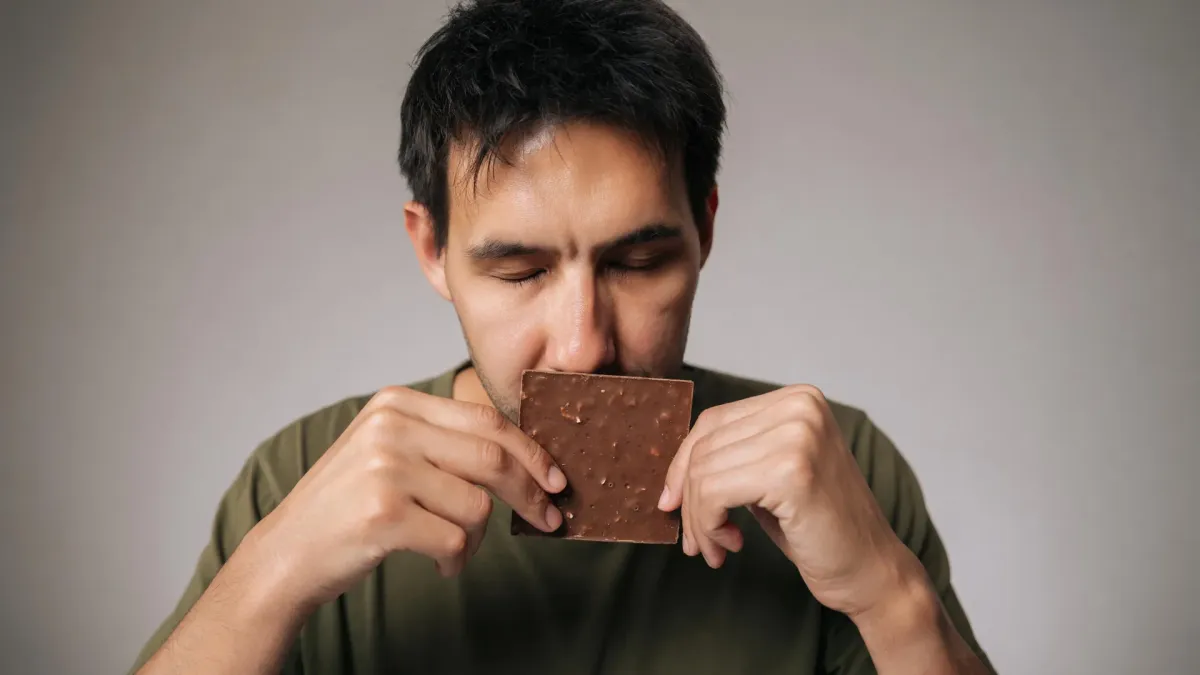
Hitting the gym for a tough workout just got a potential sweet and simple upgrade: the smell of chocolate. New research reveals that inhaling chocolate scents before and during resistance training helped men complete more repetitions without feeling like they worked any harder.
The study, published in Frontiers in Physiology, saw moderately trained men exposed to chocolate aromas. According to senior author Dr. Mohamed Nashrudin bin Naharudin from the University of Malaya, this exposure "significantly increased their overall training volume without increasing their perceived exertion." He noted that seeing a jump in reps without participants feeling more tired was a "fascinating psychobiological outcome."
To test this, 23 healthy men in their early to mid-20s, who had been fasting for at least 10 hours, participated. They were split into three groups, each exposed to either a 90% dark chocolate aroma, a 60% milk chocolate aroma, or plain water as a control. Researchers measured their leg extension performance and appetite-related feelings before and during the exercise, with scent exposures occurring between sets.
The different chocolate scents had distinct effects. The dark chocolate aroma consistently lowered hunger, reduced the desire and intention to eat, and increased feelings of fullness compared to both milk chocolate and water. Milk chocolate, while rated as more pleasant, didn't significantly alter hunger or appetite. However, both chocolate aromas boosted exercise output: smelling dark chocolate added about 18 more repetitions, while milk chocolate added around nine, compared to the water control.
Researchers theorize that learned associations with food play a key role. Smells paired with eating over time can become cues that trick the brain into anticipating post-meal effects, like fullness. Dr. Naharudin suggests the dark chocolate scent acts as a cue for a satiating food, creating an "anticipatory state of fullness." The sweeter milk chocolate scent, however, seems to act more as a reward cue, enhancing performance by creating a pleasant sensory environment rather than altering basic hunger signals.
While these findings are intriguing, the researchers point out limitations. The study didn't measure hormones or neural activity, so the exact biological pathways remain speculative. The aroma intensities might not have been perfectly matched, and participants might have guessed when they were in the control group. The study also involved a small group of young, moderately trained men, so further research with diverse groups is needed to confirm how widely these effects apply. While chocolate seems effective, other familiar, appealing food odors might produce similar performance boosts.