A year after several Western nations, including France and Britain, recognized a Palestinian state, tangible progress toward statehood remains elusive, with the situation on the ground deteriorating due to increased Israeli settler violence and the weakening of the Palestinian Authority.
The initiative, led by French President Emmanuel Macron on September 22, 2025, saw ten countries acknowledge Palestinian statehood, adding to the approximately 157 UN member-states that had already done so. This diplomatic move, however, has been met with staunch opposition from Israel, which, with U.S. backing, rejects Palestinian statehood and has intensified efforts to marginalize Palestinian President Mahmoud Abbas's authority. Despite Prime Minister Benjamin Netanyahu's avoidance of formal West Bank annexation, observers note a trend of unofficial annexation as his government approves an unprecedented number of settlements.
Palestinian Authority officials and analysts argue that diplomatic recognition is insufficient without concrete measures to support Palestinian existence and counter Israeli actions. "Recognition makes the two-state solution a reality politically and diplomatically, but unfortunately on the ground it still depends on the illegal behaviour of Israel, which is not implementing international resolutions," stated Omar Awadallah, deputy foreign affairs minister of the Palestinian Authority. Ines Abdel Razek, a Palestinian political analyst, added that recognition without supporting measures is merely a "diplomatic refrain to avoid looking at reality in the face."
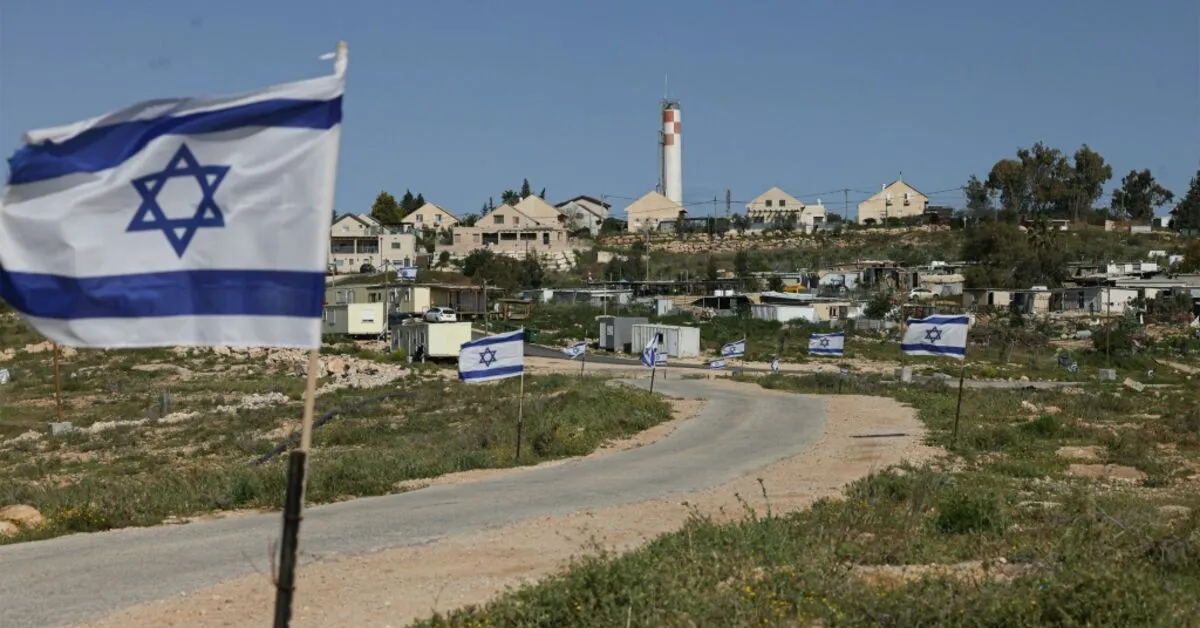
The reality on the ground is marked by rising Israeli settler violence, with Israeli flags and "No future in Palestine" graffiti visible across the West Bank. Prime Minister Netanyahu has framed Palestinian statehood as a "reward for terrorism" following the October 7, 2023 Hamas attacks. He has explicitly stated, "As long as I am prime minister, an Iranian-controlled Palestinian state will not be established—neither in Gaza nor in Judea and Samaria. Period." Tensions escalated when Israel ordered the closure of the UK consulate serving Palestinians in Jerusalem, in response to sanctions imposed by Britain, France, and Canada over settler attacks.
The Palestinian Authority, established in the 1990s, faces significant financial challenges, partly due to Israel withholding customs revenue and objecting to payments made to families of Palestinians imprisoned or killed, including those involved in attacks. Israel has also implemented movement restrictions, installing nearly 1,000 gates at the entrances of West Bank villages and towns in early 2025. Furthermore, Palestinians report a policy of pushing out herder communities to establish settler outposts, with the UN documenting an average of six extremist settler attacks per day on Palestinians and their property in the West Bank in 2026. The perceived lack of accountability for Israeli perpetrators of violence, coupled with proposed changes to civilian administration in the West Bank, suggests a further move towards annexation.