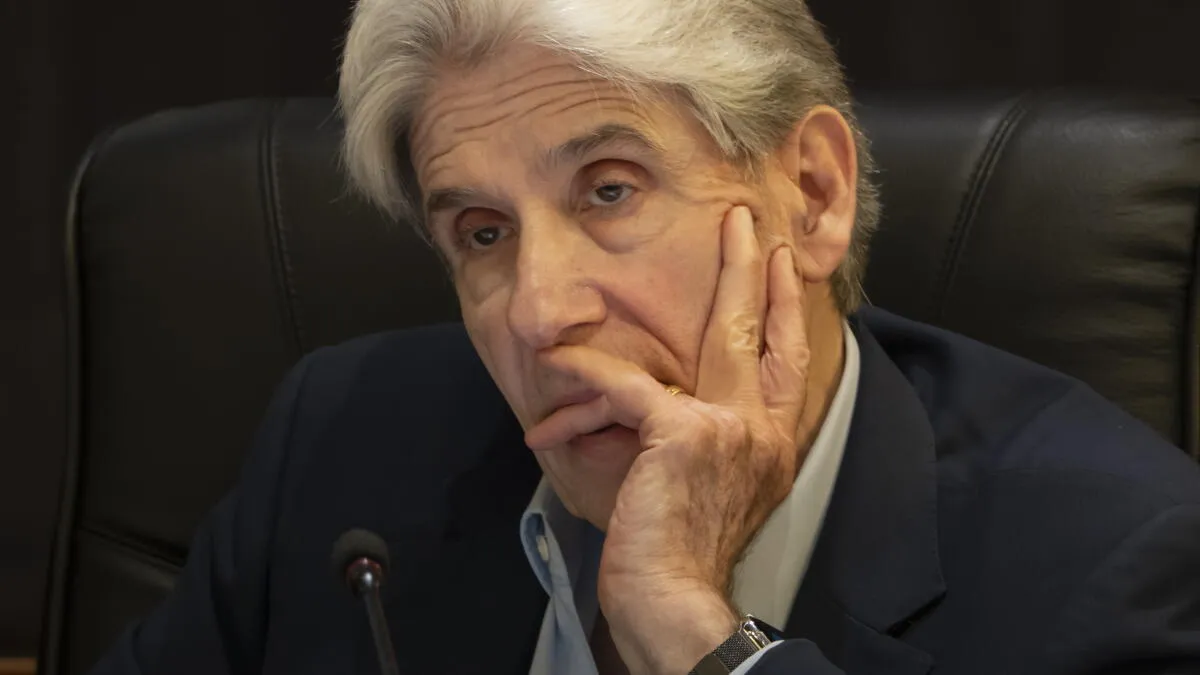
A public statement by UCLA Chancellor Julio Frenk, distancing the university from a 9/11 symposium that featured a lawyer for alleged mastermind Khalid Sheikh Mohammed, has sparked a significant outcry among faculty and academics nationwide, who argue it constitutes a substantial infringement on academic freedom.
In letters addressed to Chancellor Frenk this week, numerous UCLA School of Law faculty members demanded a retraction of his statement, deeming it "not befitting of a leader." Concurrently, over 200 academics from institutions including Harvard and Stanford signed a national open letter also calling for a retraction. The Academic Senate, a key faculty leadership body at UCLA, conveyed its "concerns and reservations" in a more measured letter, urging collaborative efforts to safeguard academic freedom.
The symposium, held on September 10-11, explored the legal ramifications of the U.S. response to the 9/11 attacks, including issues of torture, detention, and government surveillance. Criticism arose from right-leaning media outlets for including a Department of Defense lawyer who represented Khalid Sheikh Mohammed, and a speaker from the Council on American-Islamic Relations. Some members of the Jewish campus community also objected to the event's description of Israel's actions in Gaza as "genocide," a term used by international human rights groups but disputed by Israel and criticized by major American Jewish leaders as antisemitic.
Faculty organizers asserted that the event addressed core legal principles, such as defendants' rights and governmental power limitations, aligning with the law school's mission. Chancellor Frenk's September 11 statement declared that UCLA did not endorse the event, stating, "We reject antisemitism and terrorism in all their forms and we believe our campus must be a place where the dignity of every member of our community is respected." He added that the event did not alter these commitments.
Faculty signatories argued that Frenk's statement lent credence to unfounded accusations and wrongly implied that the lawyer or organizers endorsed the alleged crimes of the client. In his response to the Academic Senate, Frenk maintained that his statement reflected the university's values and expressed support for Professor Judea Pearl, whose son was a victim of terrorism and who had raised objections to the event. Frenk emphasized that the event "proceeded as planned, with its program, speakers and academic content unchanged," and that his statement aimed to uphold academic freedom while supporting community members experiencing distress.
The dispute is significant due to its prominence, involving leadership at a major university publicly confronting its chancellor over the fundamental academic principle of examining controversial ideas without interference. This conflict adds to the challenges Frenk has faced since assuming leadership in January 2025. However, some faculty members defended Frenk's stance. Harvey K. Rosenbaum, an emeritus professor, thanked Frenk for his "forthright statement," noting that while academic freedom protects expression, it does not endorse insensitivity, particularly regarding the timing of the event for 9/11 victims.
The UCLA law faculty letter, signed by 52 professors, characterized Frenk's statement as an "assault on the law school" and warned it could increase legal jeopardy, particularly in the context of ongoing federal investigations into universities. Leaders of the UCLA Academic Senate, while not demanding a retraction, noted that Frenk's statement had been "interpreted as criticizing the law school event" and reiterated the importance of academic freedom principles. Frenk, in his letter, defended his words, asserting he did not criticize the law school or question the validity of legal representation for individuals accused of heinous acts, and that protections for academic freedom do not imply institutional endorsement of all speaker viewpoints.
The symposium drew criticism from outlets like The Washington Free Beacon and New York Post, focusing on the participation of Melanie T. Partow, who worked on Mohammed's case. Event organizers and the law school letter stated her remarks concerned military adjudication procedures. Judea Pearl specifically objected to the presence of the Council on American-Islamic Relations, accusing the group of sympathizing with attackers, a claim CAIR denies. Law school faculty noted that Frenk did not consult organizers before issuing his statement and called for a retraction or clarification that he did not intend to imply the symposium promoted terrorism or antisemitism. LaToya Baldwin Clark, a UCLA law professor, criticized Frenk on social media, stating that a law school must be able to host lawyers representing any defendants, regardless of public opinion.
The national open letter, signed by faculty from multiple UC law schools, urged Frenk to reaffirm the law school's ability to invite speakers on a wide range of topics. It argued that the implication of endorsement of antisemitism and terrorism in the chancellor's statement was inaccurate and increased risks for legal professionals and scholars whose work is vital to legal institutions.