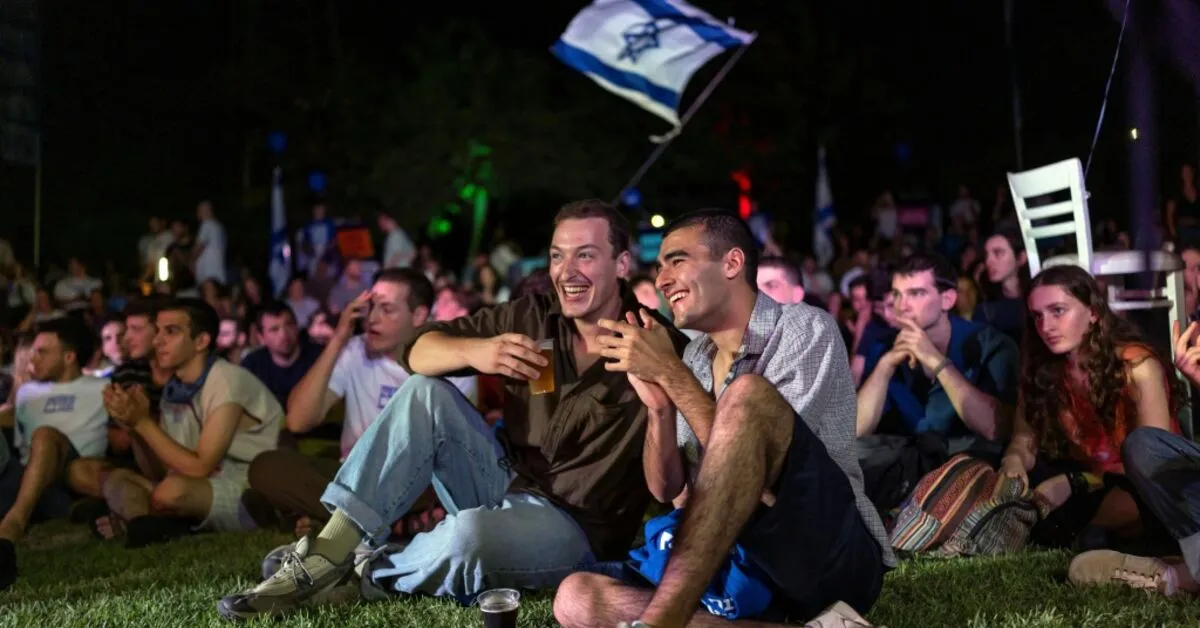
The aftermath of the October 7 attacks is significantly influencing the political leanings of hundreds of thousands of first-time Israeli voters, with a pronounced shift towards right-wing and nationalist parties, prioritizing security above all other concerns.
For 18-year-old Amihai, who will be voting for the first time this October, the paramount issue is national security, a sentiment shaped by the deadliest day in Israeli history. "I'm voting based solely on security -- not for whoever will help me buy an apartment in 10 years, but for whoever can guarantee that I'll even still be alive here in 10 years," he stated, expressing his intention to vote for a far-right party. Amihai, from Shomria in southern Israel, was attending an event advocating for Jewish settlement in Palestinian territories and indicated he would support the ultra-nationalist party of National Security Minister Itamar Ben Gvir, citing a desire for retribution against terrorists and a stronger deterrent.
This trend is reflected in recent polling data, which indicates a significant rightward political inclination among young Israelis. According to Israel's Channel 12, approximately 550,000 Israelis aged 18 to 22 are eligible to vote for the first time. A poll commissioned by the same channel revealed that 74 percent of these first-time voters identify their policy views as right or center-right, a figure higher than the general public. This contrasts with trends in many Western democracies where younger demographics often lean left.
Dahlia Scheindlin, a pollster and analyst, attributes this shift to a generational political consciousness shaped by a prolonged period of heightened nationalism under Prime Minister Benjamin Netanyahu. "Anybody who's an 18-year-old now, his or her entire political consciousness is under (Prime Minister Benjamin) Netanyahu, it's a very ultra-nationalist environment," Scheindlin explained. She noted that for younger generations, the concept of peace negotiations has become less prominent, particularly when contrasted with older generations who recall periods of hope for comprehensive peace agreements.
At a gathering for the center-left Democrats party in Tel Aviv, 18-year-old Gili articulated a similar sentiment, suggesting that the magnitude of events like October 7 fosters fear and diminishes belief in the possibility of peace. "It's really logical that everyone kind of became more and more right-wing, and more and more extreme," she commented. While Gili and her peers advocate for a political resolution with the Palestinians, they acknowledge the prevailing mood among their generation.
The October 7 attacks resulted in the deaths of 1,221 people, according to AFP's tally based on official Israeli figures. The subsequent Israeli military offensive in Gaza has led to a significant number of casualties. For some young Israelis, such as yeshiva student Yishai Neeman, the trauma of the attacks has reinforced a commitment to national defense and right-wing policies. Neeman, who plans to enlist in a combat unit, stated his intention to vote for the Religious Zionism party, advocating for the annexation of the West Bank and a decisive military victory, believing that a return to pre-October 7 conditions is not viable.