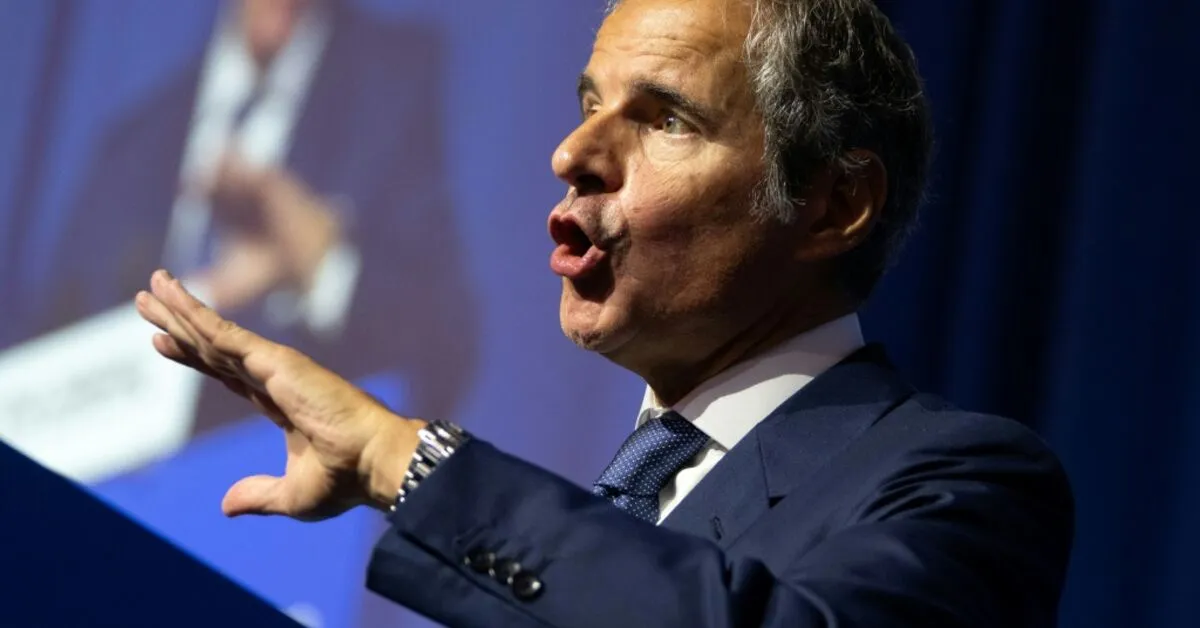
The head of the UN's nuclear watchdog, Rafael Grossi, has urgently called on Iran to grant immediate access to its nuclear facilities, emphasizing the agency's need to verify the Islamic Republic's nuclear materials.
Grossi made the appeal during a United Nations Security Council meeting on Tuesday. The International Atomic Energy Agency (IAEA) has faced significant restrictions in accessing key nuclear sites in Iran since June 2025, following a conflict initiated by Israel with support from the United States, which included strikes on these facilities. Further strikes have occurred in the current conflict, which began on February 28, prompting repeated calls for access from the IAEA.
"I invite Iran to work with the IAEA without any further delay to clarify outstanding safeguards questions and to give the IAEA the information and access the agency requires, so that it can verify all relevant facilities and material, as is Iran's legal obligation," Grossi stated.
This Security Council session convened after a resolution was passed by the IAEA board the previous month, referring Iran to the top UN body due to its nuclear "non-compliance." This resolution, put forth by Britain, France, Germany, and the United States, marks the first referral of Iran to the Security Council in two decades for failing to adhere to its nuclear reporting obligations. However, the move is largely viewed as symbolic, given the veto power held by China and Russia, allies of Tehran, over any potential sanctions.
Iran's UN representative, Amir Saeid Iravani, criticized the Security Council's "silence" regarding the US-Israeli strikes against his nation, asserting that the current meeting exemplified a "double standard" where aggressors are protected while victims face criticism, and non-proliferation is used for geopolitical aims.
Prior to the June 2025 strikes, the IAEA had estimated Iran's stockpile of uranium enriched to 60 percent purity at approximately 440 kilograms. This level is notably close to the 90 percent threshold required for nuclear weapons and significantly exceeds the 3.67 percent limit stipulated by the now-defunct 2015 agreement. The status of this stockpile has remained uncertain since the conflict began. US President Donald Trump has also recently reiterated threats of further strikes against Iran.