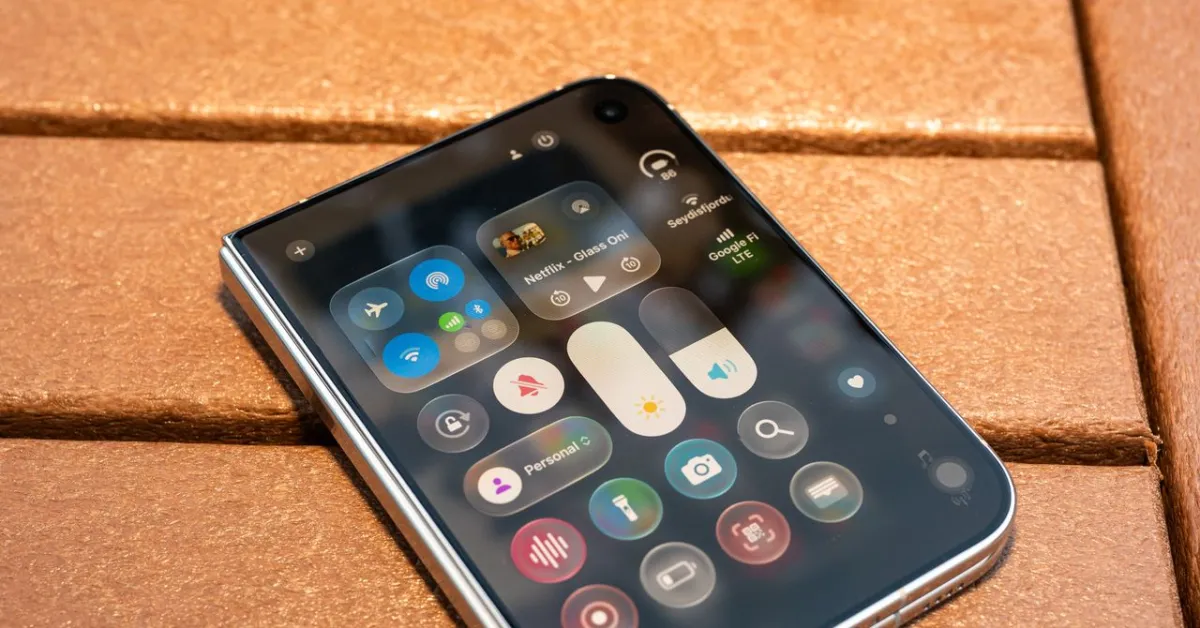
Apple is finally getting its act together with Liquid Glass, its once-divisive interface design, especially now that it's landed on the much-anticipated iPhone Duo. After initial criticism for being more style than substance, the company has significantly refined the look and feel, making it more functional and user-friendly across its devices.
When Apple first rolled out the translucent Liquid Glass design, inspired by its Vision Pro headset, it faced a backlash. Critics, including developer Ben Rice McCarthy, pointed out issues with legibility, distracting reflections, and a general lack of clarity that went against Steve Jobs' core design philosophy: "Design is how it works." Apple's own press releases even showcased interfaces with text that was hard to read.
However, with the latest OS updates and a subtle acknowledgement of user feedback from human interface designer Shubham Kedia, Apple has course-corrected. The company introduced a "Liquid Design slider" in settings, allowing users to customize the transparency, addressing the one-size-fits-all approach that frustrated many. McCarthy notes that this flexibility has vastly improved the experience, making interface elements more adaptive and easier to manage, especially when resizing windows.
The true magic of the revamped Liquid Glass is showcased on the iPhone Duo. This foldable device, with its unique passport-shaped display that opens to a landscape view, leverages the software's continuity features. Apple's industrial design VP, Molly Anderson, highlighted how the hardware and software were designed in tandem to create a seamless transition between screens. The interface elements fluidly adapt, offering controls that remain consistently placed whether the phone is open or closed, or in any orientation.
While Liquid Glass might not be perfect, with some developers still working to fully adapt their apps, its evolution on the iPhone Duo is a clear win. It feels more tailored to individual devices, moving away from a rigid universal aesthetic. The result is an interface that feels robust and respects the content it displays, making it not just usable, but genuinely delightful on Apple's latest hardware.