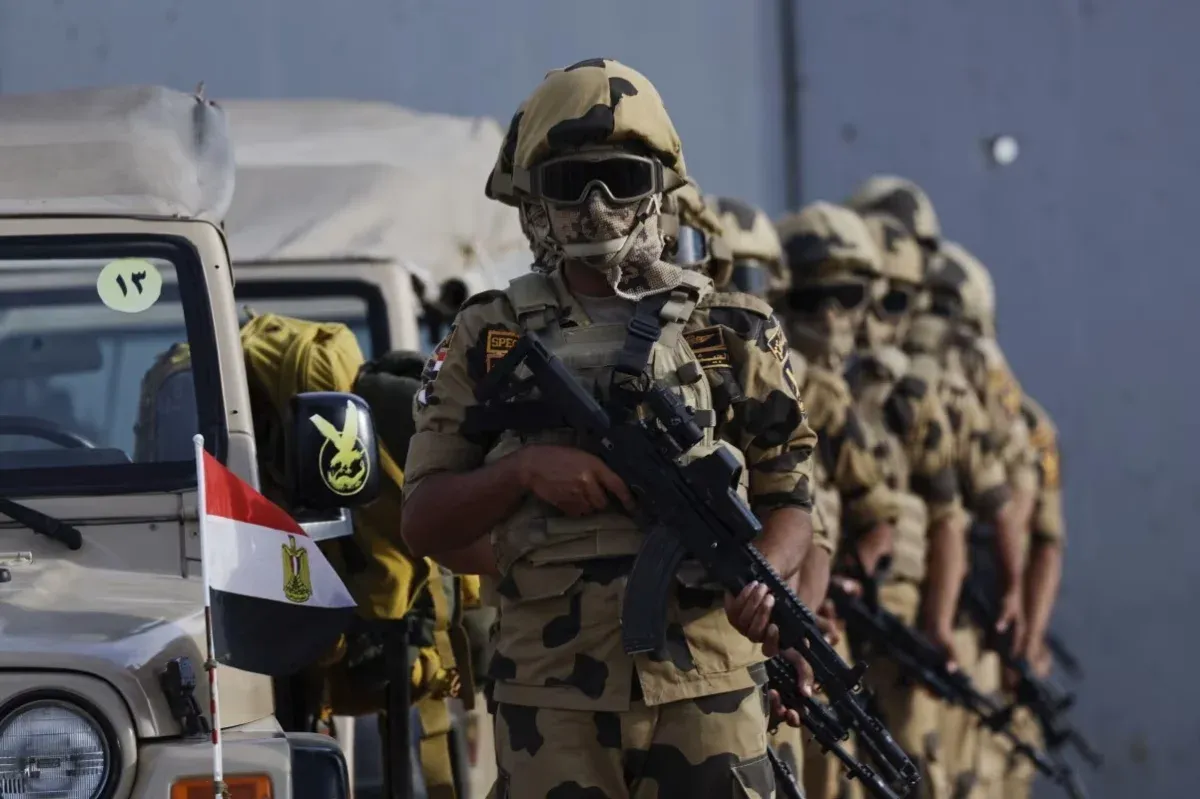
Egypt's recent move to support Saudi Arabia has triggered an escalation in the rhetoric of Iran-backed Houthi militias, who have characterized the Egyptian Parliament's authorization for President Abdel Fattah El-Sisi to take necessary measures to defend the Kingdom as a "declaration of war" on Yemen. The group has threatened a war of attrition reminiscent of Egypt's significant sacrifices in Yemen during the 1960s.
The Houthi reaction underscores the group's sensitivity to the potential for broader regional coordination against its cross-border attacks. Cairo's entry into the realm of political and defensive support for Riyadh is a development that could intensify pressure on the Houthis if translated into additional military actions or security arrangements. Instead of viewing the Egyptian decision as an authorization for supporting Saudi Arabia and defending its sovereignty, the militia has framed it as an attack on Yemen. This narrative aims to widen the scope of political confrontation and portray any move to support Riyadh as aggression against Yemen, disregarding the distinction between declared defensive support and a decision to wage war on Yemeni territory.
In a notable escalation, Mohammed Ali Al-Houthi, a member of the Houthi Supreme Political Council, warned Cairo against engaging in military confrontation. He claimed the Egyptian move would lead to a new war of attrition, similar to the Egyptian military's intervention in Yemen in the 1960s, referencing the Egyptian martyrs who fought alongside Yemenis to overthrow the tyrannical Imamate. These statements, published by the Houthi-controlled Saba news agency in Sana'a, followed the Egyptian Parliament's authorization on Monday for President El-Sisi to take necessary actions to support Saudi Arabia and defend its territories and sovereignty in coordination with the Kingdom.
The invocation of the 1960s war carries implications beyond a military warning. The Houthi group is attempting to leverage a costly historical experience for the Egyptian military to deter Cairo, suggesting that any military involvement in the Yemeni file could open the door to a protracted confrontation. The militia's threats have not been limited to the potential military cost; they have also sought to portray Egyptian support for Saudi Arabia as serving Israel. Al-Houthi alleged that an Egyptian military engagement in a new conflict could allow for the execution of plots targeting Sinai and the displacement of Palestinians to the region, without providing evidence for these claims.
The inclusion of Sinai and the Palestinian issue in their response to the Egyptian decision reflects an attempt to link the Saudi defensive action to broader regional threats. This strategy aims to shift the discussion from attacks targeting Saudi Arabia and their security implications to questioning the motives behind Egypt's actions. By leveraging sensitive issues for the Arab public opinion, the Houthis seek to pressure Cairo and dissuade it from providing support to Riyadh. In the same vein, Al-Houthi called on Egypt, Turkey, and Pakistan to withdraw from what he described as the "Defense of Mecca Alliance" and refrain from supporting Saudi military operations. This rhetoric presents the involved countries with a binary choice crafted by the group: either distance themselves from supporting Saudi Arabia or face a potential war of attrition.
This escalation occurs amidst ongoing Saudi concerns over missile and drone attacks attributed to the Houthis. Riyadh announced on Tuesday the interception of three ballistic missiles and four drones, a development that heightens fears of continued cross-border threats. These attacks place the Egyptian move within a security context related to defending Saudi Arabia, rather than necessarily opening a new war front within Yemen. The declared authorization is linked to supporting the Kingdom and defending its territories and sovereignty, while the form, mechanisms, and extent of potential support remain subject to official decisions and coordination between the two countries. Conversely, the militia attempts to portray any potential defensive action as a precursor to targeting them, enabling them to present themselves in their internal discourse as a party facing external threats, rather than focusing on their responsibility for the attacks that have led to increased calls for coordinating regional defense efforts.
This discourse gains particular importance given Yemen's geographical position adjacent to vital maritime corridors, most notably the Bab el-Mandeb strait, whose security is linked to the stability of navigation in the Red Sea and the Suez Canal. In this context, Al-Houthi claimed that his group does not pose a threat to navigation but rather provides protection, assertions that contradict regional and international concerns raised by attacks and threats related to maritime corridor security. The rapid shift from objecting to the Egyptian decision to threatening a war of attrition, and then linking the action to alleged Israeli schemes, indicates the group's reliance on a multi-pronged rhetorical strategy to pressure Cairo: invoking historical experience, warning of military losses, and raising concerns related to Egyptian national security and the Palestinian issue.