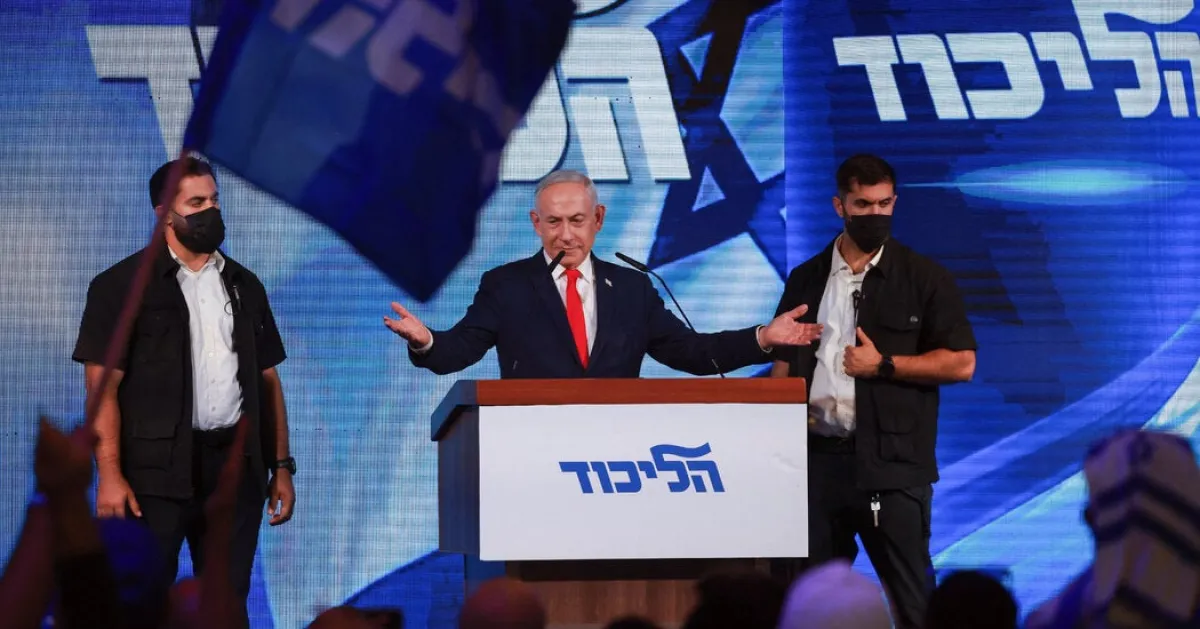
Prime Minister Benjamin Netanyahu secured a stronger-than-anticipated performance in Israel's recent election, defying expectations despite significant political challenges and a lack of a clear path to forming a government.
Netanyahu's Likud party outperformed all others in the initial results, a notable achievement given the public's dissatisfaction stemming from the October 7th attacks, his controversial judicial overhaul efforts, and his stance on military conscription exemptions for ultra-Orthodox Jews.
His primary opponents, including former military chief Gadi Eisenkot, had entered the election leading in polls with confidence in achieving a majority government composed solely of predominantly Jewish parties. However, the election outcome has presented them with a difficult dilemma.
Opposition leaders must now decide whether to abandon efforts to definitively defeat Netanyahu and consider joining a unity government, potentially excluding some of his more extreme coalition partners. Alternatively, they may attempt to form their own governing majority, a path complicated by the reluctance to collaborate with predominantly Arab parties, which Netanyahu and a significant portion of the Israeli Jewish population have historically marginalized.
In the interim, Netanyahu is expected to retain his position as Prime Minister.