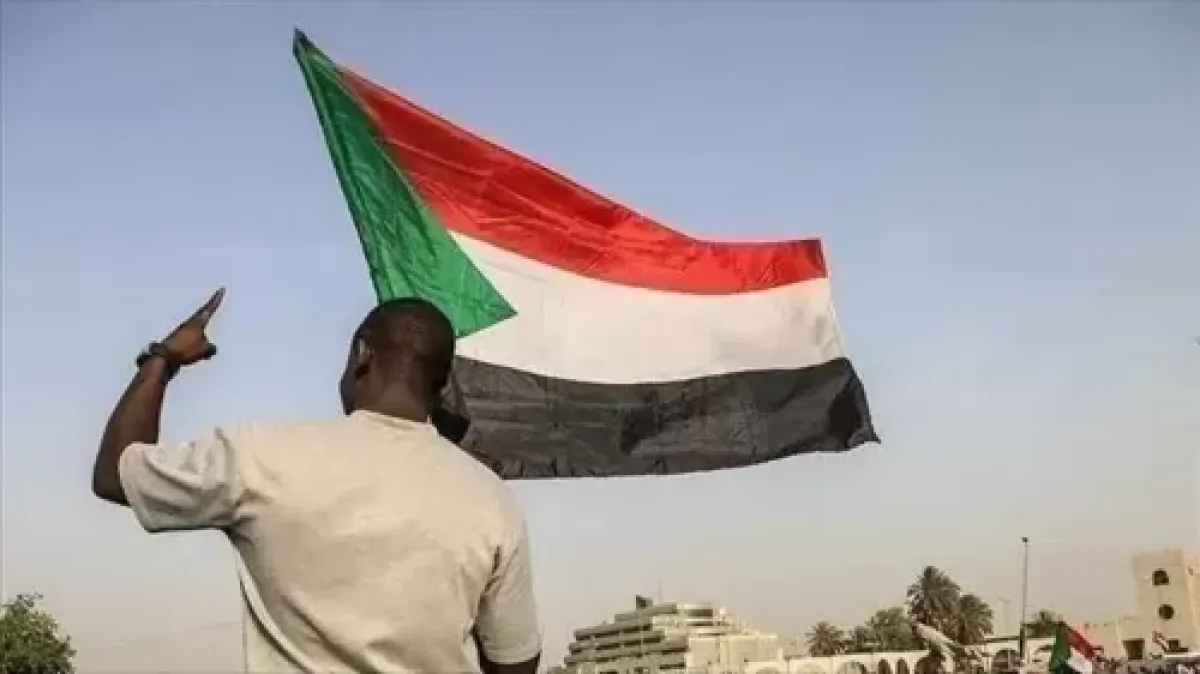
Recent US actions against the Muslim Brotherhood in Sudan indicate a growing trend of employing legal and financial tools against organizations and networks linked to violence. Simultaneously, these measures highlight the limitations of such policies when confronted with the more complex landscape of Libya, where political factions intertwine with armed groups and competing centers of influence.
While Washington has designated the Sudanese Islamic Movement and the Al-Baraa bin Malek Brigade as terrorist entities, its engagement with Islamist-affiliated political forces in Libya remains subject to different considerations. This is due to the absence of unified institutions and the multiplicity of entities controlling security and economic decision-making.
The US State Department announced on March 9, 2026, its designation of the Sudanese Muslim Brotherhood as a Specially Designated Global Terrorist organization. This was followed by their inclusion on the list of Foreign Terrorist Organizations, with the latter classification taking effect on March 16. The designation encompassed the Sudanese Islamic Movement and the Al-Baraa bin Malek Brigade, identifying them as components linked to the broader group.
Washington justified its decision by accusing the movement and its armed formations of participating in the Sudanese conflict alongside the armed forces. It stated that the group contributed over 20,000 fighters to the conflict, with some receiving training and support from Iran's Islamic Revolutionary Guard Corps. Fighters from the Al-Baraa bin Malek Brigade were also accused of carrying out mass executions of civilians in areas they controlled. These US allegations form the basis of the decision and should be considered within the context of independent verification of the facts attributed to the warring parties.
The designation represents a shift in US pressure tactics against the movement. It enables the freezing of assets under US jurisdiction, restricts financial transactions, and allows for the prosecution of entities providing material support, in accordance with US laws. However, the practical impact of these measures will depend on Washington's ability to identify the financing networks, intermediaries, and resource streams relied upon by the group, rather than merely listing it on sanctions rosters.
The significance of the Sudanese action extends beyond the internal dynamics of the war, given the country's strategic location on the Red Sea and the concerns raised by the ongoing conflict regarding the expansion of Iranian influence and the intersection of regional and international interests. From this perspective, the pursuit of networks linked to the Revolutionary Guard is inseparable from Washington's efforts to prevent Sudan from becoming an additional arena for Iranian influence in the region.
On the Libyan front, the US approach appears more intricate. This is not necessarily due to a lack of interest in pursuing extremist networks, but rather because the structure of the crisis does not allow for the reduction of political and military influence to a single party or current. The Justice and Construction Party, affiliated with the Muslim Brotherhood, operates within a political environment characterized by division and weak party organization. Actual power centers are dispersed among competing governments, armed groups, and local networks of influence.
A report by Bertelsmann Transformation Index 2026 indicates that Libya's party system remains fragmented and weak, with armed groups continuing to influence governance institutions and decision-making centers in both the east and west. In this context, no US decision similar to the Sudanese designation has been issued against the Justice and Construction Party as a political entity. This reflects a different approach to the two situations and underscores the need to distinguish between political or ideological affiliation and proven responsibility for violence or the command of armed formations.
Washington faces a dilemma in Libya that extends beyond targeting specific names and entities. The ongoing institutional division and the multiplicity of armed forces allow networks of influence to maintain their positions within and outside state structures, even with sanctions imposed on specific individuals or entities. Furthermore, the stability of energy supplies, the fight against terrorist organizations, and curbing Russian influence remain among the complex US calculations in the country.
Despite the progress announced in the political track, following the signing of an agreement by Libyan parties under UN auspices on August 30, 2026, concerning the restructuring of the High National Elections Commission and addressing disputes over the constitutional and legal framework, the agreement outlined a path toward elections within a maximum of 24 months. This does not signify the end of institutional and security division.
The comparison between Sudan and Libya suggests that US sanctions, regardless of their legal scope, do not constitute an independent solution to the crises that fuel the influence of armed organizations and political-economic networks. In Sudan, the designation allows for the pursuit of the Islamic Movement and its financial networks, but it does not resolve the armed conflict or address the power crisis. In Libya, curbing the influence of armed groups requires the unification of security and financial institutions, control over public resources, and the subordination of arms to state authority.
The dilemma lies in the fact that networks of influence do not always rely on direct funding or declared organizational structures. Instead, they benefit from intermediaries, local alliances, and the intermingling of political, economic, and military interests. This makes sanctions vulnerable to losing their effectiveness if not accompanied by mechanisms for oversight, accountability, and actual pursuit of funding sources.
The test of US influence extends beyond its ability to issue designation decisions to the extent of its success in transforming them into measurable actions. This involves drying up illicit resources and holding those involved in violence accountable, while avoiding the broadening of accusations to encompass legitimate political activity without evidence of direct involvement in terrorist or armed acts.