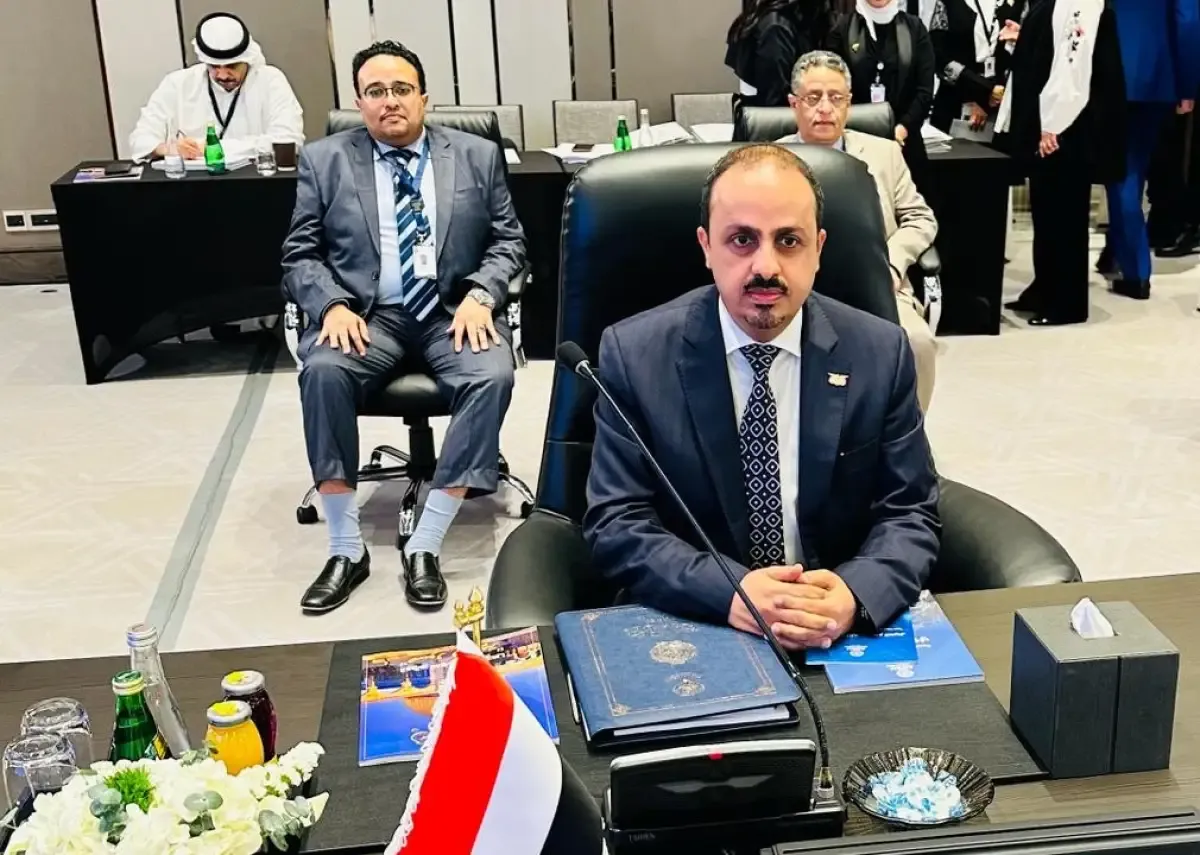
Presidential Leadership Council Chairman Rashad Al-Alimi has replaced Muammar Al-Eryani as Minister of Information, ending his nearly ten-year tenure. This change, part of broader cabinet reshuffles under Prime Minister Shaye Al-Zindani, includes ministries for Civil Service and Local Administration, signaling a critical re-evaluation of government institutions previously criticized for inefficiency and service deficiencies.
The new appointments designate Salem Abubakr Mohammed Thabet Al-Awlaqi as the Minister of Information, Judge Akram Naseeb Ahmed Al-Ameri as Minister of Civil Service and Insurances, and Ahmed Saleh Ahmed Al-Awlaqi as Minister of Local Administration. Al-Eryani has been reassigned as an ambassador within the Ministry of Foreign Affairs and Expatriates, concluding a long career in ministerial roles.
Al-Awlaqi's appointment to the Ministry of Information has been met with widespread approval from media circles. There is considerable hope that this change will initiate a course correction for a ministry perceived to have suffered from a weak institutional presence and a lack of unified, effective government messaging. This is in contrast to the growing influence and outreach of Houthi media.
The reshuffle follows Al-Eryani's prolonged tenure, which spanned multiple governments. His ministerial career began in December 2011 as Minister of Youth and Sports, later serving as Minister of Tourism in November 2014, and then assuming the Ministry of Information in December 2016, a position he held until the recent changes. Throughout this period, official media faced consistent criticism for its institutional ineffectiveness, failure to keep pace with political and field developments, and its diminished capacity to convey the government's narrative to the Yemeni public and internationally, particularly during a conflict that demanded a more robust and influential media presence.
Media professionals and activists have expressed optimism regarding the appointment of Salem Thabet Al-Awlaqi. Media figure Mohammed Al-Mahrous described the appointment as a "restoration of dignity to a ministry that has lost its presence for nearly 10 years," anticipating that the new minister, being younger and dynamic, will adapt to current needs and maintain an active presence in Aden. Media activist Nabil Abdullah highlighted Al-Awlaqi's proactive efforts in his previous role at the Ministry of Civil Service, particularly his bold initiatives and plans to support state employees, expressing confidence in his ability to lead the Ministry of Information towards a new reform phase, crucial for Yemen's ongoing critical struggle.
Political activist Assad Bin Naif considered the timing of the decision opportune, characterizing the preceding period as one of the worst for Yemeni media. He called for a competent minister with field experience to restore the prestige and strength of official media and build a public discourse capable of countering Houthi media narratives, free from nepotism and narrow loyalties. Bin Naif emphasized the need for clear vision and effective institutions, moving away from individualistic activities and rivalries, noting that the weakness of the official discourse has provided the Houthi media with significant room for influence.
Jamal Ambadi, Director-General of Coordination and Program Exchange at the Ministry of Information, urged the new minister to implement serious and comprehensive changes to restore the role and standing of media institutions, including Yemen TV, Aden TV, and the Yemen News Agency (SABA). Ambadi called for a review of administrative and employment situations, the removal of negligent or corrupt officials, and the promotion of professional competencies and expertise, along with the resumption of Yemeni channels broadcasting from Aden and fair treatment for marginalized media cadres.
Jamal Al-Asmar, a prominent activist, stressed the necessity of rebuilding the ministry on institutional foundations, unifying media discourse, and enhancing coordination between government media and the military. He urged the new minister to communicate directly with citizens during developments to foster trust in the government and restore the credibility of official media. These demands underscore the significant challenges facing Al-Awlaqi, requiring not just a change in leadership but a comprehensive review of operational mechanisms, the enhancement of media institutions' performance, the revitalization of professional cadres, and the development of a national discourse capable of countering Houthi disinformation and providing reliable information to the public.
Internationally, the British Ambassador to Yemen, Abda Sharif, congratulated the new ministers and thanked Al-Eryani for his efforts. The ambassador underscored the importance of the new ministers' responsibilities, particularly in strengthening state institutions, improving public services, and reinforcing the vital role of media in disseminating reliable information. This cabinet reshuffle presents the Al-Zindani government with a test that extends beyond reallocating portfolios, examining its capacity to translate change into tangible reforms within state institutions. The task at the Ministry of Information appears particularly urgent following years of criticism. The media community awaits whether Al-Awlaqi will introduce a distinct approach to restore the presence and impact of government media, or if the changes will remain limited to leadership transitions without addressing accumulated imbalances.