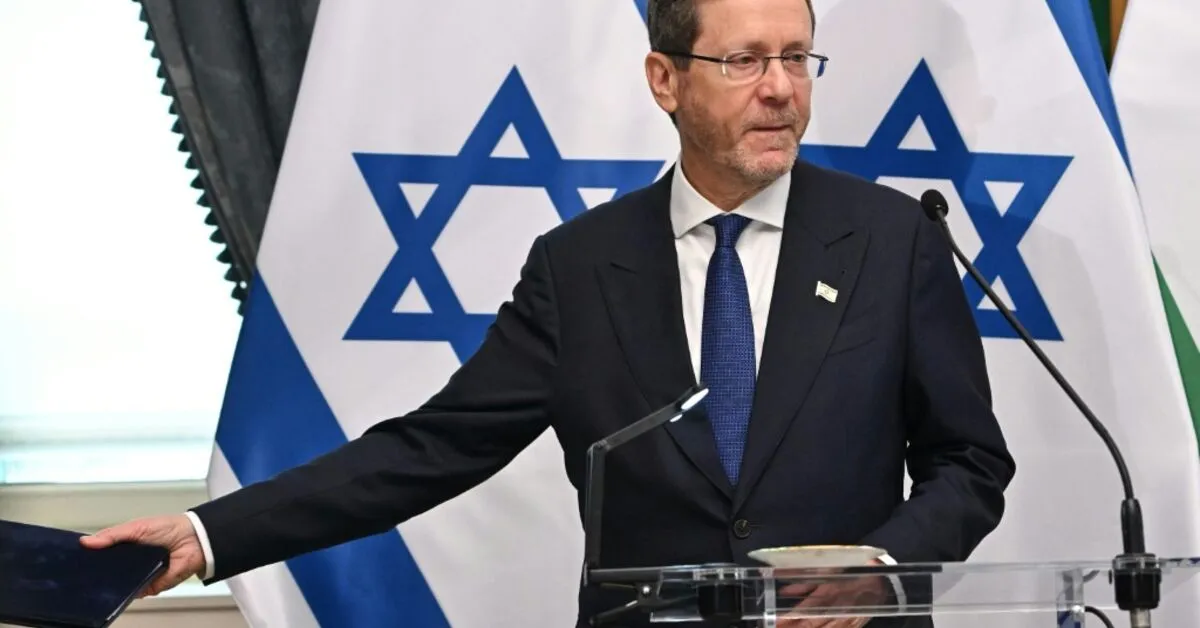
President Isaac Herzog of Israel commenced deliberations on Wednesday to determine whom to task with forming a new government, following a deeply divisive election that left neither incumbent Prime Minister Benjamin Netanyahu nor his rival Gadi Eisenkot with sufficient parliamentary seats.
The President, holding a largely ceremonial role, wields the significant authority to decide who receives the first opportunity to attempt to form a government. This process, which can extend over weeks or months, carries the inherent risk of failure, potentially leading to yet another election. Speculation has arisen that President Herzog may explore the possibility of a unity government to foster stability in a nation profoundly polarized by years of conflict and the Prime Minister's hard-right political agenda.
Following the official receipt of the October 27 election results, President Herzog began two days of consultations with political parties. His office indicated a deliberate strategy to engage with smaller parties first to elicit a broad range of perspectives, deferring meetings with the two largest factions, Netanyahu's Likud and Eisenkot's centrist Yashar, until late Thursday.
Neither Netanyahu nor Eisenkot commands the 61 seats necessary for a majority in the 120-member Knesset. Netanyahu's bloc holds a slight advantage with 53 seats, compared to Eisenkot's 48. Eisenkot could potentially achieve the required threshold by forming an alliance with Arab-majority parties, whose representation has increased to 19 seats, partly in response to the current government's policies. However, some opposition members have expressed reservations about relying on the support of non-Jewish lawmakers.
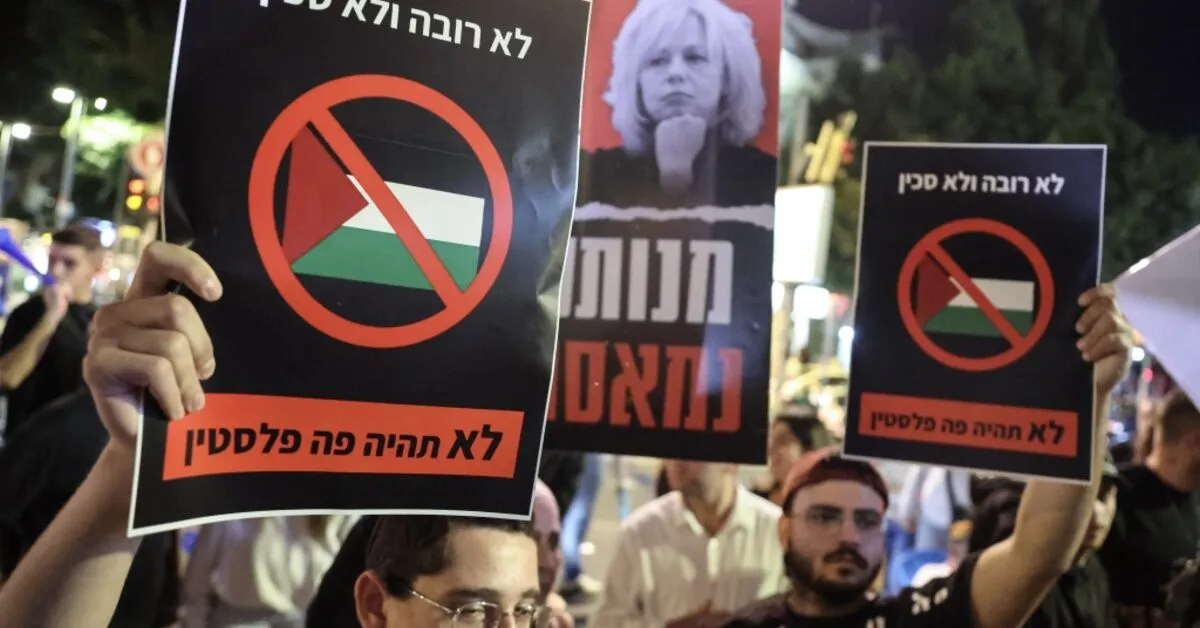
Prime Minister Netanyahu has advocated for a broad coalition government excluding Arab parties, having previously alleged electoral fraud by Arab Israeli parties. Israel's Attorney General has reportedly requested the Shin Bet intelligence agency to share its findings on these allegations, noting that no concrete evidence has yet been presented. Leaders of Arab-Israeli parties have vehemently denied these claims. Eisenkot, in turn, accused Netanyahu and Likud of attempting to orchestrate a "pogrom against democracy."
President Herzog, officially nonpartisan and a former member of the defunct left-wing Labour Party, has expressed a desire to encourage "fresh thinking" and avert a new election. His office stated the importance of exhausting all options and broadening dialogue to advance the formation process. Once a mandate is given, the designated individual will have 28 days, extendable by 14 days, to form a government. Failure to do so could result in the mandate being transferred to another individual, or if that also fails, a majority of lawmakers could nominate a candidate, or the country would face new elections.