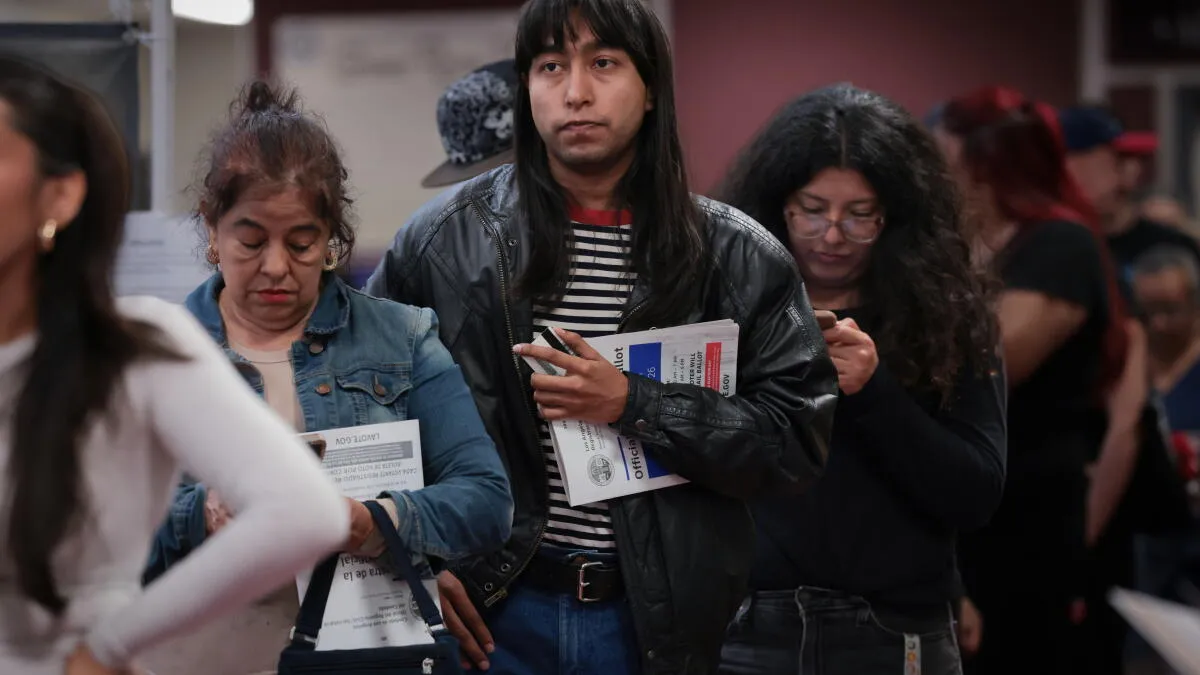
Latino voters significantly contributed to the Democratic Party's success in reclaiming control of both chambers of Congress, marking a notable reversal from their support for Republican candidates in previous elections. This shift, observed nationwide and particularly in Texas, indicates a rejection of the incumbent president and his party's policies, especially concerning immigration and the rising cost of living.
Janet Murguía, president of UnidosUS, a prominent Latino civil rights and advocacy organization, stated that Latino voters "resoundingly rejecting his extreme policies and actions and anyone who rubber-stamped them." She also highlighted that preliminary data suggests this midterm election has seen the largest turnout of Latino voters to date.
A post-election poll conducted by BSP Research for UnidosUS revealed that a substantial portion of Latino voters, many of whom identify as independent or swing voters, supported Democratic House candidates. This suggests a return to historical voting patterns, with approximately two-thirds favoring Democrats and one-third leaning Republican, a contrast to President Trump's 2024 success where over 40% of Latino votes were motivated by his promises to reduce prices.
The poll identified the cost of living and inflation as primary concerns for Latino voters, with over half citing food and grocery expenses as significant burdens. While immigration remains a concern, with 90% favoring a balanced system, it ranked behind economic issues for many. Gary Segura, president of BSP Research, observed that Republican candidates faced an uphill battle against prevailing sentiments regarding the administration's performance on key issues.
In Texas, Latino voters in districts with significant Latino populations were instrumental in Democratic victories for governor, lieutenant governor, and senator, breaking the Republican Party's long-standing dominance. Exit polling indicated that a majority of Latino men voted for Democratic House candidates. Personal motivations, such as the case of Ronaldo Salgado whose father was killed by Immigration and Customs Enforcement agents, underscored the emotional weight of this election for many voters.
The increased engagement of Latino voters was acknowledged by both parties, with Latino voters reporting more outreach this cycle. While Democrats did not win every race, Latino votes proved decisive in several competitive contests. Nationally, approximately 60% of Latino voters opted for Democratic candidates in their respective House races, according to Associated Press exit polls. This election also saw significant gains in Latino representation, with the formation of the largest Congressional Hispanic Caucus in its 50-year history.
Leaders like Julián Castro, chief executive of the Latino Community Foundation, emphasized that representation must translate into tangible policy changes addressing affordability, corruption, and immigration reform. Democratic representatives, such as Robert Garcia, acknowledged the responsibility to deliver on these issues, particularly concerning immigration enforcement and comprehensive reform, indicating a renewed trust placed in the Democratic Party by Latino voters.