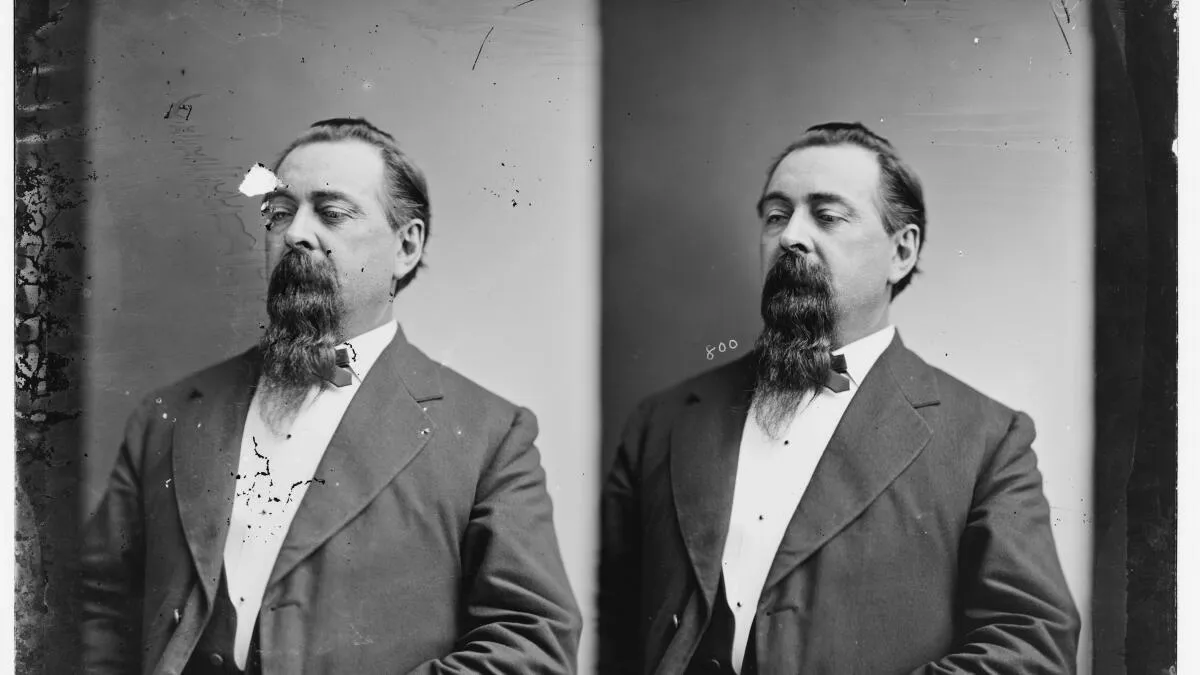
While Governor-elect Xavier Becerra is poised to become California's first elected Latino governor, the state's political history includes a notable precursor: Romualdo Pacheco, who served as governor in 1875. Pacheco's brief tenure, lasting just over nine months, marked a significant moment as he was the state's first Latino governor.
Romualdo Pacheco was born in California in 1831, during the period when it was still a Mexican territory. He ascended to the governorship from the position of lieutenant governor after the incumbent governor was elected to the U.S. Senate. Pacheco's heritage and persona left a lasting impression, even if his political achievements during his short term were less pronounced. He was also notable for being the first governor of California born within the state's borders, though he served after its incorporation into the United States.
Pacheco's life was characterized by a diverse range of public service and distinctions. He held offices such as state treasurer, judge, and state senator, and was also the first Latino elected to the U.S. Congress from California after his gubernatorial term. His family background was prominent; his mother belonged to the influential Carrillo family, and his father was a captain in the Mexican army. His early life involved maritime experience, including a period serving on merchant ships and being captured during the U.S.-Mexican War, after which he pledged allegiance to the U.S.
His political career saw him navigate pivotal periods in California's history, including the growing tensions over slavery leading up to the Civil War. Pacheco shifted his political affiliations, moving from the Democratic Party to the short-lived National Union Party, and eventually becoming a Republican. This alignment was consistent with California's constitutional stance against slavery, mirroring that of Mexico. He served as lieutenant governor before assuming the governorship upon Newton Booth's resignation to enter the Senate.
Pacheco's time in office was marked by both commendation and criticism. While lauded for his integrity, he faced scrutiny for not distributing political appointments liberally and for refusing to pardon a convicted embezzler despite potential financial incentives. His relationship with the powerful Southern Pacific Railroad also drew attention, with accusations of being influenced by the company. This was particularly evident in his voting record on legislation concerning railroad projects and labor, and later, his endorsement of the Chinese Exclusion Act in Congress, where he articulated concerns about Chinese laborers impacting white employment and cultural integrity.
In contemporary discussions, Xavier Becerra's openly acknowledged Mexican heritage contrasts with how Pacheco's ancestry was sometimes framed. Historical accounts indicate that Pacheco's "pure Spanish" heritage was emphasized, which some scholars interpret as a coded reference to whiteness and a romanticization of California's Spanish colonial past, potentially marginalizing its authentic Mexican identity. Pacheco concluded his political career with an appointment as a diplomat in Central America before returning to California and retiring. He passed away in 1899, remembered in an obituary for his dignity and integrity.