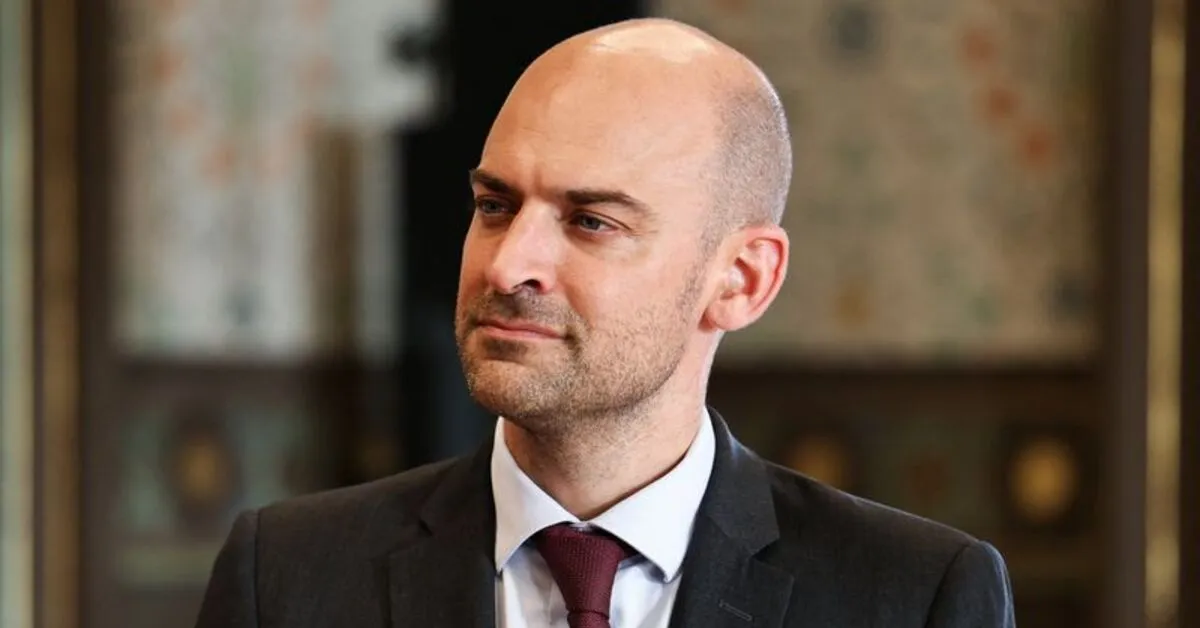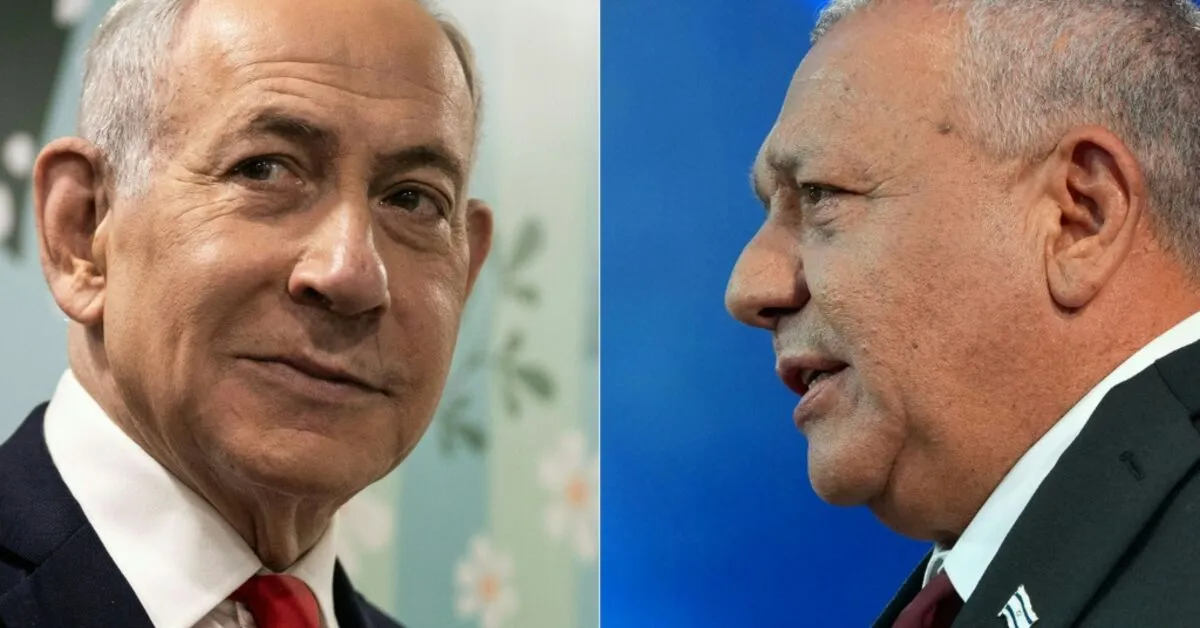
President Isaac Herzog has formally tasked Gadi Eisenkot with forming Israel's next government, a move perceived by opposition factions as a significant step toward potentially removing Prime Minister Benjamin Netanyahu.
Eisenkot, a former military chief and a political newcomer, leads an opposition bloc that secured the recommendation of 67 lawmakers, surpassing Netanyahu's bloc, which garnered 46 recommendations. The formal appointment ceremony is scheduled for Sunday at the president's residence in Jerusalem. This development follows a general election on October 27 that failed to produce a clear majority in a nation deeply divided by Netanyahu's leadership and prolonged conflicts.
The opposition's path to forming a coalition may involve an unconventional alliance with ultra-Orthodox parties. However, recommendations for Eisenkot include members of Israel's Arab minority, whose electoral gains were fueled by opposition to Netanyahu. This has created a complex dynamic, as some right-leaning members within the opposition coalition express reservations about relying on Arab votes. Avigdor Liberman, a key opposition figure, has stated he will not participate in a government dependent on Israeli-Arab support.
President Herzog has expressed a desire to explore a national unity government, potentially uniting Israelis across the political spectrum. Pressure for such a coalition may intensify if Netanyahu proceeds with plans to engage militarily with Iran, a move that has not received backing from U.S. President Donald Trump. Netanyahu, who faces corruption charges and potential international legal scrutiny, has advocated for a unity government but insists on his own leadership. He has strongly criticized opposition leaders for considering cooperation with Arab parties, labeling such a coalition a threat to Israel's existence.
Eisenkot's party has urged Netanyahu's allies to form a unity government under Eisenkot's leadership and to sever ties with "extremists." Eisenkot himself has characterized Netanyahu as a danger to Israeli democracy and has called for the swift formation of a government, which could initially depend on external support before broader party participation. He has proposed a national service requirement for all Israelis, with options for civilian roles, to facilitate the integration of the ultra-Orthodox community.
Eisenkot will have 28 days to secure the necessary 61 votes for a coalition, with a possible 14-day extension from President Herzog. Failure to form a government would lead to new elections, marking the sixth electoral contest since 2019 due to ongoing political deadlock.