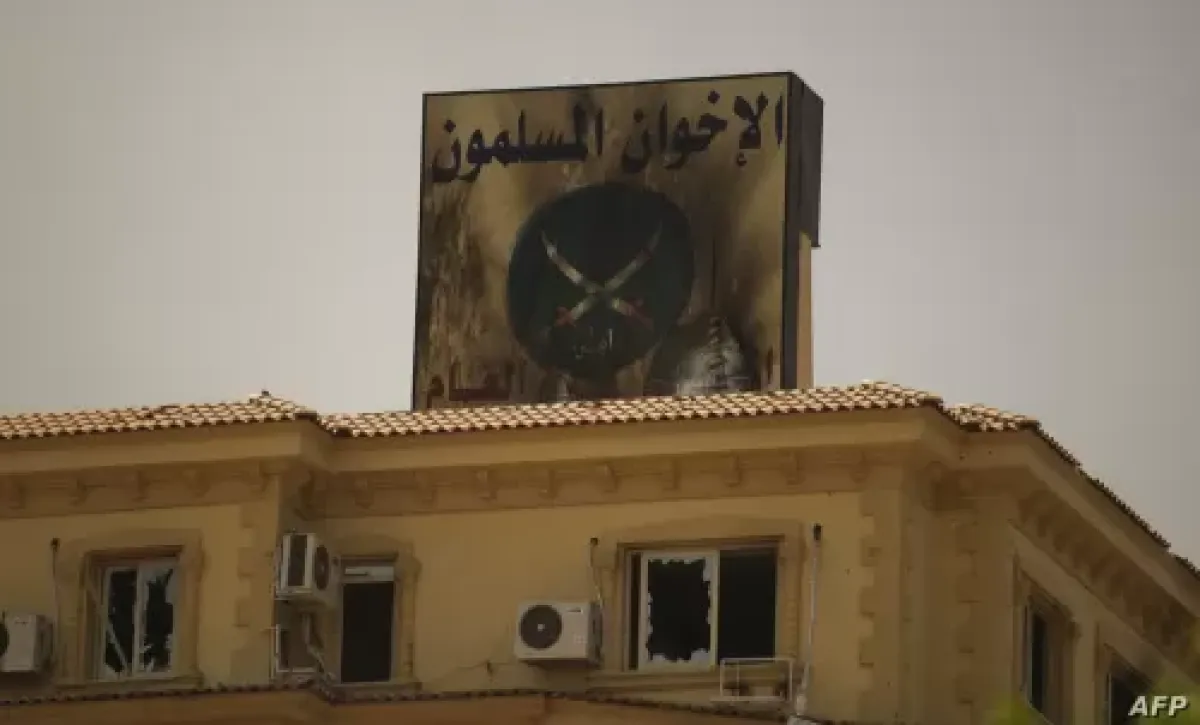
Egypt has extended its confrontation with the Muslim Brotherhood beyond its borders, targeting the organization's networks and associated entities in Europe. This strategic shift signifies a move from domestic prosecution to confronting what Cairo describes as the Brotherhood's organizational, financial, and ideological extensions abroad.
The escalation follows a recent Egyptian judicial decision to designate 35 entities and 36 individuals as terrorist organizations and terrorists, respectively, for a period of five years. This list includes Islamic organizations and associations operating in several European countries, such as the European Council for Muslims, the Muslim Association of Britain, the Federation of Muslims of France, the Swiss Muslim Association, and the German Islamic Association, in addition to the European Council for Fatwa and Research, the European Council of Imams, and the European Institute of Human Sciences.
The decision, published in the official gazette "Al-Waqi'a Al-Misriya," was issued by the Cairo Criminal Court. It comes just one day after the Muslim Brotherhood was officially placed on Egypt's list of terrorist entities, reinforcing the broader context of Egypt's intensified efforts to counter the organization's influence both domestically and internationally.
The scope of Egypt's targeting is evident in the nature of the listed entities, which include not only explicitly organizational names but also religious, educational, student, and community associations and links spread across various European nations. Researchers specializing in extremist groups suggest this move aims to disrupt what they perceive as external extensions of the Brotherhood, particularly those suspected of being used for political, intellectual, or financial activities. Analysts note that drying up financial resources and restricting organizational ties are central to this strategy, especially as the Brotherhood's external presence has become a pathway for it to reassert its political, media, and intellectual influence.
The significance of this decision lies not only in the number of listed entities but also in the nature of the institutions included. The designation of fatwa councils, imams, and educational and student institutions indicates that Egypt views these as supportive environments for the organization. This approach suggests that Cairo considers the Brotherhood not merely a domestic organization but a vast network of entities operating under various guises in different legal and political environments, making its pursuit more complex than simply banning a centralized group.
The crucial question remains about the extent to which this Egyptian decision will influence European governments. While the Egyptian ruling does not automatically compel European nations to take similar actions against all listed entities, as European organizations are subject to national laws, Cairo's designation could lead to increased political and legal scrutiny. The actual impact will likely depend on European reactions and whether the Egyptian list prompts independent regulatory or legal measures. This marks a new phase where Egypt seeks to extend its campaign into the environment where the Brotherhood has rebuilt part of its political and institutional presence outside Egypt.
The decentralized nature of the Brotherhood in Europe presents challenges in assessing its influence and connections, particularly with independent organizations that may not publicly declare direct ties. Experts describe the Brotherhood's operations as a complex, decentralized structure involving a network of institutions, mosques, schools, and community organizations across Europe. Egypt's broadened list, encompassing religious, educational, and cultural institutions alongside political figures, signals a comprehensive approach to dismantling what Cairo perceives as a multifaceted network rather than a conventional political organization. This expansion also invites legal and political debate in Europe regarding the evidence underpinning the Egyptian decision and the applicability of each case under local laws. The next stage will depend not only on Egypt's decree but also on its ability to persuade European capitals that the listed entities are indeed extensions of the Brotherhood and not independent Islamic organizations.