Scientists have unearthed a groundbreaking clue from ancient proteins found in South Africa's Rising Star Cave system, suggesting an extinct human relative, Homo naledi, may have exclusively buried females in a specific chamber. This discovery could point to the earliest known burial site reserved for a single sex by a human relative other than our own species.
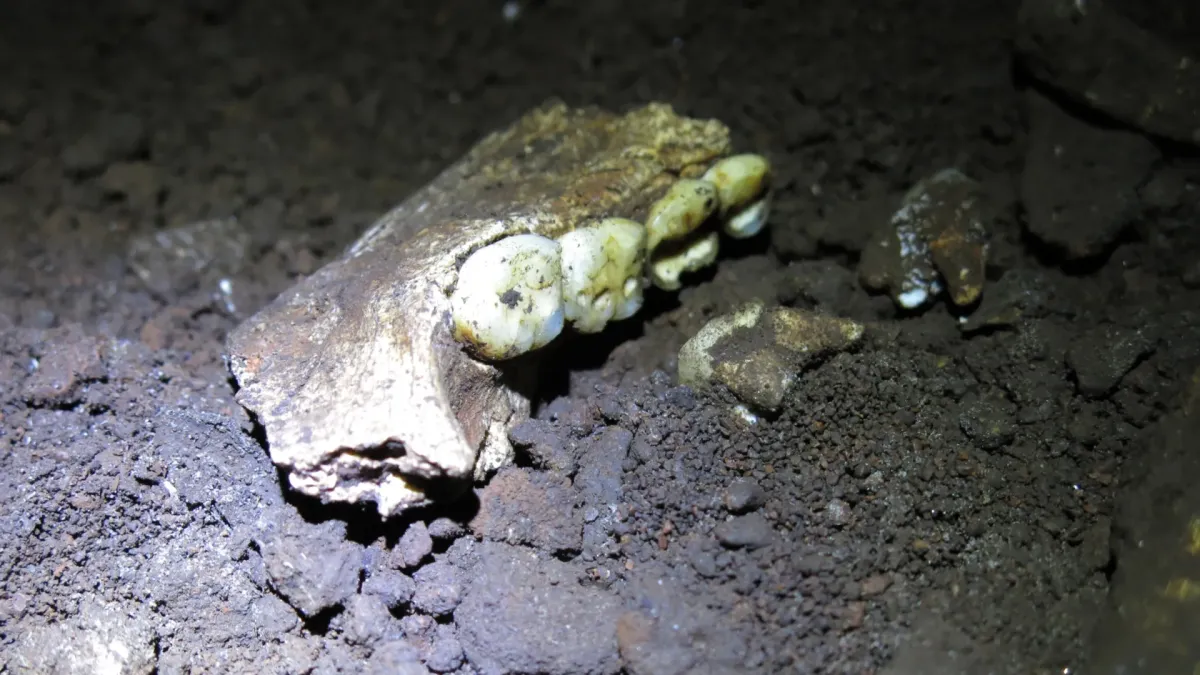
Homo naledi, which roamed the Earth between 335,000 and 241,000 years ago, has long puzzled researchers due to the lack of physical variation among adult fossils found in the Dinaledi Chamber. Now, an international team has analyzed proteins from 23 teeth belonging to at least 20 individuals, specifically looking for Amelogenin-Y, a protein linked to the male Y chromosome.
The surprising absence of this male-specific marker has fueled speculation. "The lack of male markers with the group is truly fascinating," stated Dr. Marc Dickinson from the University of York. "It is incredibly exciting to gain a window not only into the biology of our ancestors, but also into how they lived." This finding offers a rare glimpse into a culture previously difficult to access directly.
While the evidence leans towards an all-female burial site, the researchers acknowledge other possibilities. One theory suggests that Homo naledi's genetics might have evolved differently, with the Amelogenin-Y gene potentially mutated or absent in the population, meaning some individuals could have been male despite lacking the protein.
This research highlights the incredible preservation capabilities of tooth enamel, the hardest tissue in the body, which shields proteins from environmental damage for millennia. "Our study helps in the long-standing mystery of why Homo naledi lacked significant variation; it's probably because they could have all belonged to one sex," explained Palesa Madupe, who conducted the research.
This extensive protein analysis of an extinct hominin species provides a fresh perspective on Homo naledi, regardless of the final interpretation. The findings underscore the power of ancient protein analysis to reveal details about extinct human relatives that skeletal remains alone cannot. As investigations continue, this discovery could significantly reshape our understanding of the social behaviors and potential burial traditions of ancient human species.