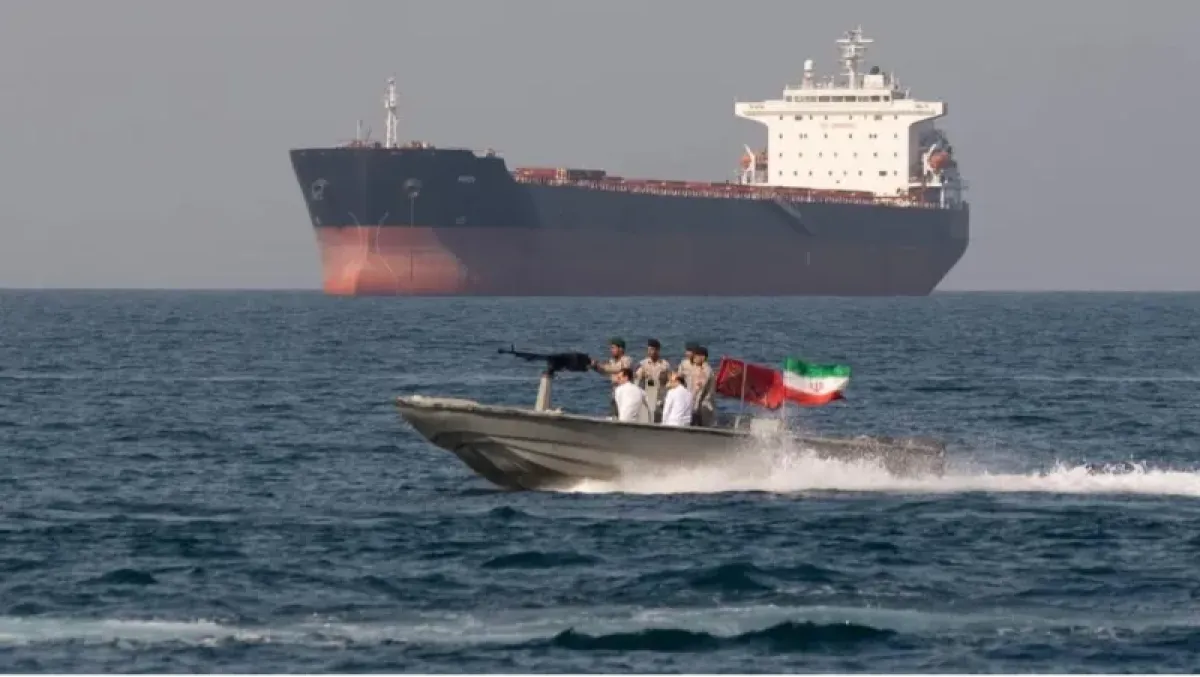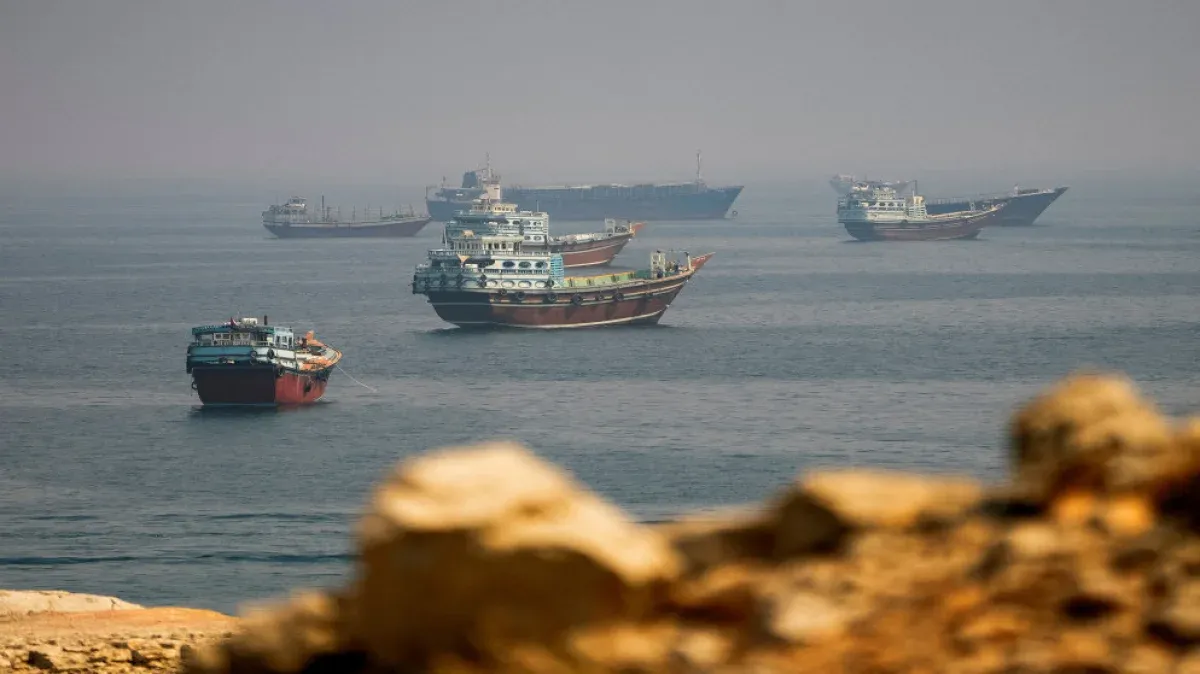
Soon, a vast, decrepit oil tanker in the Red Sea will likely sink, catch fire, or explode. The vessel, the F.S.O. Safer—pronounced “Saffer”—is named for a patch of desert near the city of Marib, in central Yemen, where the country’s first reserves of crude oil were discovered. In 1987, the Safer was redesigned as a floating storage-and-off-loading facility, or F.S.O., becoming the terminus of a pipeline that began at the Marib oil fields and proceeded westward, across mountains and five miles of seafloor. The ship has been moored there ever since, and recently it has degraded to the verge of collapse. More than a million barrels of oil are currently stored in its tanks. The Exxon Valdez spilled about a quarter of that volume when it ran aground in Alaska, in 1989.
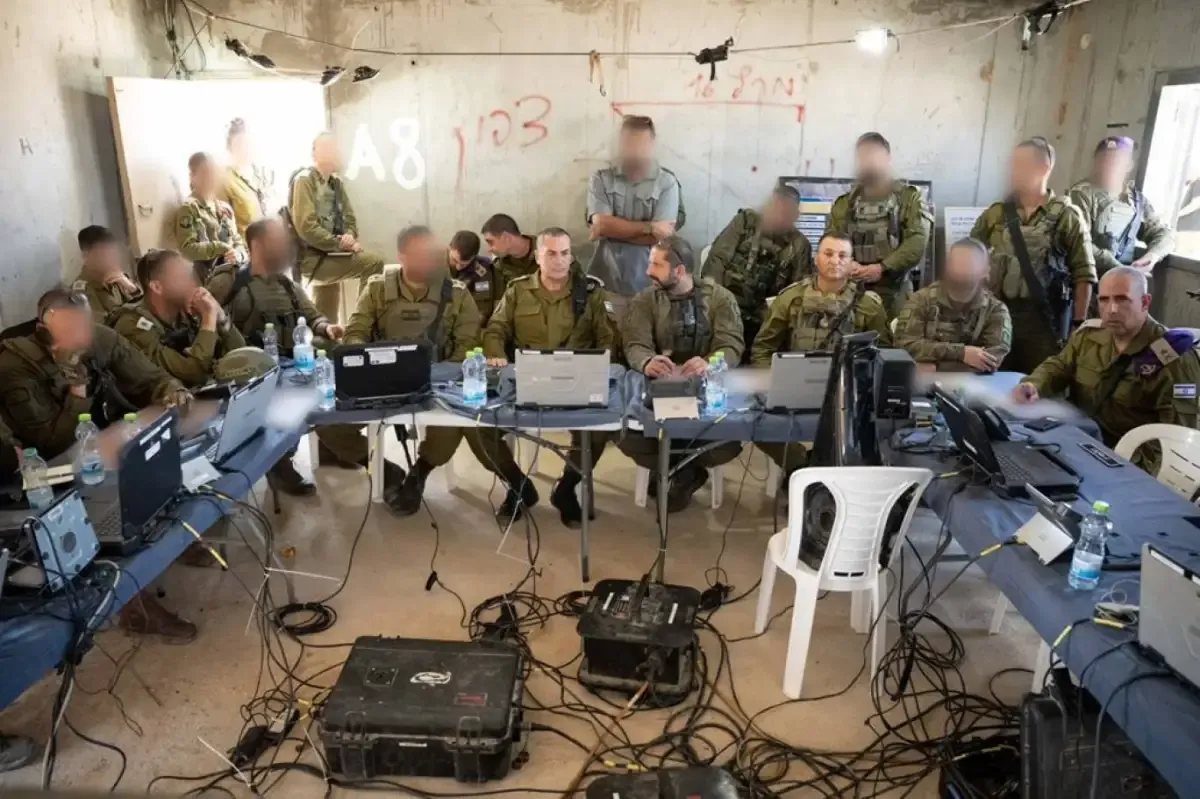
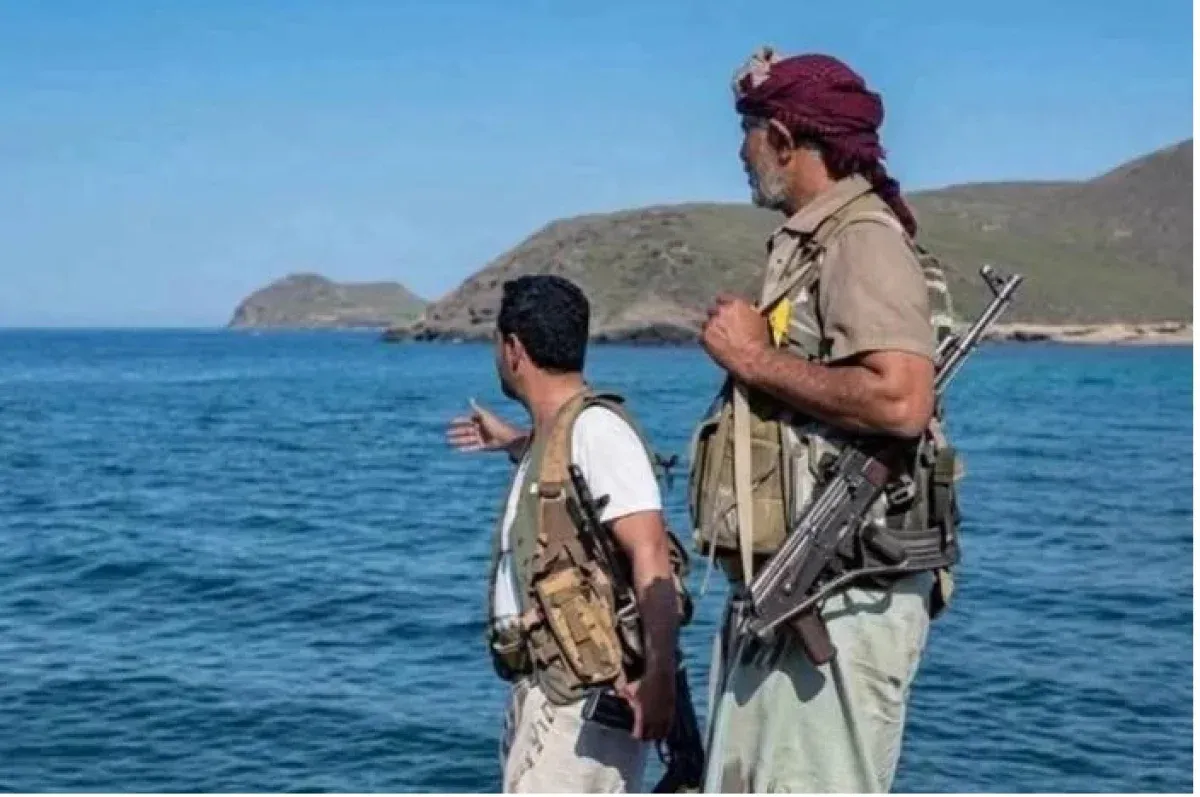
The Safer’s problems are manifold and intertwined. It is forty-five years old—ancient for an oil tanker. Its age would not matter so much were it being maintained properly, but it is not. In 2014, members of one of Yemen’s powerful clans, the Houthis, launched a successful coup, presaging a brutal conflict that continues to this day. Before the war, the Yemeni state-run firm that owns the ship—the Safer Exploration & Production Operations Company, or sepoc—spent some twenty million dollars a year taking care of the vessel. Now the company can afford to make only the most rudimentary emergency repairs. More than fifty people worked on the Safer before the war; seven remain. This skeleton crew, which operates with scant provisions and no air-conditioning or ventilation below deck—interior temperatures on the ship frequently surpass a hundred and twenty degrees—is monitored by soldiers from the Houthi militia, which now occupies the territory where the Safer is situated. The Houthi leadership has obstructed efforts by foreign entities to inspect the ship or to siphon its oil. The risk of a disaster increases every day.
A vessel without power is known as a dead ship. The Safer died in 2017, when its steam boilers ran out of fuel. A boiler is a tanker’s heart, because it generates the power and the steam needed to run vital systems. Two diesel generators on deck now provide electricity for basic needs, such as laptop charging. But crucial processes driven by the boiler system have ceased—most notably, “inerting,” in which inert gases are pumped into the tanks where the crude is stored, to neutralize flammable hydrocarbons that rise off the oil. Before inerting became a commonplace safety measure, in the nineteen-seventies, tankers blew up surprisingly often, and with lethal consequences: in December, 1969, three of them exploded within seventeen days, killing four men. Since the boilers on the Safer stopped working, the ship has been a tinderbox, vulnerable to a static-electric spark, a discharged weapon, a tossed cigarette butt.
Many people familiar with the Safer liken it to the dockside warehouse in Beirut, packed with ammonium nitrate, that exploded last year. That blast killed two hundred and eighteen people and destroyed a swath of the city: nearly eighty thousand apartments were damaged. Beirut’s plight was predicted, too—six months before the explosion, officials inspecting the consignment of ammonium nitrate on the waterfront warned that it could “blow up all of Beirut.” Ahmed Kulaib, who was the head of sepoc until recently, described the Safer to me as a “bomb.”
Some observers also believe that the Houthis have laid mines in the waters around the Safer. Many coastal regions under Houthi control have been booby-trapped this way. If explosives indeed surround the ship, nobody knows their exact locations. According to sources in Ras Issa, the port closest to the ship, the Houthi officer responsible for laying mines in the area was killed.
Given these concerns, it is striking that many tanker-safety experts and former sepoc employees are more worried about the ship sinking than about it exploding. Its steel hull is corroding, as are its many pipes and valves. Last year, the skeleton crew had to make emergency repairs to a cracked pipe leaking seawater into the engine room; a sinking was narrowly averted. If the Safer goes under, one of two scenarios is likely: it would break free of its moorings and be dashed against coastal rocks, or its weakened hull would shear apart. In either event, the ship’s oil would spill into the water.
The Safer threatens not only the ecosystems of the Red Sea but also the lives of millions of people. A major spill would close a busy shipping lane. Not long ago, a British company, Riskaware, worked with two nonprofits, ACAPS and Satellite Applications Catapult, to generate projections for the U.K. government outlining possible outcomes of a disaster on the Safer, allowing for seasonal variations in Red Sea currents and wind patterns. In the worst forecasts, a large volume of oil would reach the Bab el-Mandeb Strait—the pinch point between Djibouti, on the African mainland, and Yemen. Every year, enough cargo passes through the strait to account for some ten per cent of the world’s trade. The insurer Allianz estimated that when the container ship Ever Given blocked the Suez Canal for nearly a week, this past March, the incident cost about a billion dollars a day. Ships rarely traverse oil-contaminated waters, especially when a cleanup is in progress, and their insurance can be imperilled if they do. A spill from the Safer could take months to clear, imposing a toll of tens of billions of dollars on the shipping business and the industries it services. acaps estimated that the cleanup alone could cost twenty billion dollars.
In any scenario, Yemenis would suffer the most. The country, which has a population of thirty million, is already experiencing the worst humanitarian crisis in the world. Tens of thousands of Yemenis live in famine conditions, and another five million face dire food insecurity. Twenty million people require the support of non-governmental organizations to access basic provisions, and four million are internally displaced.
A fire or an explosion on the Safer could pollute the air for up to eight million Yemenis, and would complicate the delivery of foreign aid to the western coast. A spill would be even more calamitous. Yemen’s Red Sea fishing industry has already been ravaged by the war. An oil slick would knock it out entirely. A big spill would also block the port of Hodeidah, which is some thirty miles southeast of the tanker. Two-thirds of Yemen’s food arrives through the port. In every projection presented to the U.K. government, Hodeidah remained closed for weeks; in the worst case, it did not reopen for six months. The United Nations, whose mission to Yemen is overstretched and underfunded, has no contingency plan to accommodate a shutdown of the Hodeidah port.
John Ratcliffe, an American who is a Yemen specialist in the U.N. Office for the Coordination of Humanitarian Affairs, is one of the central figures engaged in the U.N.’s attempt to solve the Safer crisis. He told me recently that the prolonged closure of the Hodeidah port might precipitate a famine unprecedented in scale in the twenty-first century. In 2018, unicef estimated that, if the port closed, three hundred thousand children would be at risk of dying from starvation or disease. Ratcliffe told me that this calculation is still valid in 2021. “We have no Plan B,” he said. “It would be a catastrophic situation.”
Yachts are compared by length, and container ships by cubic capacity, but oil tankers are compared by “deadweight”—the maximum tonnage that they carry when fully laden. By this yardstick, the Safer is one of the biggest ever built. Completed in May, 1976, in a shipyard in Japan, it measures more than four hundred thousand deadweight tons. It is eleven hundred feet long and two hundred feet wide, and can carry more than three million barrels of oil. The month the ship was completed, the United States was importing that much crude about every eighteen hours.
The ship, then owned by Exxon, was initially named the Esso Japan. Classified as an ultra-large crude carrier, it resembled a giant barge more than a traditional seagoing ship. On the open ocean, slowing from full speed to a stop took about fifteen minutes, and required two miles of clear water. When the ship was fully laden, its “draft”—or depth below the waterline—extended more than seventy feet. It could be berthed only in the world’s deepest ports. The English Channel was very nearly impassable for the ship, and it could not steam through the Suez Canal.
In the years when the ship was being built, this unwieldiness was hardly considered a liability. From the beginning of the Six-Day War, in 1967, until 1975, the Suez Canal was closed to commercial shipping, and for most of this period oil was relatively cheap. Shipbuilders and oil companies began designing ever-bigger tankers, to make the transport of crude oil more economical. Ultra-large crude carriers were so enormous that Exxon offered bicycles to senior officers stationed on them, to make crossing the deck faster.
The huge increase in the size of tankers corresponded with a rash of fatal accidents and sinkings, most notably the wreck of the Torrey Canyon, which struck rocks off the coast of Cornwall in 1967, causing what was then the world’s largest-ever spill. At least eight hundred thousand barrels of oil are thought to have spilled into the English Channel. In 1974, in an influential two-part investigation for this magazine, Noël Mostert suggested that the fragility of supertankers rendered them “fatally flawed” as a species.
As Mostert wrote those words, the brief golden age of the supertanker was already ending. The oil crisis of 1973 had driven up crude prices, reducing demand and setting off a worldwide financial crisis. The Suez Canal reopened in 1975, making smaller tankers useful again. The moment the Esso Japan left the shipyard, it was a dinosaur.
Nonetheless, the supertanker was active for a while. Archived reports from Lloyd’s List, a London shipping bulletin, document it shuttling between deepwater ports in the Middle East and Europe, and occasionally voyaging to the Caribbean or the United States, even as the ship’s economic usefulness was waning. In 1982, it was sent to Ålesund, Norway, and was “laid up.” That year, about two hundred and fifty oil tankers were mothballed in this fashion: Norway’s fjords became tanker parking lots. Many of the vessels were eventually sold for scrap, but the Esso Japan found another purpose.
In 1983, the Hunt Oil Company, of Dallas, discovered crude in the Marib desert. The site of the strike was in the Yemen Arab Republic—sometimes known as North Yemen—about twenty miles from the border with the People’s Democratic Republic of Yemen, or South Yemen. Between 1984 and 1987, Hunt teamed up with Exxon to build a pipeline from the Marib oil fields to Ras Issa, on the coast of North Yemen, near Hodeidah.
For its Marib crude, Hunt needed storage space and an export facility on the coast. The company’s license to extract oil lasted only fifteen years, so building an onshore storage terminal at Ras Issa—which would take years and cost more than a hundred million dollars—didn’t seem like a good investment. Instead, for about a tenth of that price, Hunt bought the Esso Japan and retrofitted it as a floating storage-and-off-loading unit. Smaller tankers could berth alongside it to access its oil. Karim Abuhamed, a manager who worked on the conversion of the ship for Hunt, told me that the intent was to create a “floating gas station.”
The Esso Japan steamed from Norway to Korea for the twelve-million-dollar conversion, whereupon it was renamed the F.S.O. Safer. Among other modifications, the tanker was outfitted with a rotating-front mooring system, so that the ship could swing around its bow, like a weathervane, whenever winds kicked up, reducing strain on the hull. The tanker arrived in the Red Sea by March, 1988.
In the late eighties, the Safer was one of the best places to work in Yemen. Many of the crew members were Italian, including some excellent chefs. More and more Yemenis came aboard to work. One former employee recalled that during this period the ship was as well appointed as “a five-star hotel,” with pristine living quarters. Moreover, Yemen was relatively peaceful. The discovery of oil on the border between North and South Yemen had spurred coöperation, and in 1990 the states merged. During this period, Abuhamed lived in Hodeidah, travelled to the ship by helicopter, and windsurfed on the weekends.
By the late nineties, the Safer had begun to decay. In 2000, Hunt was granted a five-year extension at Ras Issa, but a more durable storage facility was clearly needed. The Yemeni government convened a committee to plan an onshore terminal. Abdulwahed Alobaly, an accountant who used to work for sepoc, the state-owned oil company, told me that the project’s budget was about a billion dollars—a wildly excessive sum. Not a brick was laid. Alobaly, who fled Yemen four years ago, told me that he suspected “huge corruption.”
Hunt was denied permission to keep extracting oil in Yemen, and in 2005 sepoc began administering the pipeline and the Safer, which at that point was thirty years old. The ship’s age was beginning to show, but it was maintained well enough to pass annual inspections by the American Bureau of Shipping. Seven years later, a consortium led by ChemieTech, a Dubai-based company, finally began building an onshore terminal, this time with a budget of less than two hundred million dollars. Hundreds of Yemeni and international contractors set up camp at Ras Issa and began constructing three enormous vats for storing crude oil. From the site, the workers could see the Safer floating on the horizon. Sameer Bawa, a director at ChemieTech, remembers discussing the poor state of the ship with crew members who came onshore. “That was what everyone was talking about—that it may sink at any time,” Bawa recalled.
The new oil terminal was half built when Yemen’s capital, Sana’a, was overtaken by the Houthis.
Yemen's Safer, The Ship That Became a Bomb
4 years ago